
How to Store Wigs Properly: 11 Wig Storage Mistakes That Can Ruin Your Hair

Why Does a Wig Look Perfect When You Take It Off—Then Terrible When You Take It Out of Storage?
Have you ever finished wearing a wig, put it away carefully, and felt completely responsible?
Then a week later, you pull it out and discover:
The hair is flattened.
The ends are tangled.
The curls have disappeared on one side.
The lace is bent.
And somehow the wig has developed a mysterious little dent right across the crown.
It can feel like your wig has been quietly fighting for its life inside the closet.
But here’s the strange part:
A lot of wig damage happens when the wig isn’t being worn at all.
People spend so much time learning how to wash a wig, how to install a lace front wig, or how to style a human hair wig that storage becomes an afterthought.
That is a mistake.
Storage is part of wig care.
A good storage routine protects three things at the same time:
- The hair fiber
- The wig’s shape and texture
- The lace and cap construction
And those three things don’t always need the same treatment.
A long straight wig can tolerate a different storage setup from a curly wig.
A lace front wig needs different protection from a simple headband wig.
A human hair wig needs different consideration from a synthetic wig.
So let’s make wig storage much less mysterious.
What Is the Best Way to Store a Wig?
For most human hair wigs, the basic formula is surprisingly simple:
Clean → completely dry → detangle → restore the shape → protect the hair → protect the lace → store in a cool, dry place.
The important part is what happens between those words.
You don’t want to put a wet wig into a closed storage bag.
You don’t want to throw a long wig into a drawer.
You don’t want to stuff curly hair into a small box.
And you don’t want to hang a heavy wig from the lace.
Each of those shortcuts can create a different type of wear.
The goal is not to make your wig storage look like a beauty showroom.
It is to prevent unnecessary pressure, friction, moisture, and tangling.
Step 1: Never Store a Wig While It Is Damp
This is probably the first rule I’d put on a little sticky note inside your closet.
Never store a wig until it is completely dry.
That includes the hair, cap, and areas around the lace.
A wig can feel dry on the outside while retaining moisture deeper inside the cap.
That matters because a closed, damp environment has very different conditions from an open, ventilated room.
Before storage, check:
- The roots
- The inside of the cap
- The lace
- The nape area
- Dense sections of hair
- Areas underneath curls or waves
If you recently washed the wig, allow enough time for it to dry thoroughly.
If you used a leave-in conditioner or styling product, make sure the hair isn’t still noticeably wet or tacky.
Storage should be the final stage of drying, not the place where drying happens.


HD lace wigs
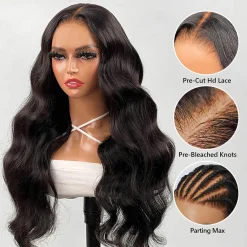
Pre-bleached Knots Straight HD Lace Frontal Wig 180% Density 6×5 Pre-cut Lace Wear & Go Glueless Wig

HD lace wigs




HD lace wigs
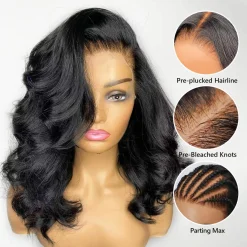
Glueless Straight Short Bob Wigs Brazilian Clear Lace 180% Density Hd Closure Wig Human Hair

HD lace wigs


Step 2: Detangle the Wig Before Putting It Away
You don’t want to open your storage bag three weeks later and discover that yesterday’s tiny tangle has become a full negotiation.
Detangle before storage.
But do it gently.
Start at the ends and gradually work upward.
For a straight wig, a wide-tooth comb or appropriate wig brush can help.
For a curly wig, your fingers may be the better tool.
Why You Shouldn’t Brush From the Roots Down
When you pull a comb from the root to the ends in one long movement, any knot becomes a point of resistance.
Your hand keeps moving.
The knot doesn’t.
Something has to give.
That “something” can be the hair fiber, the knot attachment, or both.
Instead:
Ends → middle → upper lengths → roots
It takes slightly longer.
It also puts much less unnecessary tension on the wig.
Step 3: Restore the Wig’s Shape Before Storage
This is especially important for lace front wigs.
After wearing a wig, the cap can become slightly compressed.
The hair may also have been brushed in a particular direction.
Before storage, gently return the wig to its normal shape.
Place it on a mannequin head or suitable wig stand.
Make sure the front lace isn’t folded.
Allow the hair to fall naturally.
If you wear a 13×4 lace front wig or 13×6 lace front wig, pay particular attention to the lace area because repeated sharp folds can create unnecessary stress.
The available MsAloe category list includes dedicated 13×4, 13×6, HD lace, 360 lace, full lace, and glueless wig categories, so storage requirements can be considered according to the construction rather than treating every wig identically.
13×6 lace front wig collection
Step 4: Use a Wig Stand When You Want to Preserve the Shape
A mannequin head or wig stand is useful when:
- The wig is frequently worn
- The hairstyle needs to retain its shape
- The wig has curls or waves
- You want easy access between wears
- You have enough closet or vanity space
The stand gives the cap somewhere stable to rest.
But there’s one thing to watch.
Don’t Stretch the Cap to Fit the Stand
A stand that is significantly larger than the wig’s natural cap size can place unnecessary tension on the construction.
You want support.
You don’t want stretching.
The wig should sit securely without looking like you’re forcing it over an oversized head.
Step 5: Don’t Hang a Heavy Wig From the Lace
This is one of those storage shortcuts that looks convenient.
A hanger.
A hook.
A lace front hanging over it.
Done.
Except the lace is delicate.
If the full weight of a long, dense wig repeatedly pulls from one small point, you’re creating concentrated tension.
For a lace front wig, support the cap rather than suspending the wig from the lace edge.
If you need to hang the wig, use a method designed to distribute the weight rather than placing all the tension on one narrow section.
This becomes even more important with long human hair wigs.
Step 6: Protect the Lace Before You Store the Wig
The hair often gets all the attention.
The lace quietly gets folded underneath.
That’s where problems begin.
Before storing a lace front wig, check that:
- The lace is flat.
- Adhesive residue has been removed appropriately.
- The lace isn’t folded sharply.
- Hair isn’t trapped underneath the lace.
- The front edge isn’t pressed against a rough surface.
If you regularly wear lace front wigs, it can be useful to develop a simple lace-first storage habit.
Before thinking about the hair, look at the lace.
Is it clean?
Is it flat?
Is it protected?
Then move to the hair.
For more detailed lace-care considerations, the available MsAloe content includes a dedicated guide to maintaining human hair HD lace wigs.
how to maintain human hair HD lace wigs
Step 7: Store Straight Wigs With the Hair in a Natural Direction
Straight wigs are relatively easy to store.
Once detangled, allow the hair to hang naturally.
If the wig is long, don’t create several sharp folds simply because the storage space is small.
Repeated folding can create bends that require heat or restyling later.
A straight wig is happiest when the hair can remain relatively organized.
If you have limited space, gently gather the hair rather than creating tight folds.
Think:
controlled and loose
rather than:
compressed and tight
Step 8: Curly and Deep Wave Wigs Need Different Storage
This is where people often use the wrong storage method.
A curly wig shouldn’t be treated like a straight wig.
If you brush all the curls out before storing it, you’re creating work for yourself later.
For Curly Wigs
Use your fingers to separate obvious tangles.
Preserve the curl pattern.
Avoid compressing the curls tightly.
If needed, gently arrange the curls around the mannequin head.
For Deep Wave Wigs
Try to preserve the wave direction.
Don’t flatten the hair under heavy objects.
Don’t repeatedly comb through the wave pattern just before storage.
The goal is to preserve the texture you already have rather than creating a completely new shape.
MsAloe’s available product categories include curly, deep wave, body wave, and water wave human hair constructions, which are useful examples of why texture-specific storage matters.




Synthetic Extensions


Synthetic Extensions


Synthetic Extensions


Synthetic Extensions


Step 9: Use a Satin or Smooth Storage Bag
A smooth storage bag can help reduce friction between the wig and surrounding fabrics.
The material matters.
A rough cotton bag can create more friction than a smooth satin-like material.
This doesn’t mean a storage bag will magically prevent every problem.
It simply gives the hair a more controlled environment.
Should You Store a Wig in a Plastic Bag?
For long-term storage, I would be cautious about sealing a wig in an airtight plastic bag.
Especially if there is any remaining moisture.
A breathable storage environment is generally more practical.
The basic principle is:
protect the wig without trapping unwanted moisture.
Step 10: Keep Wigs Away From Heat and Direct Sunlight
Your closet may seem harmless.
But where exactly is the wig sitting?
Near a sunny window?
Above a heater?
Inside a hot attic?
Next to a bathroom where humidity changes dramatically?
These environmental conditions can affect how your wig behaves over time.
For long-term storage, choose a place that is:
- Cool
- Dry
- Clean
- Away from direct sunlight
- Away from strong heat sources
- Relatively stable in humidity
A wig doesn’t need a climate-controlled museum.
It simply shouldn’t live in an environment that repeatedly exposes it to unnecessary heat, moisture, or sunlight.
Step 11: Keep Your Wig Away From Heavy Pressure
This sounds obvious until you look inside a typical closet.
A wig gets placed in a box.
Then another box goes on top.
Then a handbag.
Then a stack of clothes.
Three weeks later, your carefully shaped wig has been sleeping underneath approximately half your closet.
Long-term compression can flatten hairstyles.
It can also distort curls and put pressure on the cap.
If you’re storing multiple wigs, give each one enough room to retain its shape.
How Should You Store a Human Hair Wig Long Term?
If you won’t wear the wig for several weeks or months, take a little more care.
Before Long-Term Storage
Do the following:
- Clean the wig if it needs washing.
- Make sure it is completely dry.
- Remove excessive product buildup.
- Detangle gently.
- Restore the hairstyle.
- Check the lace.
- Make sure adhesive residue has been addressed.
- Place the wig in a clean protective storage environment.
Then check on it periodically.
You don’t need to handle it every week.
But if it is stored in a location with changing humidity or temperature, an occasional inspection can catch problems before they become bigger ones.
Human Hair Wig vs. Synthetic Wig: Does Storage Matter Differently?
Yes.
The basic principles are similar, but the material behaves differently.
Human hair wigs can be restyled and often require more attention to moisture, conditioning, tangling, and heat exposure.
Synthetic wigs retain their manufactured fiber shape differently.
For either type, avoid crushing the wig, storing it while damp, or exposing it unnecessarily to heat.
If you’re unsure which type you own, MsAloe’s existing resources include a comparison of synthetic and human hair wigs that can help explain the differences before you build a care routine around the wrong assumptions.
human hair wigs vs. synthetic hair wigs
Three Storage Setups for Different Lifestyles
There isn’t one perfect storage method.
Your routine matters.
Setup 1: The Everyday Wig
If you wear the same wig several times a week:
Best approach:
- Mannequin head
- Cool room
- Hair gently detangled
- Lace kept flat
- No heavy objects nearby
This setup makes reinstalling easy.
Setup 2: The Rotation System
If you rotate several wigs:
Use individual storage bags or boxes.
Label them by:
- Texture
- Length
- Color
- Construction
For example:
Body Wave — 24″ — 13×6
Straight — 20″ — Glueless
Curly — 18″ — HD Lace
This sounds a little obsessive.
Until you’re standing in front of six black wigs wondering which one is which.
Setup 3: Seasonal Storage
If you won’t wear certain wigs for months:
Clean them.
Dry them.
Protect them.
Store them in a stable environment.
Then inspect them before bringing them back into rotation.
Four Things That Quietly Damage Wigs During Storage
Let’s look beyond the obvious mistakes.
1. Friction
Hair rubbing against rough fabric can create tangling and frizz.
2. Compression
Heavy objects can flatten curls and distort the cap.
3. Moisture
Storing a damp wig creates an environment you don’t want.
4. Tension
Hanging or stretching a wig incorrectly can put unnecessary stress on the cap and lace.
These four dimensions are useful because they give you a simple diagnostic framework.
When your wig comes out of storage looking worse, ask:
Was it rubbed, compressed, damp, or stretched?
Usually, you’ll find the answer somewhere in those four.
HD lace wigs
Pre-bleached Knots Straight HD Lace Frontal Wig 180% Density 6×5 Pre-cut Lace Wear & Go Glueless Wig
HD lace wigs
HD lace wigs
Glueless Straight Short Bob Wigs Brazilian Clear Lace 180% Density Hd Closure Wig Human Hair
HD lace wigs
Real Case Study: The Curly Wig That Lost Its Shape in a Drawer
Let’s call her Monique.
She had a curly human hair wig she wore mostly for special occasions.
After each use, she removed it, brushed it lightly, folded it in half, and placed it in a drawer.
At first, nothing seemed wrong.
Then several weeks later, she pulled it out.
The curls on one side were flattened.
The ends had tangled.
The crown had a strange compressed shape.
She thought the hair had deteriorated.
But the hair hadn’t suddenly changed.
The storage method had been shaping the wig while she wasn’t wearing it.
She changed three things:
- stopped folding the wig tightly
- restored the curls before storage
- stored it on a properly sized mannequin head when possible
The next time she took it out, there was much less restyling to do.
That’s an important distinction.
Good storage doesn’t make your wig immortal.
It simply prevents storage itself from becoming another source of wear.
Real Case Study: The Lace Front Wig With a Bent Hairline
Another common problem happens with lace.
Let’s call her Renee.
She had a beautiful lace front wig that she stored in a small box after every installation.
The hair was fine.
The problem was the front lace.
Because the wig had been pushed into the box at an angle, the lace repeatedly folded in the same place.
After several storage cycles, the front edge no longer wanted to lie naturally.
Her instinct was to apply more adhesive during installation.
But adhesive wasn’t the original problem.
The lace had been repeatedly compressed during storage.
The better solution was to change how the wig was stored and protect the lace from sharp folding.
This is why wig storage should be considered part of installation prep.
If the lace is already distorted before you put the wig on, you’re starting the installation with a disadvantage.
How to Store a Wig Without a Mannequin Head
Not everyone has room for a mannequin collection.
And honestly, not everyone wants their bedroom to look like a wig studio.
If you don’t have a mannequin head, you can still store a wig carefully.
The basic method is:
- Make sure the wig is completely dry.
- Detangle gently.
- Keep the lace flat.
- Arrange the hair in its natural direction.
- Place it inside a clean, smooth protective bag.
- Store it in a cool, dry area.
- Avoid heavy pressure on top.
For long wigs, don’t force them into a tiny container.
The smaller the storage space, the more likely you are to create unnecessary folds and compression.
Should You Put a Wig in a Box?
You can.
The question is what happens inside the box.
A box can protect a wig from dust and physical contact.
But it can also become a problem if:
- it is too small
- the wig is folded tightly
- the hair is still damp
- heavy items are placed on top
- the lace is pressed against sharp edges
A box is a tool.
It isn’t automatically good or bad.
The storage environment matters more than the container itself.
How to Store a Wig After Wearing It for One Day
You don’t necessarily need to wash it after every single wear.
Instead:
First
Remove the wig gently.
Second
Check for tangles.
Third
Remove visible styling residue if necessary.
Fourth
Allow any perspiration or moisture to dissipate.
Fifth
Restore the hair shape.
Sixth
Protect the lace.
Seventh
Store it in a clean, dry environment.
This routine takes much less time than repairing a badly tangled wig later.
Synthetic Extensions
Synthetic Extensions
Synthetic Extensions
Synthetic Extensions
What About Storing a Wig After Washing?
This is where your previous washing routine and storage routine connect.
The wig should be:
washed → conditioned → thoroughly rinsed → gently dried → completely dry → detangled → stored
Not:
washed → towel wrapped → immediately stuffed into a bag
If you recently washed your human hair wig, make sure the inside of the cap is dry before closing it away.
For people who want a more detailed look at hair washing and maintenance, the available MsAloe content includes guidance on washing human hair extensions worn on the head.
how to wash human hair worn on the head
Should You Store a Wig in a Satin Bonnet?
A satin bonnet can reduce friction around the hair.
But it should not be used as an excuse to compress the entire wig into a tiny bundle.
If the wig is placed on a mannequin head, a satin bonnet or smooth protective covering can provide an additional layer of protection.
If the wig is stored in a bag, make sure the hair isn’t being forced into a shape that will create tangles.
Protection should be gentle.
How to Store Different Wig Types
Your storage method can change depending on the construction.
| Wig Type | Storage Priority |
| Human hair wig | Dryness, detangling, shape |
| Lace front wig | Hair + lace protection |
| HD lace wig | Extra care around delicate lace |
| Glueless wig | Preserve cap shape and lace |
| 13×4 lace front wig | Keep front lace flat |
| 13×6 lace front wig | Protect larger lace area |
| 360 lace wig | Protect lace around perimeter |
| Full lace wig | Protect lace across entire base |
| Bob wig | Preserve shape and ends |
| Straight wig | Avoid sharp folding |
| Body wave wig | Preserve wave direction |
| Curly wig | Preserve curl pattern |
The point isn’t that each wig requires an entirely different routine.
It’s that the most vulnerable part changes.
How to Store a Bob Wig Properly
Short wigs are easier to store, but they have their own issue:
shape.
A bob wig can lose its intended silhouette if you compress it underneath clothes or store it folded.
If the style has a defined curve around the face, use a stand that supports the cap without stretching it.
Before storing, gently arrange the ends.
Don’t aggressively brush the entire wig if the hairstyle depends on a specific shape.
For shorter styles, preserving the silhouette can be more important than simply preventing tangles.
How to Store a Wear and Go Wig
A wear and go wig is designed around convenience, but convenience shouldn’t mean tossing it into a drawer.
After wearing:
- remove gently
- inspect the lace
- allow moisture to dissipate
- smooth the hair
- protect the hairline
- store in a clean environment
The easier a wig is to put on, the more tempting it can be to treat it casually.
But frequent removal and reinstallation mean the wig is also being handled frequently.
A few careful seconds after each wear can reduce unnecessary wear over time.
Six Wig Storage Mistakes to Stop Making
Mistake 1: Storing It Wet
Wait until it’s fully dry.
Mistake 2: Throwing It Into a Drawer
Drawers are convenient but can create compression and tangling.
Mistake 3: Folding the Lace
Keep the lace as flat as practical.
Mistake 4: Hanging It by the Lace
Support the cap instead.
Mistake 5: Putting Heavy Objects on Top
Your wig doesn’t need to become part of the furniture.
Mistake 6: Storing Curly Hair Brushed Straight
Preserve the texture you want to wear.
A Simple Wig Storage Routine You Can Actually Maintain
Here’s the routine I’d recommend if you don’t want wig care to become another full-time hobby.
After Wearing
Remove → inspect → gently detangle → air out → store.
After Washing
Wash → condition → dry completely → detangle → reshape → store.
Before Long-Term Storage
Clean → dry → remove buildup → protect lace → preserve texture → store in a stable environment.
Before Wearing Again
Inspect → shake out gently → detangle → restore texture → check lace → style.
That’s enough.
You don’t need a 17-step ceremony every time you take your wig off.
A Practical Storage Checklist
Save this if you have several wigs.
Before storage, ask:
☐ Is the wig completely dry?
☐ Is the hair detangled?
☐ Is the lace clean?
☐ Is the lace flat?
☐ Is the cap stretched?
☐ Is the hairstyle preserved?
☐ Are the curls or waves still arranged naturally?
☐ Is the storage bag or box clean?
☐ Is the storage location cool and dry?
☐ Is anything heavy pressing on the wig?
If you can answer yes to the right questions, your wig is ready.
FAQ: How to Store Wigs Properly
What is the best way to store a human hair wig?
Store it completely dry, gently detangled, and supported in a way that preserves its cap shape and hairstyle. A properly sized mannequin head is useful for frequently worn wigs, while a clean protective bag can work for compact storage.
Can I store my wig in a plastic bag?
For long-term storage, avoid trapping moisture in an airtight plastic bag. A clean, breathable or moisture-safe storage environment is preferable.
Should I wash my wig before storing it?
If the wig is dirty, has substantial product buildup, or has been exposed to sweat, washing before longer-term storage makes sense. Always make sure it is completely dry before putting it away.
Can I fold a lace front wig?
You can carefully arrange a wig for compact storage, but avoid repeatedly creating sharp folds in the lace. Keeping the lace relatively flat can reduce unnecessary stress.
Should I store a wig on a mannequin head?
A mannequin head can be helpful for preserving the shape of frequently worn wigs, especially curly, wavy, or styled wigs. Make sure it is appropriately sized and does not stretch the cap.
How do I store a curly wig without ruining the curls?
Avoid brushing the curls straight before storage. Use your fingers to separate tangles, arrange the curls naturally, and avoid compressing the wig under heavy objects.
How do I store a straight wig?
Gently detangle it and allow the hair to remain in its natural direction. Avoid tight folds that create unnecessary bends.
Can I store a wig in a drawer?
Yes, provided the drawer is clean, dry, and large enough to prevent excessive compression. Don’t place heavy clothing or objects on top of the wig.
How do I keep my wig from tangling in storage?
Detangle it before storage, reduce friction with a smooth protective covering, avoid tight folding, and store long hair in a way that prevents it from being compressed into a small bundle.
How should I store a lace front wig?
Protect both the hair and the lace. Keep the lace clean and as flat as practical, support the cap rather than hanging the wig from the lace, and avoid compression.
Does a human hair wig need special storage?
It needs thoughtful storage because human hair can tangle, dry out, and change shape with repeated handling. Keeping it clean, dry, detangled, and protected from friction and heat helps reduce unnecessary wear.
The Girlfriend-Style Summary: Your Wig Needs a Home, Not a Hideout
If we were standing in your bedroom after a long day, and you were about to toss your wig onto the dresser, I wouldn’t give you a lecture.
I’d probably say:
“Give her somewhere to sleep.”
Because that’s really what good wig storage is.
Not complicated.
Not glamorous.
Just considerate.
A wig doesn’t need to be treated like a priceless antique.
But it also shouldn’t be stuffed into the darkest corner of your closet while still damp, tangled, folded, and covered in yesterday’s styling product.
Give it a clean place.
Let it dry.
Detangle it gently.
Protect the lace.
Keep the curls in their shape.
Don’t stretch the cap.
Don’t crush it.
And don’t let a pile of handbags spend the night on top of it.
The beautiful thing about good storage is that you don’t notice it when it works.
You simply open the bag a few days later and think:
Oh. She’s ready.
The hair still falls the way you remember.
The curls still have movement.
The lace is flat.
The ends aren’t fighting each other.
And you don’t have to spend the next 45 minutes repairing something that happened while the wig was sitting quietly in your closet.
That’s the whole idea.
Good wig storage isn’t about making your routine more complicated. It’s about preventing tomorrow’s problems today.
HD lace wigs
Pre-bleached Knots Straight HD Lace Frontal Wig 180% Density 6×5 Pre-cut Lace Wear & Go Glueless Wig
HD lace wigs
HD lace wigs
Glueless Straight Short Bob Wigs Brazilian Clear Lace 180% Density Hd Closure Wig Human Hair
HD lace wigs
The One Storage Rule Worth Remembering
If you remember only one thing from this article, make it this:
Never let your wig’s storage environment become harder on the hair than wearing the wig itself.
Keep it dry.
Keep it supported.
Keep it untangled.
Keep the lace protected.
Keep pressure, friction, heat, and moisture under control.
And choose the storage method according to the wig you actually own.
A straight wig, curly wig, bob wig, human hair wig, HD lace wig, and full lace wig may all sit in the same closet—but they don’t necessarily need to be treated exactly the same.
That’s the little shift that makes wig care much easier.
You’re not trying to preserve a wig perfectly forever.
You’re simply trying to make sure that when you reach for it again, it still feels like the wig you put away.
Synthetic Extensions
Synthetic Extensions
Synthetic Extensions
Synthetic Extensions
