
How to Wash a Human Hair Wig: The Complete Step-by-Step Guide to Clean, Soft, Healthy-Looking Hair
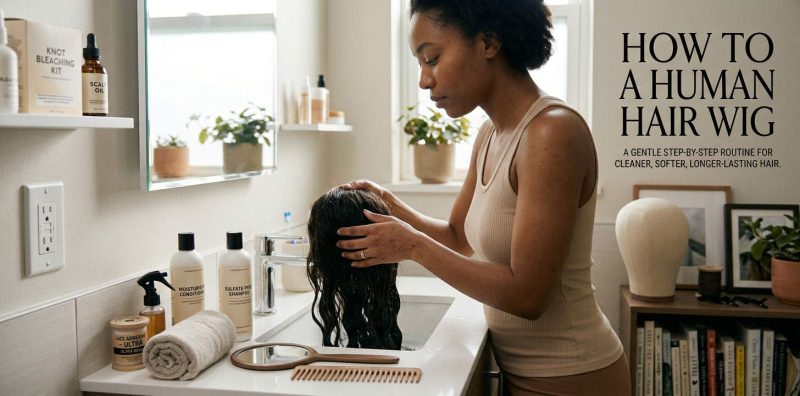
Why Does Washing a Human Hair Wig Sometimes Make It Feel Worse?
Have you ever washed a beautiful human hair wig, waited for it to dry, and then thought:
“Why does my clean wig suddenly feel drier, rougher, and more tangled than it did before I washed it?”
It’s a frustrating little moment.
You did what you were supposed to do.
You shampooed it.
You conditioned it.
You rinsed it.
And somehow the wig feels less silky.
The problem usually isn’t that washing is bad for a human hair wig.
The problem is how the washing is done.
A human hair wig is not attached to a living scalp. It doesn’t receive natural sebum from your scalp the way your own hair does. Once the hair has been processed into a wig, the strands depend on careful handling, conditioning, and controlled styling to maintain a pleasant feel.
And then there is the lace.
The hair and the lace have different vulnerabilities.
The hair can become dry or tangled.
The knots can loosen.
The lace can stretch.
The cap can lose its shape.
So washing a human hair wig isn’t simply a miniature version of washing your own hair.
It is more like washing a delicate garment that happens to be made of hair.
The good news?
Once you understand what you’re trying to protect, the routine becomes much easier.
How Often Should You Wash a Human Hair Wig?
There isn’t one number that works for every wig.
A wig worn every day and exposed to sweat, styling products, and environmental pollution will need washing more often than a wig worn occasionally.
Consider these factors:
| Situation | Washing Consideration |
| Daily wear | May require more frequent cleaning |
| Occasional wear | Can usually go longer between washes |
| Heavy styling products | Product buildup may require earlier washing |
| Frequent heat styling | Hair may benefit from conditioning-focused care |
| Heavy sweating | Clean sooner rather than allowing buildup to remain |
| Curly texture | Avoid unnecessary washing that can disturb the pattern |
| Straight texture | Product buildup can become more noticeable |
| Lace front installation | Pay attention to adhesive and residue around the cap |
The mistake is treating washing frequency like a calendar appointment.
Instead, look at the wig.
Does it have buildup?
Does it feel coated?
Does it smell stale?
Has the movement changed?
Does the hair feel unusually dry or tangled?
Those are more useful signals than blindly washing because it happens to be Sunday.
What Happens to Human Hair When You Wash It?
This is where a little hair science helps.
Human hair is primarily composed of keratin.
The outermost layer, the cuticle, consists of overlapping scales that protect the inner structure of the fiber.
When hair is wet, it becomes more vulnerable to mechanical stress.
That matters because wet hair stretches more easily than dry hair.
Now add:
- aggressive rubbing
- pulling
- brushing
- twisting
- hot water
- rough towels
and you have a recipe for unnecessary stress.
This is why the washing process needs to be gentle.
You aren’t just removing dirt.
You’re managing water, friction, tension, and chemical exposure at the same time.
What You Need Before Washing Your Human Hair Wig
Gather everything first.
This sounds like a small organizational detail.
It isn’t.
The worst time to realize you don’t have a towel is when your soaking wet wig is sitting in the sink.
Prepare:
- Wide-tooth comb
- Gentle shampoo
- Moisturizing conditioner
- Clean towel or microfiber towel
- Wig stand or mannequin head
- Clean basin or sink
- Spray bottle if needed
- Hair clips
- Optional leave-in conditioner
- Optional heat protectant for later styling
If your wig has a lace front, you should also have enough space to support the lace without stretching it.
Step 1: Remove the Wig and Detangle It Before Washing
If you’re wearing the wig, remove it gently.
Don’t pull from the lace.
Don’t grab the hair and yank the wig backward.
If there is adhesive or tape around the lace, remove it according to the product’s removal instructions rather than trying to rip the lace away.
Once the wig is off, place it on a mannequin head or clean towel.
Now detangle.
Why You Should Detangle Before Shampooing
Imagine washing a knot of shoelaces.
Adding water doesn’t magically separate the knot.
It can make the knot tighter.
Hair can behave similarly.
If the wig is already tangled, shampooing before detangling may make those tangles harder to manage.
Start at the ends.
Work upward gradually.
Never begin by dragging a comb from the crown all the way to the ends.
Instead:
ends → mid-lengths → upper lengths → roots
This reduces the amount of force transferred to the hair.
Step 2: Use the Right Water Temperature
Use lukewarm water.
You don’t need very hot water to clean a wig.
Extremely hot water can make the washing process harsher, particularly when the hair has already been chemically processed or repeatedly heat styled.
Cold water isn’t necessary either.
Lukewarm water is a comfortable middle ground for washing.
Why Water Direction Matters
This is a small detail that can make a noticeable difference.
When possible, allow water to flow from the top toward the ends.
Avoid aggressively flipping the wig upside down and scrubbing the hair in every direction.
Think about the cuticle like overlapping roof shingles.
You want the hair to move in an organized direction rather than repeatedly rubbing strands against each other.


HD lace wigs
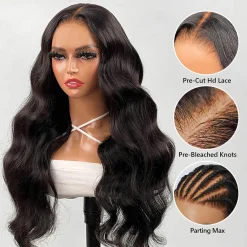
Pre-bleached Knots Straight HD Lace Frontal Wig 180% Density 6×5 Pre-cut Lace Wear & Go Glueless Wig

HD lace wigs



HD lace wigs
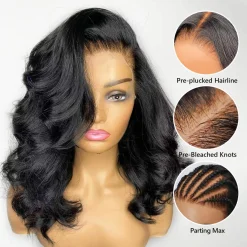
Glueless Straight Short Bob Wigs Brazilian Clear Lace 180% Density Hd Closure Wig Human Hair

HD lace wigs


Step 3: Thoroughly Saturate the Hair
Before applying shampoo, make sure the hair is completely wet.
Don’t immediately pour shampoo onto a partially wet wig.
Allow the water to penetrate through the hair.
With a dense wig, gently separate sections with your fingers so water can reach the inner layers.
But don’t scrub.
Don’t twist the hair.
Don’t bunch it into a ball.
The objective is simply to saturate the fibers.
Step 4: Apply Shampoo Without Scrubbing the Hair Aggressively
This is where many people accidentally damage their wigs.
Take a small amount of shampoo and distribute it between your hands first.
Then apply it primarily to the hair.
Gently smooth the shampoo through the strands.
Don’t Rub the Hair Into a Ball
This is one of the easiest ways to create tangles.
You know how laundry sometimes comes out of the washer twisted into one giant knot?
Hair can do the same thing when you rub it randomly while wet.
Instead:
smooth → massage gently → rinse
rather than:
scrub → twist → pile → rinse
You don’t need aggressive friction to clean hair.
The water and shampoo are doing most of the cleaning work.
Step 5: Pay Attention to the Cap and Lace
The hair gets most of the attention, but the inside of a wig can hold:
- sweat
- oils
- styling residue
- adhesive residue
- makeup
- environmental buildup
If the wig is a lace front wig, be especially gentle around the lace.
Do not stretch the lace repeatedly.
Do not scrub knots aggressively with your fingernails.
The individual hairs are ventilated into the lace, and excessive manipulation can contribute to shedding.
If you’re working with a virgin human hair wig, you may want to preserve its original texture and movement rather than treating it like a disposable style.
MsAloe’s available wig categories include both virgin hair and a range of lace constructions.
Step 6: Rinse Thoroughly
Rinse until the shampoo is completely gone.
This is important.
Residual shampoo can leave the hair feeling coated or rough.
Use the same directional movement:
roots → lengths → ends
Keep the hair organized.
Don’t twist it into a bundle.
Don’t repeatedly rub the strands against each other.
Synthetic Extensions


Synthetic Extensions

Synthetic Extensions
Synthetic Extensions


Step 7: Condition the Wig Properly
Now comes the part most dry human hair wigs desperately need.
Conditioner.
Apply conditioner primarily through the mid-lengths and ends.
If the wig is particularly dry, you can work conditioner through more of the hair, but avoid unnecessarily saturating the lace and knots with heavy products.
Why the Ends Need More Attention
Your wig’s ends are the oldest part of the hair fiber.
They have experienced more:
- brushing
- friction
- heat
- environmental exposure
- styling
- washing
than the hair closer to the roots.
That’s why a wig can feel soft near the top while the ends feel dry and rough.
Work conditioner through the lengths.
Use your fingers first.
Then gently use a wide-tooth comb if needed.
Start at the ends.
Step 8: Let the Conditioner Sit
Don’t rinse the conditioner off immediately.
Give it time to work according to the instructions on the product you’re using.
A moisturizing conditioner generally needs a few minutes of contact time.
You don’t need to leave it on for an hour just because you want extra softness.
More time isn’t automatically better.
The conditioner’s formulation matters more than turning the process into an overnight experiment.
A Simple Trick for Dry Ends
While the conditioner is sitting, gently smooth the ends between your fingers.
Don’t rub.
Think of your fingers as guiding the hair into alignment.
That small amount of controlled movement is much kinder than combing aggressively through heavily conditioned hair.
Step 9: Rinse Conditioner Carefully
Rinse with lukewarm water.
Make sure the hair doesn’t feel coated unless you’re intentionally using a leave-in product.
If the hair feels:
- slippery but clean
- soft
- flexible
- easy to separate
you’re generally in a good place.
If it feels waxy or heavily coated, you may have used too much product or not rinsed thoroughly enough.
Step 10: Never Twist a Wet Wig Like a Towel
This deserves its own section because it happens so often.
You finish washing.
The wig is dripping.
You grab it and twist.
Please don’t.
Wet hair is more vulnerable to mechanical stress.
Instead, gently support the wig and allow excess water to drain.
Then place it on a clean towel.
You can gently press the towel against the hair.
Press. Don’t wring.
This one habit can make your washing routine much gentler.
Step 11: How to Dry a Human Hair Wig
Air drying is often the gentler option.
Place the wig on a wig stand or mannequin head in a well-ventilated area.
Allow air to circulate around it.
Don’t put a soaking wet wig directly into a tightly enclosed space.
Don’t leave it bunched up.
Don’t place it on a hot radiator.
Don’t blast it immediately with the hottest setting on a blow dryer.
Why the Drying Stage Matters So Much
People often think washing causes the damage.
But the drying stage can be just as important.
Imagine washing a silk shirt and then wringing it aggressively.
The washing isn’t necessarily the problem.
The mechanical treatment afterward is.
Hair is similar.
Gentle washing followed by rough drying is still a rough routine.
What About Blow-Drying a Human Hair Wig?
You can style human hair with heat, but repeated high heat can gradually affect the hair fiber.
If you need to blow-dry:
- Remove excess water first.
- Use a heat protectant appropriate for human hair.
- Use controlled airflow.
- Avoid concentrating very high heat on one small area.
- Keep the dryer moving.
- Don’t pull aggressively with the brush.
- Allow the hair to become partially dry before intensive styling.
If your wig has a body wave, curly, or deep wave texture, excessive heat can gradually alter its original pattern.
Sometimes the most beautiful thing you can do after washing is simply let it dry.
HD lace wigs
Pre-bleached Knots Straight HD Lace Frontal Wig 180% Density 6×5 Pre-cut Lace Wear & Go Glueless Wig
HD lace wigs
HD lace wigs
Glueless Straight Short Bob Wigs Brazilian Clear Lace 180% Density Hd Closure Wig Human Hair
HD lace wigs
Straight Wig, Body Wave Wig, and Curly Wig Need Different Post-Wash Care
Washing technique matters, but the texture changes what happens afterward.
Straight Human Hair Wig
A straight wig usually benefits from keeping the hair aligned during washing and drying.
Don’t twist it.
Don’t pile it.
Don’t let wet strands dry in random directions.
If you want the final result sleek and straight, allow the hair to dry downward in an organized direction.
Body Wave Wig
A body wave wig needs a little more restraint.
After conditioning, gently separate the waves with your fingers.
Don’t repeatedly comb through the entire wig while it’s drying.
Too much manipulation can disturb the wave pattern.
MsAloe’s available categories include human hair with frontal options in body wave, straight, curly, deep wave, and water wave textures.
body wave human hair styles with frontal
Curly Human Hair Wig
Curly hair needs even more patience.
Do not brush it aggressively while soaking wet.
Instead, use your fingers or a wide-tooth comb where necessary.
Encourage the curl pattern to reform as the hair dries.
The goal is to separate tangles without destroying the shape.
How to Wash a Lace Front Human Hair Wig Without Excessive Shedding
Shedding can be alarming.
You wash the wig and suddenly notice several strands in your hands.
Some shedding can occur naturally, but excessive manipulation can make it worse.
The lace area deserves particular care.
Don’t Scrub the Knots
The hairs are secured through the lace.
Aggressive rubbing around the knots can put additional stress on the attachment points.
Don’t Comb Directly From Roots to Ends
Start at the ends.
Work upward.
This reduces pulling at the base.
Don’t Detangle a Completely Saturated Tangled Mass
If the hair is severely tangled, add conditioner and gently separate it in sections.
Don’t attack the knot with force.
How to Wash a Wig With Adhesive Residue
If you wear a lace front wig with adhesive, the inside may have residue after removal.
Don’t immediately scrub the lace aggressively.
First loosen the residue using an appropriate adhesive-removal method.
Then clean the cap gently.
If you simply rub sticky residue repeatedly, you can stretch or damage the lace.
The goal is:
loosen → lift → clean
not:
scrub harder → scrub harder → scrub harder
The Difference Between Cleaning Hair and Restoring Dry Hair
This is a subtle but important distinction.
Shampoo cleans.
Conditioner helps improve manageability and softness.
Neither one can magically restore a severely damaged hair fiber to its original state.
If your wig has been:
- repeatedly bleached
- frequently heat styled
- chemically processed
- aggressively brushed
- exposed to chlorine or harsh environmental conditions
you may notice that washing alone doesn’t bring back the original feel.
At that point, your routine should focus on reducing additional damage rather than trying to force the hair back to a brand-new condition.
MsAloe’s existing content library also includes guidance on what can cause a human hair wig to lose its vitality, making it a useful related resource when dryness continues after washing.
what can make a human hair wig lose its vitality
Real Case: The Wig That Became Tangled After Every Wash
Let’s call her Tasha.
She had a long straight human hair wig that she loved.
Every time she washed it, she did roughly the same thing:
She wet the entire wig.
Put shampoo on it.
Rubbed everything together.
Rinsed.
Wrapped it tightly in a towel.
Then brushed from the roots down while it was still soaking wet.
After several washes, the ends began tangling much faster.
She thought the hair quality had suddenly changed.
But when she changed the routine, the problem became much easier to manage.
She started detangling before washing.
She stopped rubbing the hair together.
She conditioned the lengths.
She pressed excess water out instead of twisting the towel.
Then she allowed the wig to dry in an organized position.
The difference wasn’t one magical product.
It was less mechanical stress.
That is an important lesson with human hair wigs.
Sometimes better care looks remarkably boring.
And boring is good.
Real Case: The Curly Wig That Lost Its Shape
Another customer had a curly human hair wig.
She washed it like a straight wig.
After shampooing, she combed from roots to ends several times.
Then she brushed it again after conditioning.
Once dry, the curls looked much looser.
She assumed the wig had permanently lost its texture.
But the problem was partly the post-wash handling.
Curly hair needs enough moisture and minimal unnecessary manipulation.
Once she changed to finger separation, conditioning, and gentler drying, the curl pattern became much easier to maintain.
This is why how you handle a wig after washing can be just as important as the shampoo you choose.
Five Washing Mistakes That Can Shorten the Life of a Human Hair Wig
Mistake 1: Using Very Hot Water
Hot water isn’t necessary for cleaning a wig.
Use lukewarm water instead.
Mistake 2: Scrubbing the Hair Like Natural Scalp Hair
A wig doesn’t need vigorous scalp-style scrubbing.
Smooth the shampoo through the hair.
Mistake 3: Brushing From Root to Tip
This transfers unnecessary tension to the hair and knots.
Start at the ends.
Mistake 4: Wringing the Wig
Never twist it like wet clothing.
Press out excess water gently.
Mistake 5: Applying Heavy Products to the Lace
Heavy product buildup around the lace can make maintenance more difficult.
Keep conditioning focused primarily on the hair that needs it.
How to Wash a Human Hair Wig Step by Step: Quick Reference
If you’re standing in the bathroom with a wet wig in your hands, here’s the short version.
Step 1: Remove the wig gently.
Step 2: Detangle from ends upward.
Step 3: Saturate with lukewarm water.
Step 4: Apply shampoo gently.
Step 5: Smooth rather than aggressively scrub.
Step 6: Rinse thoroughly.
Step 7: Apply conditioner mainly through lengths and ends.
Step 8: Allow conditioner to sit according to its directions.
Step 9: Rinse completely.
Step 10: Gently press out excess water.
Step 11: Place on a wig stand.
Step 12: Air dry when practical.
Step 13: Detangle and style only after the hair is manageable and appropriately dry.
Synthetic Extensions
Synthetic Extensions
Synthetic Extensions
Synthetic Extensions
How Often Should You Deep Condition a Human Hair Wig?
Not every wash needs to become a complicated deep-conditioning ritual.
If the hair is still soft and manageable, regular conditioning may be enough.
If the lengths feel:
- dry
- rough
- difficult to detangle
- unusually frizzy
- less flexible than before
a deeper conditioning treatment may be worth considering.
But remember that product buildup is also real.
A wig doesn’t become healthier simply because you keep adding more products.
Sometimes the hair needs less product and gentler handling, not another layer.
Should You Wash a Human Hair Wig Before Every Install?
Not necessarily.
If you have worn the wig briefly and it remains clean, there may be no reason to wash it immediately.
Repeated washing introduces:
- water exposure
- friction
- drying
- detangling
- manipulation
Each of these carries some level of wear.
Wash when the wig needs cleaning.
Not simply because you’re reinstalling it.
How to Store a Human Hair Wig After Washing
Never store the wig while it is still damp.
Make sure it is thoroughly dry first.
Then:
- Place it on a wig stand or mannequin.
- Keep it away from direct sunlight for prolonged periods.
- Avoid crushing long hair underneath heavy objects.
- Keep the lace protected.
- Avoid storing it in a humid, enclosed environment while damp.
For longer styles, allow the hair to hang naturally rather than folding it repeatedly.
If you have a curly or wavy wig, preserve the texture rather than brushing it straight before storage.
Product Placement: Choose the Construction That Matches Your Routine
Washing becomes easier when the wig construction fits your lifestyle.
If you prefer frequent removal, a glueless human hair wig can simplify the routine.
If you want more styling flexibility around the front, a lace front construction may suit you.
If you prefer a shorter style that takes less time to wash and dry, a bob wig naturally reduces the amount of hair you need to manage.
For someone who frequently wears long, straight styles, the drying and detangling stage may require more patience simply because there is more hair to organize.
HD lace wigs
Pre-bleached Knots Straight HD Lace Frontal Wig 180% Density 6×5 Pre-cut Lace Wear & Go Glueless Wig
HD lace wigs
HD lace wigs
Glueless Straight Short Bob Wigs Brazilian Clear Lace 180% Density Hd Closure Wig Human Hair
HD lace wigs
FAQ: Washing a Human Hair Wig
Can I wash a human hair wig with regular shampoo?
You can clean human hair with shampoo, but a gentle formulation is generally preferable. Avoid treating the wig like a scalp that needs aggressive cleansing.
What temperature water should I use to wash a human hair wig?
Lukewarm water is a practical choice. Avoid very hot water, especially if the hair has already been chemically processed or frequently heat styled.
Should I wash my wig before or after detangling?
Gently detangle before washing. Start at the ends and work upward so you don’t pull through existing knots.
Can I brush my human hair wig while it is wet?
Wet hair is more vulnerable to mechanical stress. If detangling is necessary, use a wide-tooth comb gently and start from the ends. For curly textures, finger separation may be preferable.
How long should I leave conditioner on a human hair wig?
Follow the directions for the specific conditioner. A few minutes is often sufficient for a regular conditioning step; longer isn’t automatically better.
Can I use a hair dryer on a human hair wig?
Yes, but repeated high heat can contribute to dryness and wear. Remove excess water first, use heat protection when appropriate, and keep the dryer moving rather than concentrating high heat in one area.
Can I wash a lace front wig?
Yes. Wash it gently and take extra care around the lace and ventilated knots. Avoid aggressive rubbing or stretching of the lace.
How do I prevent shedding when washing a human hair wig?
Minimize tension. Detangle before washing, avoid aggressive scrubbing, don’t pull directly from the roots, and handle the lace and knots gently.
Why does my human hair wig feel dry after washing?
Possible reasons include harsh cleansing, excessive washing, hot water, heat styling, insufficient conditioning, product buildup, or pre-existing damage to the hair fiber.
Why does my wig tangle after washing?
Tangles can become worse when hair is rubbed, twisted, brushed aggressively while wet, or allowed to dry in a disorganized position.
Should I wash a virgin human hair wig differently?
The same gentle principles apply. Avoid unnecessary chemical processing, excessive heat, aggressive brushing, and rough washing.
Can I air-dry a human hair wig?
Yes. Air drying is often a gentler option than immediately applying high heat. Place the wig on a suitable stand and allow adequate ventilation.
Can I wash a curly human hair wig the same way as a straight wig?
The cleansing process can be similar, but post-wash handling should be different. Curly hair generally benefits from less brushing and more careful curl preservation.
The Four-Dimension Check After Every Wash
Before you put the wig back on, check four things.
1. Hair Feel
Does it feel soft and flexible?
Or coated and heavy?
2. Hair Direction
Did you preserve the natural texture?
Or did you create unnecessary tangling through rough handling?
3. Lace Condition
Is the lace still flat and intact?
Are there areas that look stretched?
4. Ends
Are the ends smooth?
Or are they beginning to feel rough and knot easily?
This four-part check tells you much more about the success of your wash than simply asking whether the wig looks clean.
The Girlfriend-Style Summary: Washing Your Wig Should Feel Almost Boring
If we were standing together in your bathroom, I wouldn’t tell you to turn wig washing into a giant production.
You don’t need twenty products lined up like little soldiers.
You don’t need to scrub the hair until it squeaks.
And you definitely don’t need to wrestle with a soaking wet wig like you’re trying to wash a sweater.
I’d tell you to slow down.
Detangle first.
Use lukewarm water.
Keep the hair going in one direction.
Massage shampoo gently.
Rinse completely.
Condition the lengths.
Treat the ends with a little extra kindness.
Then press out the water.
Don’t wring.
Don’t yank.
Don’t immediately attack it with a brush.
Let it dry.
And when you finally put it back on, it should feel clean without feeling stripped.
That’s really the heart of good human hair wig care.
You’re not trying to force the wig to stay perfect forever.
You’re trying to avoid unnecessary wear every time you touch it.
A human hair wig doesn’t have a scalp producing fresh natural oils.
It doesn’t grow replacement strands when one breaks.
It doesn’t forgive rough handling quite as easily as the hair growing from your own head.
So every wash is a little conversation between you and the hair:
I need you clean.
You need me to be gentle.
And when you find that balance, washing stops being something you dread.
It becomes just another quiet part of taking care of something you enjoy wearing.
Synthetic Extensions
Synthetic Extensions
Synthetic Extensions
Synthetic Extensions
The One Rule Worth Remembering
Clean your human hair wig when it needs cleaning, but handle it as little as necessary while it is wet.
That one idea explains most of the routine.
Water isn’t your enemy.
Shampoo isn’t automatically your enemy.
Even styling isn’t automatically your enemy.
Unnecessary friction and tension are the things to watch.
Detangle gently.
Wash in an organized direction.
Condition thoughtfully.
Protect the lace.
Dry patiently.
And don’t confuse a complicated routine with a better routine.
Sometimes the healthiest wig-care routine is the quietest one.
Synthetic Extensions
Synthetic Extensions
Synthetic Extensions
Synthetic Extensions
