
Why Does My Wig Get Dry? The Real Reasons Your Wig Loses Softness and How to Bring It Back
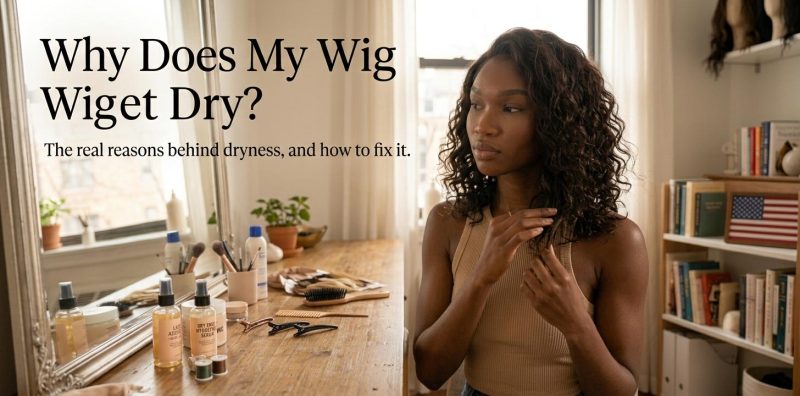
Why Does My Wig Get Dry?
Why does a wig that felt soft and silky when you first opened the package sometimes become rough, tangled, and lifeless after only a few weeks?
This is one of the most frustrating moments for many wig wearers.
You remember that first day.
You take the wig out of the box.
You run your fingers through the hair.
The strands move easily.
The texture feels soft.
The style looks exactly how you imagined it.
Then, slowly, something changes.
The ends start feeling rough.
The hair does not fall the same way.
The curls lose their shape.
The wig feels harder to manage.
And many women immediately think:
“Did I buy the wrong wig?”
But after working with wig wearers for years, I have learned something important:
A dry wig does not always mean a bad wig.
Sometimes it means the wig is asking for a different kind of care.
A wig is not exactly the same as the hair growing from your scalp.
Your natural hair receives oils from your scalp throughout the day.
A wig does not have that natural support system.
Once hair becomes part of a wig, especially a human hair wig, its condition depends on:
- how it is washed;
- how it is styled;
- how it is stored;
- what products are used;
- what environment it experiences.
This is why two women can own similar human hair wigs and have completely different results after several months.
One wig stays soft and flexible.
Another becomes dry and difficult to style.
The difference is usually not luck.
It is understanding the material.
Dryness Is Not Just About Moisture: It Is About Hair Structure
When someone says:
“My wig feels dry.”
They are usually describing several symptoms:
- rough texture;
- dull appearance;
- tangled ends;
- increased frizz;
- less movement;
- difficulty styling.
But dryness is not simply a lack of water.
The deeper issue is whether the hair can hold and maintain moisture.
Human hair has an outer protective layer called the cuticle.
Think of the cuticle like tiny overlapping roof tiles covering each strand.
When those layers are smooth and aligned:
- light reflects evenly;
- the hair feels softer;
- strands move against each other more easily.
When the cuticle becomes damaged:
- the surface becomes rougher;
- strands create more friction;
- moisture escapes faster.
This is why dry wigs often become tangled.
The problem is not only that the hair feels less soft.
The strands are also creating more resistance against each other.
A professional wig consultation usually starts by asking:
“What happened before the dryness appeared?”
Because the timeline tells the story.
Did the dryness begin after:
- coloring?
- frequent heat styling?
- winter weather?
- a new shampoo?
- heavier product use?
The answer usually reveals the real cause.
Human Hair Wig Dryness: Understanding Cuticle Damage
Human hair wigs are loved because they offer styling flexibility.
They can be:
- curled;
- straightened;
- parted differently;
- customized around the hairline.
However, this flexibility also means they respond to treatment.
A human hair wig needs care because the hair is no longer receiving natural oils from the scalp.
How the Hair Cuticle Changes Over Time
Imagine a soft cotton shirt.
When it is new, the fabric feels smooth.
After repeated washing with harsh methods, the fibers become rougher.
Hair behaves similarly.
Healthy cuticles:
- protect the inner structure;
- help retain moisture;
- reduce tangling.
Damaged cuticles:
- lose moisture faster;
- catch against neighboring strands;
- create a rough feeling.
Several daily habits can slowly affect the cuticle.
Excessive Heat Styling
Heat itself is not always the problem.
The problem is repeated stress.
Examples:
- straightening every morning;
- curling the same section multiple times;
- using very high temperatures;
- applying heat without protection.
A human hair wig can handle styling, but it still needs recovery.
Hair that is constantly reshaped eventually loses flexibility.
The signs often appear first at the ends:
- dryness;
- split-looking texture;
- stiffness.
Chemical Processing
Some human hair wigs are processed to create:
- blonde colors;
- highlights;
- specific textures;
- wave patterns.
Processing can affect the internal structure of the hair.
The wig may still look beautiful.
However, processed hair often requires more careful moisture management.
This is similar to natural colored hair.
A blonde hairstyle and a natural dark hairstyle may need different routines.
Incorrect Washing Habits
Many wig problems begin in the bathroom.
Common mistakes include:
Scrubbing the hair aggressively
A wig should not be treated like clothing.
Twisting, squeezing, or rough rubbing increases friction.
Washing too frequently
Overwashing may remove the softness that keeps hair flexible.
Using too much product
Sometimes women see dryness and immediately add more:
- oil;
- cream;
- leave-in conditioner.
But too much product can create buildup.
The hair may feel coated rather than moisturized.
Hair Porosity: Why Some Wigs Become Dry Faster
One of the most useful concepts in wig care is porosity.
Porosity describes how easily hair absorbs and loses moisture.
A simple way to imagine it:
Hair has doors.
Low-porosity hair:
The doors stay mostly closed.
Moisture enters slowly and remains longer.
High-porosity hair:
The doors are more open.
Moisture enters quickly but escapes quickly.
This explains why some wigs feel soft immediately after conditioning but become dry again a few days later.
The hair may not need more product.
It may need better moisture retention.
For women who want to understand why their human hair wigs gradually lose softness, learning about what makes your human hair wig lose its vitality can help identify problems related to daily styling, storage, and maintenance.
Why Wig Ends Become Dry First
Almost every experienced wig wearer notices the same pattern:
“The top still looks good, but the ends look tired.”
This happens because the ends experience the most stress.
They touch:
- clothing;
- coats;
- scarves;
- shoulders;
- pillows.
They also have the longest history of exposure.
A 20-inch wig end has been through more styling, brushing, and environmental contact than the hair near the lace.
That is why professional maintenance usually focuses extra attention on the lower half of the hair.
Not because the entire wig is failing.
Because the oldest part needs more support.

The Difference Between Dryness and Product Buildup
One of the biggest mistakes in wig care is assuming every rough texture means:
“I need more moisture.”
Sometimes the opposite is true.
The wig may actually have too much product sitting on the surface.
Signs of buildup include:
- heavy feeling;
- sticky texture;
- reduced movement;
- difficulty styling.
A wig covered with product residue can feel dry because the hair surface is no longer behaving naturally.
The solution is not adding another layer.
The solution is restoring balance.
A healthy wig routine usually includes:
- gentle cleansing;
- appropriate conditioning;
- protection from friction;
- careful storage.


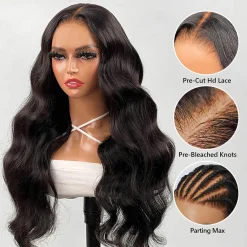
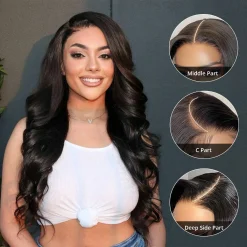
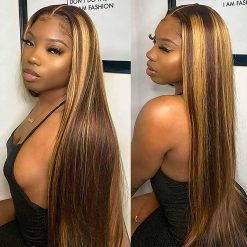
HD lace wigs
Pre-bleached Knots Straight HD Lace Frontal Wig 180% Density 6×5 Pre-cut Lace Wear & Go Glueless Wig

HD lace wigs



HD lace wigs
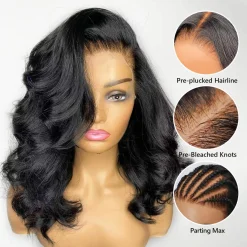
Glueless Straight Short Bob Wigs Brazilian Clear Lace 180% Density Hd Closure Wig Human Hair

HD lace wigs

Why Synthetic Wigs Become Dry and Rough Even Without Real Hair
Many women are surprised when their synthetic wig starts feeling dry.
They think:
“Since it is not real hair, why does it need so much care?”
The answer is the fiber itself.
Synthetic wigs are not made from human hair cuticles.
They are created from manufactured fibers designed to imitate the appearance and movement of hair.
These fibers can look beautiful and natural.
But they respond differently to:
- heat;
- friction;
- cleaning;
- styling products;
- environment.
A synthetic wig does not become dry because it loses natural oils.
It becomes rough because the surface of the fiber changes.
Understanding Synthetic Fiber Surface Damage
A synthetic wig fiber is designed with a specific texture.
For example:
A curly synthetic wig is manufactured to remember its curl pattern.
A straight synthetic wig is designed to maintain smooth movement.
This “memory” is what makes synthetic wigs convenient.
However, the fiber surface can become damaged over time.
Common causes include:
- repeated rubbing against clothing;
- sleeping while wearing the wig;
- incorrect heat exposure;
- using products made for human hair;
- aggressive brushing.
When the outer surface becomes rough, the wig may feel:
- stiff;
- dry;
- tangled;
- less natural.
Why Heat Can Permanently Change Synthetic Hair
This is one of the biggest differences between human hair and synthetic fibers.
Human hair can often recover from some styling stress with proper conditioning.
Synthetic fibers are different.
If a regular synthetic wig is exposed to excessive heat, the fiber structure can change permanently.
Possible signs:
- melted-looking ends;
- uneven texture;
- strange bends;
- loss of original curl pattern.
This is why it is important to know whether your wig is:
- heat-friendly synthetic;
- regular synthetic;
- human hair.
Using the wrong styling method can create damage that cannot be reversed.
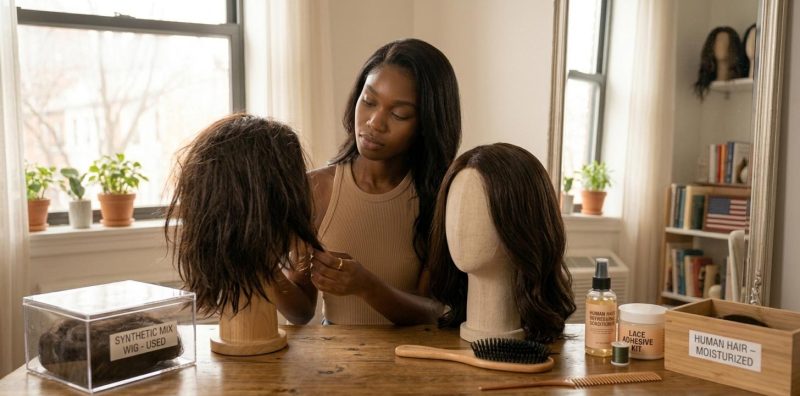
Real Case Study: A Synthetic Wig That Was Mistaken for a “Bad Wig”
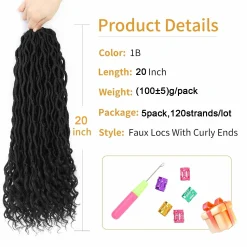
Synthetic Extensions


Synthetic Extensions
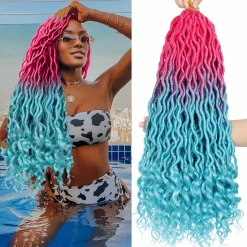
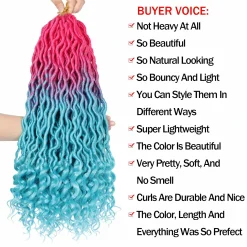
Synthetic Extensions
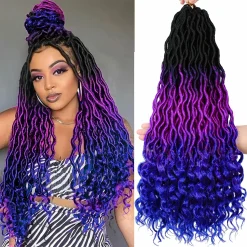
Synthetic Extensions
A customer named Jessica contacted me after wearing her synthetic bob wig for several months.
Her concern was simple:
“It used to look soft and expensive. Now it feels rough and fake.”
She believed the wig had reached the end of its life.
During our conversation, I asked about her routine.
She mentioned three things:
- she brushed it several times every day;
- she sprayed regular human hair serum on it;
- she stored it on a chair overnight.
Those three habits explained almost everything.
The problem was not the original wig quality.
The problem was friction and product buildup.
We changed her routine:
- She reduced unnecessary brushing.
- She switched to products designed for synthetic fibers.
- She stored the wig on a proper stand.
After a few weeks, she told me:
“I stopped fighting the wig. I started caring for the material it was made from.”
That small mindset change made the biggest difference.
Four Hidden Dimensions That Make a Wig Look Dry
When someone says:
“My wig looks dry.”
I never immediately recommend buying a new product.
First, I diagnose the problem.
Because dryness is usually a symptom.
The real cause is often hidden.
Dimension 1: The Fiber Type
The first question:
“What is your wig made from?”
A human hair wig and a synthetic wig require different solutions.
Human Hair Wig
Common causes:
- damaged cuticles;
- heat stress;
- chemical processing;
- moisture imbalance.
Synthetic Wig
Common causes:
- fiber friction;
- heat damage;
- surface wear;
- incorrect products.
The same treatment cannot be applied to both.
A moisturizing mask designed for human hair may not solve synthetic fiber problems.
Dimension 2: Washing and Product Routine
Many women accidentally create dryness during cleaning.
A good wig washing routine should consider:
Water temperature
Very hot water can increase stress on hair fibers.
A gentle temperature is usually safer.
Washing motion
Avoid:
- rubbing aggressively;
- twisting the hair;
- creating unnecessary tangles.
Instead:
- allow water to flow through the hair;
- gently cleanse;
- support the hair length.
Product amount
More product does not always mean more softness.
Too much conditioner or oil can create:
- buildup;
- heaviness;
- reduced movement.
Dimension 3: Styling Frequency
A wig worn occasionally has a different maintenance schedule than a wig worn every day.
Daily styling creates repeated stress.
Examples:
- curling every morning;
- straightening the same area;
- constantly changing the part.
A beautiful wig does not need to be restyled completely every day.
Sometimes the most natural look comes from preserving the original texture.
Dimension 4: Storage and Friction
This is one of the most overlooked causes of dryness.
Many women carefully wash their wigs but forget what happens afterward.
A wig left:
- on a chair;
- inside a drawer;
- exposed to dust;
experiences unnecessary friction.
Better storage:
- wig stand;
- satin bag;
- clean protected space.
Storage is not just organization.
It is part of maintenance.
Wig Dryness Diagnosis Guide: What Is Your Wig Trying To Tell You?
Before buying another product, try identifying the actual cause. Learning how to detangle a wig correctly without damaging the fibers is also an important step because rough handling is one of the most common reasons wigs lose softness.
| Problem You Notice | Possible Cause | What To Try |
| Ends feel rough | Friction or aging ends | Focus care on the lower sections |
| Hair feels coated | Product buildup | Clean residue and simplify products |
| Curls lose shape | Over-brushing or heat | Refresh curls gently |
| Synthetic hair feels stiff | Fiber surface damage | Reduce friction and avoid heat |
| Hairline looks messy | Adhesive or product residue | Clean lace area carefully |
| Wig tangles easily | Rough handling | Detangle slowly from ends upward |
| Bob wig loses shape | Damaged ends or excessive heat | Reshape carefully |
| Long wig feels heavy | Too much product | Reset maintenance routine |
How To Repair a Dry Human Hair Wig Step by Step
A dry human hair wig often needs a reset.
Not punishment.
Not endless products.
A reset.
Step 1: Clean Away Buildup
If the wig feels:
- heavy;
- sticky;
- difficult to style;
start by removing residue.
This creates a cleaner surface so conditioning can work properly.
Step 2: Condition the Areas That Need It Most
The ends usually need more attention than the roots.
Apply conditioning carefully to:
- mid-lengths;
- ends.
Avoid excessive product near:
- lace;
- knots;
- adhesive areas.
Keeping the lace clean helps maintain a natural-looking hairline.
For women wearing lace styles, choosing the right construction also matters. Many users prefer HD lace wigs because the lace design supports a more natural blending experience when properly maintained.
Step 3: Learn Proper Detangling Technique
Detangling is one of the moments when many wigs receive unnecessary damage.
A common mistake:
Starting from the roots.
A better method:
- Hold the hair section gently.
- Start from the ends.
- Slowly move upward.
- Never force through knots.
For women who experience repeated tangling and dryness, learning how to detangle a wig without damaging the fibers can help reduce unnecessary stress on the hair.
Lace Front Wig Dryness: Why The Hairline Changes Everything
A wig can have beautiful lengths and still look unnatural if the front area is not maintained.
The hairline includes:
- lace;
- knots;
- baby hairs;
- adhesive area.
This area receives special attention because it is where people naturally look first.
HD Lace Care and Dry Appearance
HD lace is delicate.
Heavy products around the lace can create:
- residue;
- stiffness;
- visible buildup.
Avoid applying large amounts of:
- oils;
- creams;
- styling products;
directly onto the lace.
The goal is a clean, lightweight appearance.
Adhesion Problems That Look Like Hair Problems
Sometimes women think:
“My wig looks dry.”
But the actual issue is:
- adhesive residue;
- dirty lace;
- uneven installation.
A clean installation creates a better foundation.
Good adhesion is about:
- preparation;
- correct amount;
- proper removal.
Not simply adding more adhesive.
HD lace wigs
Pre-bleached Knots Straight HD Lace Frontal Wig 180% Density 6×5 Pre-cut Lace Wear & Go Glueless Wig
HD lace wigs
HD lace wigs
Glueless Straight Short Bob Wigs Brazilian Clear Lace 180% Density Hd Closure Wig Human Hair
HD lace wigs
How Weather Changes Your Wig’s Moisture Balance
One thing many women do not expect after wearing wigs is this:
The weather becomes part of their wig care routine.
Your wig is not living in a controlled environment.
It experiences:
- humidity;
- dry indoor heating;
- sunlight;
- seasonal temperature changes.
Just like natural hair, different environments can change how the hair behaves.
Humidity: Why Your Wig Can Feel Dry and Frizzy at the Same Time
This seems confusing.
Many women ask:
“How can my wig feel dry when the air is humid?”
The answer is moisture balance.
Humidity does not always create healthy-looking moisture.
When the air contains a lot of moisture, hair can absorb it unevenly.
This may cause:
- frizz;
- expanded curls;
- loss of smoothness;
- reduced definition.
A human hair wig with higher porosity may react more strongly because the cuticle allows moisture to enter and leave more easily.
Instead of adding more products, focus on:
- lightweight conditioning;
- reducing friction;
- protecting the ends.
Winter Dryness: Why Cold Weather Makes Wigs Feel Rough
Winter creates another challenge.
Cold outdoor air combined with indoor heating can create a very dry environment.
Common winter wig problems:
- static;
- rough ends;
- more tangling;
- reduced softness.
This is especially common with:
- long human hair wigs;
- straight textures;
- processed blonde wigs.
A simple winter routine can help:
- store the wig away from dry air;
- reduce unnecessary washing;
- protect the ends;
- avoid excessive heat styling.
For women wearing HD lace styles during colder months, learning proper seasonal maintenance can prevent many texture changes. A helpful guide on tips to care your HD human hair wig in winter can provide additional details for protecting softness during cold weather.

Protective Styles: How To Prevent Dryness in Boho Hair, Passion Twist Hair, and Faux Locs Hair
Not every wig or hair extension style should look perfectly smooth.
Some textures are beautiful because they have movement and personality.
Protective styles are a good example.
The goal is not removing every piece of texture.
The goal is maintaining a healthy appearance.
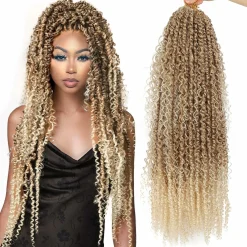
Boho Hair Care: Keeping Texture Soft Without Over-Manipulating
Boho Hair combines different textures:
- braids;
- loose curls;
- flowing pieces.
That combination creates a relaxed, effortless look.
However, the loose sections can become dry faster because they experience more movement.
Helpful habits:
- avoid brushing aggressively;
- separate tangled sections gently;
- refresh only the areas that need attention;
- protect the style while sleeping.
The biggest mistake with Boho Hair is trying to make every strand perfectly controlled.
The beauty comes from softness and natural movement.
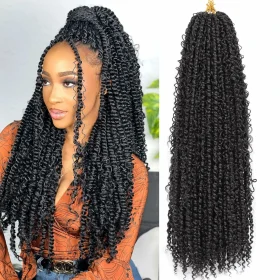
Passion Twist Hair Care: Protecting the Soft Twist Pattern
Passion Twist Hair has a distinctive relaxed texture.
The style depends on:
- softness;
- lightweight movement;
- defined twists.
Too much touching can create unnecessary fuzziness.
Better habits:
- avoid constantly adjusting twists;
- use gentle refreshing methods;
- protect the hair while sleeping.
The goal is maintaining the texture, not forcing it into a completely different style.
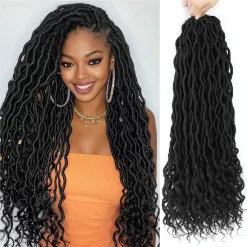
Faux Locs Hair Care: Maintaining Texture Without Overloading Products
Faux Locs Hair is designed to have character.
A common mistake is applying too much product because the hair feels different from straight textures.
Heavy products can create:
- buildup;
- stiffness;
- dull appearance.
Instead:
- keep the scalp area clean;
- reduce unnecessary manipulation;
- protect the locs from excessive friction.
Choosing the Right Wig Can Reduce Dryness Problems
Sometimes the solution is not changing your care routine.
Sometimes the wig type does not match your lifestyle.
A busy professional may need a different option than someone who enjoys daily styling.
Someone who frequently changes hairstyles may prefer human hair.
Someone who wants easier maintenance may prefer a glueless human hair wig.
Understanding different wig constructions helps women choose styles that fit their routines.
For example, women looking for a more flexible daily option may explore glueless wigs because they are designed for easier wear and removal while reducing repeated adhesive exposure.
A Simple Weekly Wig Care Routine
A good routine does not need to feel complicated.
Here is a realistic schedule many wig wearers can follow.
After Each Wear
Check:
- tangles;
- ends;
- hairline area.
Remove:
- loose hairs;
- product residue;
- visible buildup.
Store carefully.
Weekly Check
Ask:
Does the wig feel:
- dry?
- heavy?
- tangled?
- less flexible?
Then adjust.
Do not automatically add more products.
Diagnose first.
Monthly Reset
Depending on how often you wear your wig:
Consider:
- deeper cleaning;
- conditioning treatment;
- checking lace condition;
- reshaping the style.
For women who want to extend the lifespan of their wigs, learning how to maintain human hair HD lace wigs properly can help create a more consistent care routine.
Synthetic Extensions
Synthetic Extensions
Synthetic Extensions
Synthetic Extensions
FAQ: Why Does My Wig Get Dry?
Why does my wig become dry after only a few wears?
A wig can become dry quickly because of:
- friction;
- heat styling;
- product buildup;
- incorrect washing.
The first step is identifying the cause instead of adding random products.
How do I make my dry human hair wig soft again?
Start with:
- Gentle cleansing.
- Targeted conditioning.
- Reduced heat styling.
- Proper storage.
A dry wig often improves when the routine becomes more balanced.
Why does my synthetic wig feel like straw?
Synthetic wigs usually become rough because of:
- fiber wear;
- friction;
- heat damage;
- incorrect products.
Synthetic fibers need protection rather than traditional moisture treatments.
Can I use regular hair products on my wig?
Not always.
Human hair wigs and synthetic wigs react differently.
Some products designed for natural scalp hair may create buildup or heaviness on wigs.
Why are my wig ends dry but the top is fine?
The ends experience:
- more friction;
- more brushing;
- more environmental exposure.
They are usually the oldest and most stressed part of the wig.
Does sleeping in a wig make it dry?
Sleeping in a wig can increase:
- friction;
- tangling;
- texture changes.
If wearing a wig overnight, protection becomes very important.
How often should I wash my wig?
There is no single answer.
It depends on:
- wearing frequency;
- products used;
- climate;
- wig material.
A wig worn daily usually needs more attention than one worn occasionally.
Can a dry wig be repaired?
Sometimes.
If dryness comes from:
- buildup;
- poor maintenance;
- environmental stress;
the wig may improve.
However, permanent synthetic fiber heat damage cannot always be reversed.
A Friend-to-Friend Reminder: Your Wig Is Not Broken, It Is Giving You Information
After years of helping women care for wigs, I have noticed something.
Many women become frustrated because they expect their wig to behave exactly like the first day forever.
But every wig has a story.
The first day is when the hair has:
- no product buildup;
- no daily friction;
- no environmental stress.
After that, your routine shapes the future of the wig.
A human hair wig needs balance.
A synthetic wig needs fiber protection.
A lace front wig needs gentle handling around the hairline.
A textured style needs respect for its natural design.
The goal is not perfection.
The goal is understanding.
A beautiful wig is not one that never changes.
It is one that continues to look like it belongs to you.
Final Thoughts: Understanding Dryness Changes How You Care for Your Wig
A dry wig is one of the most common concerns among wig wearers.
But dryness is not a single problem.
It can come from:
- damaged cuticles;
- high porosity;
- synthetic fiber wear;
- heat;
- weather;
- friction;
- incorrect maintenance.
The solution starts with diagnosis.
Before replacing your wig, ask:
What changed?
What does the material need?
What habit can I improve?
With the right care approach, many wigs can remain soft, comfortable, and natural-looking for much longer.
A wig is not just a beauty accessory.
For many women, it is part of confidence, creativity, and everyday expression.
Taking care of it is simply another way of taking care of yourself.
