
Why Does My Wig Smell Bad? The Hidden Reasons Behind Wig Odor and How to Keep Your Hair Fresh
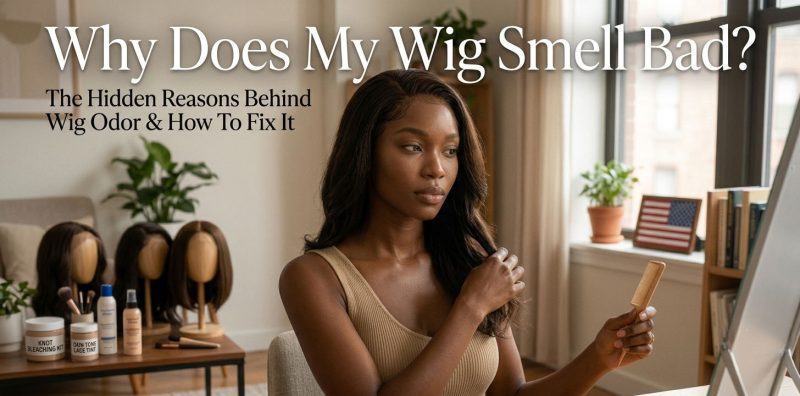
Why Does My Wig Smell Bad?
Introduction: The Strange Moment When Beautiful Hair Suddenly Feels Uncomfortable
Have you ever spent an hour styling your wig perfectly, only to catch a strange smell when you move your hair?
The frustrating part is this:
Sometimes the wig looks completely fine.
The curls are still defined.
The lace still looks natural.
The hair still feels soft.
But something feels wrong.
A small scent appears when you walk outside.
Or when you take your wig off at night.
Or when a friend hugs you and you suddenly wonder:
“Can they smell my wig?”
This is one of those beauty problems people rarely talk about.
We talk about tangling.
We talk about shedding.
We talk about lace blending.
But smell?
Many women quietly deal with it because they feel embarrassed.
After more than ten years working with wigs, lace systems, human hair extensions, braiding hair, Boho Hair, Passion Twist Hair, and protective styles, I have learned something important:
A bad smell does not automatically mean your wig is poor quality.
Many times, it is a conversation between the hair fiber, the products you use, your scalp environment, moisture, and your maintenance habits.
A wig is not just something sitting on your head.
It is a small environment.
And like any environment, it needs balance.
The Four Hidden Reasons Your Wig Starts Smelling
Reason 1: Moisture Gets Trapped Between the Wig Cap and Your Scalp
One of the most common reasons for wig odor is surprisingly simple:
Moisture has nowhere to go.
Think about wearing a jacket on a rainy day.
Even if the jacket is beautiful, warm, and expensive, if air cannot circulate, moisture builds up.
A wig works in a similar way.
Your scalp naturally produces:
- sweat;
- oil;
- natural skin cells;
- product residue.
When these combine under a wig cap, especially for long wear periods, bacteria can multiply.
That creates the familiar “musty” smell.
This happens more often with:
- dense wigs;
- long wigs;
- full lace wigs;
- wigs worn during workouts;
- wigs worn in humid climates.
A human hair wig and a synthetic wig can both experience this issue.
The difference is usually how they respond to moisture.
Human hair behaves more like natural hair.
It absorbs water and product.
Synthetic fibers do not absorb moisture the same way, but oils and products can still sit on the surface.
Reason 2: Product Build-Up Changes the Hair Smell
Many women think:
“If my wig smells bad, I need more fragrance spray.”
Usually, this is not the answer.
Sometimes the problem is not a lack of fragrance.
The problem is too many layers.
Over time, wigs collect:
- leave-in conditioner;
- hair oil;
- edge control;
- mousse;
- styling cream;
- adhesive residue;
- environmental pollution.
Imagine putting perfume on top of dirty clothes.
The perfume does not remove the source.
It mixes with it.
The same thing happens with wigs.
A fresh wig routine is usually less about adding more products and more about removing old residue correctly.
For example:
A water wave wig may need different care from a straight HD lace wig.
Curly textures have more bends in the fiber, so products can remain trapped inside the pattern.
Straight hair allows easier distribution and cleaning.
This is why texture matters.
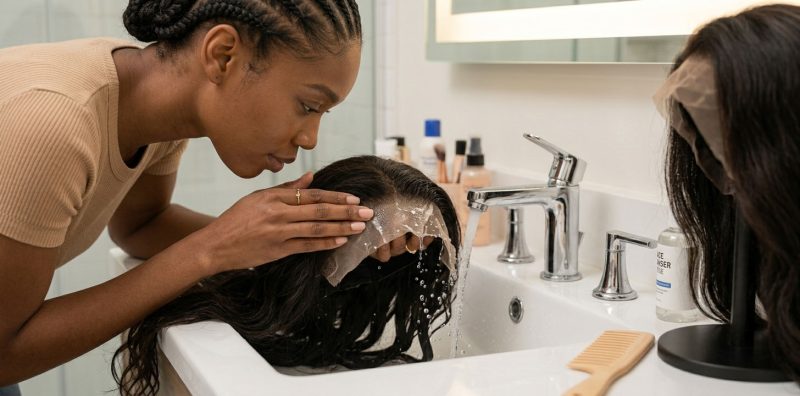
Real Case Study: Two Different Wig Smell Problems
Case One: Maya’s Human Hair Lace Front Wig Smelled “Wet” After Workouts
Maya is a 32-year-old professional living in Florida.
She wore a human hair lace front wig almost every day.
Her routine was:
Morning:
- install wig;
- style curls;
- go to work.
Evening:
- gym workout;
- dinner;
- sleep.
After several weeks, she noticed the wig had a damp towel smell.
Her first thought was:
“The hair must be bad.”
But after checking her routine, the real problem was different.
The wig was not drying completely between wears.
Her scalp was producing sweat during workouts.
The inside cap stayed slightly damp overnight.
The solution was simple:
- Reduce wearing time after heavy sweating.
- Allow the wig cap to fully air dry.
- Clean adhesive residue regularly.
- Avoid sleeping with a damp wig.
After changing these habits, the odor disappeared.
The hair itself was not the problem.
The environment was.
Case Two: Jasmine’s Synthetic Wig Developed a Chemical Smell
Synthetic Extensions


Synthetic Extensions

Synthetic Extensions
Synthetic Extensions
Jasmine purchased a synthetic wig for occasional events.
At first, she noticed a factory-like smell.
This situation is different.
New synthetic wigs can sometimes have temporary manufacturing odors from:
- packaging materials;
- fiber processing;
- storage conditions.
A gentle cleaning routine can help.
But the method matters.
Synthetic wigs cannot always tolerate the same heat and products as human hair wigs.
High heat can damage synthetic fibers.
Heavy oils can make synthetic hair feel coated.
For synthetic wig care, always consider the fiber type first.
How Different Wig Types Handle Odor
Human Hair Wig
Human hair wigs require routines similar to natural hair.
They respond well to:
- gentle shampoo;
- conditioning;
- proper drying;
- careful styling.
However, because human hair can absorb oils and moisture, neglecting washing schedules can create odor.
A quality human hair wig still needs maintenance.
Natural material does not mean maintenance-free.
Synthetic Wig
Synthetic wigs are convenient, but they have different rules.
Avoid:
- heavy oils;
- excessive heat;
- strong chemical products.
The fiber surface can hold onto smells from:
- smoke;
- perfume;
- cooking odors.
Cleaning frequency depends on usage.
A synthetic wig worn occasionally needs different care from one worn every day.
Lace Front Wig and HD Lace Wig
Lace systems create beautiful hairlines because the lace allows a scalp-like appearance.
But the lace area is also where:
- adhesive;
- sweat;
- oils;
often collect.
HD lace is especially delicate because the material is thinner.
Gentle cleaning is important.
Avoid aggressively rubbing the lace knots.
For women who want more information about maintaining HD lace systems, this guide on human hair HD lace wig care can help explain the relationship between cleaning, storage, and longevity:
The Four “Smell Sources” Most Wig Wearers Miss
When someone tells me:
“My wig smells bad even after I washed it,”
I usually ask a few questions before recommending anything.
Because odor has a source.
And finding the source is much more effective than covering it.
A wig can smell because of the hair.
It can smell because of the cap.
It can smell because of products.
It can even smell because of where it is stored.
Let’s look closer.
Source 1: The Wig Cap Is Holding More Than Hair
Many women focus only on the visible hair.
They brush the curls.
They smooth the ends.
They style the baby hairs.
But the inside of the wig often tells the real story.
The wig cap touches:
- your scalp;
- your natural hair underneath;
- adhesive products;
- sweat;
- oils.
The cap works almost like a fabric collar on a favorite shirt.
Even if the outside looks clean, the area touching your skin collects the things your body naturally releases.
This is especially common with:
- lace front wigs worn several days continuously;
- glueless wigs worn during hot weather;
- wigs installed with strong adhesive;
- protective styles underneath that are not fully dry.
A common mistake is washing only the hair strands.
The inside construction needs attention too.
For lace front wigs, gently cleaning the lace and cap area helps prevent odor from becoming trapped.
The process should be slow.
Do not aggressively scrub.
Lace is designed to be delicate.
Source 2: Your Natural Hair Underneath May Be the Real Reason
This is something many people overlook.
A wig does not exist separately from your own hair.
Your natural hair underneath affects the whole environment.
For example:
A woman with thick braids underneath may experience more heat and less airflow.
A woman with freshly moisturized natural hair may create more product transfer.
A woman wearing braiding hair or protective styles such as Boho Hair, Passion Twist Hair, or Faux Locs hair may also need to pay attention to drying time.
Moisture trapped inside a protective style can create an unpleasant smell.
A good wig routine begins before the wig goes on.
Before installation:
- make sure your natural hair is completely dry;
- avoid heavy oils directly on the scalp;
- keep braids flat and clean;
- allow airflow whenever possible.
The wig is only one part of the system.

A Step-by-Step Wig Odor Reset Routine
Sometimes a wig does not need replacing.
It needs a reset.
Here is the maintenance sequence I usually recommend.
Step 1: Remove Product Residue First
Before washing, gently inspect the wig.
Look for:
- adhesive around the lace;
- sticky residue near the hairline;
- heavy oil around the roots;
- styling product buildup.
Do not immediately soak everything.
Removing buildup first makes washing more effective.
For adhesive areas:
Use a suitable adhesive remover.
Allow the product time to soften the residue.
Avoid pulling.
A stretched lace edge can later affect how naturally the wig sits.
Step 2: Wash According to Hair Type
Different wigs need different approaches.
Human Hair Wig Washing
Human hair can usually handle a routine similar to natural hair.
A gentle sequence:
- Detangle from ends upward.
- Wet hair with lukewarm water.
- Apply sulfate-free shampoo.
- Clean mainly where buildup exists.
- Rinse completely.
- Apply conditioner from mid-length to ends.
- Allow proper drying.
Avoid rubbing the hair aggressively.
Hair knots are more likely when the cuticle layers become rough.
Synthetic Wig Washing
Synthetic fibers need more caution.
Avoid:
- boiling water;
- high heat tools;
- heavy oils.
Synthetic fibers can hold onto odors differently.
A mild cleanser and proper drying are usually better.
Curly and Wave Textures
Curly wigs, including water wave and Burmese Curl-inspired textures, need special attention.
Why?
Because the bends create more places for:
- conditioner;
- styling foam;
- oils;
to remain.
The mistake many people make:
They add more product to revive curls.
Then the hair becomes coated.
A better approach:
Clean buildup first.
Refresh second.
Step 3: Dry Completely Before Storage
This step sounds obvious.
But it is one of the most common causes of odor.
Many women wash their wig at night.
Then they place it away while it is still slightly damp.
The next day:
The wig smells different.
Not dirty.
Not damaged.
Just trapped moisture.
A wig should be completely dry before storage.
For lace wigs:
- place on a wig stand;
- keep lace stretched naturally;
- avoid closed plastic bags while damp;
- allow ventilation.
Think about storing a towel.
You would never fold a wet towel and expect it to smell fresh.
A wig follows the same rule.
Four “Giveaway Signs” That Reveal Why Your Wig Smells
Sometimes the smell itself gives clues.
Let’s break down four common situations.
Sign 1: Sour or Musty Smell
Usually connected with:
- trapped moisture;
- sweat;
- incomplete drying.
Common solution:
Improve airflow and drying habits.
Sign 2: Sweet Chemical Smell
Often appears with:
- new synthetic wigs;
- packaging;
- manufacturing residue.
Solution:
Gentle cleaning and ventilation.
Do not immediately apply perfume.
Sign 3: Old Product Smell Near Hairline
Usually caused by:
- adhesive residue;
- edge control;
- styling products.
The hair may smell fine.
The lace area does not.
Focus cleaning around the installation area.
Sign 4: Smoke or Food Odor
Hair fibers easily collect surrounding smells.
Especially:
- restaurants;
- cooking areas;
- smoke exposure.
This does not mean the wig is ruined.
It means the hair needs refreshing.
Synthetic Extensions
Synthetic Extensions
Synthetic Extensions
Synthetic Extensions
How to Prevent Wig Odor Before It Starts
The easiest smell problem to solve is the one that never develops.
A simple routine can make a big difference.
Create a Wig Rotation System
Many women own several wigs but wear only one.
That one wig receives:
- daily heat;
- daily products;
- daily moisture.
Rotating wigs gives each piece time to recover.
A wig deserves rest.
Just like your favorite pair of shoes.
Keep Your Wig Tools Clean
Sometimes the smell is not coming from the wig.
It is coming from the tools.
Clean regularly:
- combs;
- brushes;
- wig caps;
- storage stands.
A dirty brush transfers old oils back into clean hair.
Pay Attention to Adhesion Products
Adhesion products help create secure installations.
But they also need maintenance.
Old adhesive can collect:
- dust;
- oils;
- sweat.
A clean hairline usually starts with a clean foundation.
How MsAloe’s Wig Collection Fits Different Maintenance Needs
Different lifestyles require different wig choices.
Someone wearing a wig occasionally for events may prefer a different construction from someone wearing one every weekday.
For women looking through different wig options, exploring a collection of lace front wigs can help compare different constructions, textures, and wearing styles:
https://www.msaloe.com/category/wigs
The goal is not finding a wig that never needs care.
Every hair system needs maintenance.
The goal is choosing a style that fits your routine.
Real-Life Cases: Why Two Women With Similar Wigs Had Completely Different Experiences
Sometimes wig problems become easier to understand when we look at real situations.
The following examples are based on common consultations I have encountered with wig wearers. Names and personal details have been adjusted for privacy.
Case Study 1: Maya’s “New Wig Smells Like It’s Been Stored Forever” Problem
Maya was a 29-year-old professional living in Atlanta.
She purchased a new human hair wig because she wanted something easy for busy mornings.
When the package arrived, she loved the texture.
The density looked beautiful.
The lace looked natural.
But after opening the box, she noticed a noticeable factory-like smell.
Her first thought was:
“Did I receive a bad wig?”
This is actually a very common misunderstanding.
A new wig can sometimes carry odors from:
- packaging materials;
- storage conditions;
- transportation;
- processing products used during manufacturing.
The mistake Maya made was spraying perfume directly onto the hair.
This temporarily covered the smell but created another problem.
The fragrance mixed with the original odor and became stronger.
The better approach:
Maya’s Reset Sequence:
Step 1: Air the wig out
She placed the wig on a wig stand near an open window for 24–48 hours.
This allowed trapped smells to release naturally.
Step 2: Perform a gentle wash
She used lukewarm water and a mild shampoo.
The goal was not aggressive cleaning.
The goal was removing surface residue.
Step 3: Deep dry
She allowed the wig to dry completely before wearing it.
After this routine, the smell became much less noticeable.
The lesson:
A new wig smell does not always mean a quality problem.
Sometimes it simply means the wig needs preparation before its first wear.
Case Study 2: Jasmine’s Lace Front Wig Developed an Odor After Two Weeks
Jasmine loved wearing lace front wigs.
She worked long hours and preferred an installation that lasted.
Her routine:
- install wig;
- wear it daily;
- refresh edges;
- add styling products.
After about two weeks, she noticed something unusual.
The hair itself smelled fine.
But around the hairline, there was a sour smell.
When examining the wig, the issue became clear.
The odor was concentrated around:
- adhesive areas;
- lace edge;
- cap section touching the scalp.
The hair was not the problem.
The installation area was.
The correction:
Jasmine changed her routine.
Instead of repeatedly adding more adhesive:
She removed old residue completely.
Cleaned the lace.
Allowed the area to dry.
Then reinstalled.
The result:
The wig felt fresher and more comfortable.
The lesson:
Many wig odor problems happen because maintenance is focused on the hair while ignoring the foundation.
The Connection Between Wig Construction and Odor
Not every wig behaves the same way.
Construction affects:
- airflow;
- moisture retention;
- cleaning difficulty;
- wearing comfort.
Understanding the differences helps you choose better.
Lace Front Wig vs Full Cap Wig
A lace front wig creates a natural-looking hairline because the lace mimics the appearance of scalp.
But the lace area also requires careful maintenance.
Why?
Because the front area often receives:
- adhesive;
- sweat;
- styling products.
A full cap wig may have different airflow characteristics depending on construction.
Neither option is automatically better.
The question is:
“How does this match my lifestyle?”
Someone wearing a wig occasionally for dinners may have different needs from someone wearing one every day for work.
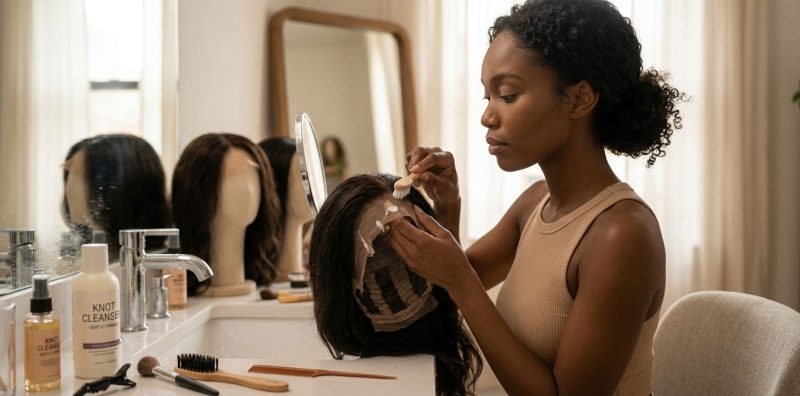
HD Lace and Odor Management
HD lace is designed to be very thin and blend naturally with the scalp.
Because it is delicate, cleaning requires patience.
Avoid:
- harsh scrubbing;
- strong chemicals;
- aggressive brushing near knots.
When cleaning HD lace:
Use gentle pressure.
Focus on dissolving residue rather than pulling.
A good rule:
Treat lace like silk fabric.
You clean it because you value it, not because you want to fight with it.
The Difference Between Covering Odor and Solving Odor
There is a small habit many people develop:
They try to hide smells instead of understanding them.
Perfume.
Hair spray.
Fragrance mist.
These products can be useful occasionally.
But they are not a cleaning method.
It is similar to spraying perfume on a jacket after wearing it for weeks.
The fragrance changes.
The buildup remains.
Healthy wig care usually follows this order:
Clean → Rinse → Dry → Store → Refresh
Not:
Smell → Spray → Ignore
A Weekly Wig Maintenance Schedule That Actually Works
Many women avoid wig maintenance because they imagine it takes hours.
It does not need to.
A simple schedule works better.
Daily: 3-Minute Check
After wearing your wig:
- remove loose hairs gently;
- check the hairline area;
- allow airflow before storage.
Small actions prevent bigger problems.
Weekly: Refresh Routine
Depending on wear frequency:
- inspect lace;
- clean product buildup;
- brush carefully;
- check dryness.
If you wear your wig every day, weekly maintenance becomes more important.
Monthly: Deep Care
A deeper routine may include:
- full wash;
- conditioning;
- checking cap condition;
- cleaning storage tools.
This is especially helpful for human hair wigs.


HD lace wigs
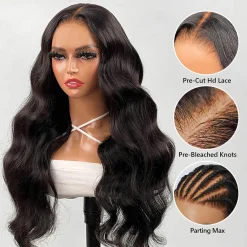
Pre-bleached Knots Straight HD Lace Frontal Wig 180% Density 6×5 Pre-cut Lace Wear & Go Glueless Wig

HD lace wigs



HD lace wigs
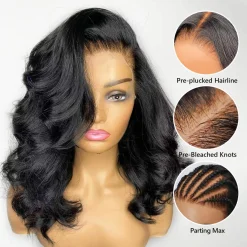
Glueless Straight Short Bob Wigs Brazilian Clear Lace 180% Density Hd Closure Wig Human Hair

HD lace wigs

A Friendly Conversation About Wig Smell: FAQ
Sometimes the simplest questions are the ones women hesitate to ask.
Let’s answer them like we would during a relaxed beauty conversation.
Why does my wig smell worse after washing?
Usually one of three things happened:
- The wig was not rinsed completely.
- Product residue remained.
- The wig was stored before fully drying.
A clean wig should smell neutral, not heavily scented.
Can I use perfume on my wig?
Yes, but lightly.
Remember:
Human hair and synthetic fibers can absorb surrounding scents.
Too much fragrance can become difficult to remove.
Why does my wig smell only when I wear it?
This usually means the odor appears when:
- body heat increases;
- moisture activates trapped residue;
- airflow decreases.
Check the cap and installation area.
How often should I wash my wig?
There is no single schedule.
It depends on:
- how often you wear it;
- your environment;
- styling products;
- sweating level.
A wig worn once a month does not need the same routine as a daily wig.
Can a bad smell mean my wig is damaged?
Not always.
Many odors come from buildup, not damage.
Before deciding a wig is unusable:
Try a proper reset routine.
A Gentle Wig Care Reminder From One Beauty Lover to Another
There is something very personal about hair.
For many women, a wig is not only about changing appearance.
It can be about confidence during a transition.
It can be about trying a new style.
It can simply be about making mornings easier.
That is why small maintenance habits matter.
A wig does not need perfection.
It needs understanding.
Think of it like a favorite sweater.
You do not throw it away because it needs washing.
You learn how to care for the fabric.
The same idea applies to wigs.
Clean the foundation.
Respect the materials.
Give the hair time to breathe.
And pay attention to what your wig is telling you.
Sometimes a smell is not a sign that something is wrong.
Sometimes it is simply your wig asking for a little care.
For readers who want to learn more about common wig maintenance mistakes and everyday care routines, related educational guides on wig care can also help build a more consistent routine:
