Why Does My Wig Look Shiny? The Real Reasons Your Wig Looks Artificial and How to Make It Blend Naturally
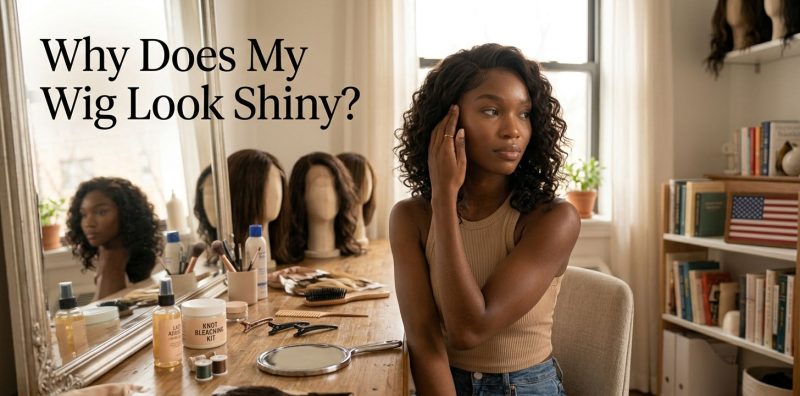
The Wig That Looks Expensive Until It Catches the Light
Have you ever put on a new wig, looked in the mirror, and thought, “Something feels off”?
The color is beautiful.
The length is exactly what you wanted.
The style looks amazing from the front.
But then you step near a window.
Suddenly, your hair has a strange reflection. It catches the sunlight differently from your natural hair. Instead of looking soft and touchable, it looks almost like it has a thin layer of plastic sitting on top.
And the confusing part?
Sometimes it happens with a wig that was not cheap.
A woman once told me during a wig consultation, “I thought spending more money would automatically make my wig look real. Why does my $300 wig look shinier than my friend’s inexpensive one?”
That question stayed with me because it reveals something many wig wearers experience but rarely talk about.
A natural-looking wig is not only about the price, the length, or whether it is labeled as human hair.
It is about understanding how real hair reflects light.
Human hair has tiny irregularities. Each strand has a cuticle layer, small bends, natural oils, and different angles that scatter light. This creates a soft glow.
A wig that looks overly shiny usually reflects light in one strong direction. Your eyes recognize that pattern immediately.
It is similar to the difference between a silk blouse and a polyester costume. Both can be smooth. Both can be beautiful. But one interacts with light naturally, while the other announces its material.
The good news?
A shiny wig does not always mean a bad wig.
Sometimes the problem is the fiber.
Sometimes it is the coating.
Sometimes it is the styling products.
Sometimes it is even the lighting in your room.
After more than ten years working with wigs, I have learned that the “fake wig look” is usually caused by small details working together.
Today, we are going to look closely at why wigs become shiny, how professional wig wearers reduce artificial shine, and how to make your wig look like it belongs with you.

Why Does My Wig Look Shiny? Understanding the Science Behind Wig Shine
Before fixing the problem, it helps to understand what creates the shine.
Many people assume:
“Shiny means synthetic.”
That is not always true.
A high-quality human hair wig can also look shiny if it is freshly conditioned, overloaded with products, or exposed to certain lighting.
The real question is:
What kind of shine are we seeing?
There are three common types.
1. Synthetic Fiber Shine: When the Material Reflects Too Much Light
Synthetic wigs are made from manufactured fibers such as:
- Kanekalon
- Toyokalon
- Heat-resistant synthetic fibers
- Other polymer-based materials
These fibers are designed to imitate human hair, but the surface structure is different.
Human hair:
- has uneven texture
- absorbs and reflects light differently
- contains natural movement
Synthetic fibers:
- are smoother
- have a more uniform surface
- reflect light more directly
This is why a brand-new synthetic wig may look “too perfect.”
The strands can appear:
- overly glossy
- mirror-like under flash photography
- bright under indoor LED lights
- unrealistic around the hairline
This does not mean synthetic wigs cannot look good.
Many women choose synthetic wigs because they are:
- affordable
- easy to maintain
- already styled
- convenient for daily wear
The key is choosing the right texture.
For example:
A straight synthetic wig often shows shine more easily because the flat surface reflects light in a clean line.
A curly or textured synthetic style may hide shine better because the curls break up reflection.
If someone tells me:
“I want a synthetic wig that looks natural for everyday office wear,”
I usually recommend looking for:
- realistic density
- matte fiber finish
- natural layering
- less uniform strands
A very thick, perfectly straight synthetic wig can sometimes create the “helmet effect” because the light reflects across hundreds of identical strands.
2. Product Buildup: When Your Wig Care Routine Creates the Problem
This is one of the most common reasons.
Many wig owners are surprised when I tell them:
“Your wig may not be shiny because it is cheap. It may be shiny because it is too clean.”
This sounds strange, but think about your own hair.
After washing your natural hair, do you immediately apply:
- leave-in conditioner?
- hair oil?
- serum?
- shine spray?
- smoothing cream?
These products create softness, but on wigs they can behave differently.
A wig does not produce scalp oil the same way natural hair does.
When too much product sits on the strands, it creates a coating.
Instead of light passing through and scattering naturally, it bounces off the surface.
Common causes include:
Silicone-heavy products
Ingredients such as:
- dimethicone
- amodimethicone
- cyclopentasiloxane
can make hair feel silky.
For natural hair, this may be helpful.
For wigs, especially synthetic wigs, too much silicone can create a glassy appearance.
Too much wig spray
Some wig sprays are designed for stage performance or photography.
They create:
- stronger hold
- smoother appearance
- extra reflection
But daily wear usually needs a softer finish.
Hair oil applied like natural hair
A human hair wig can benefit from small amounts of lightweight oils.
However:
Three drops of argan oil may create softness.
Ten drops may create a greasy reflection.
The difference is surprisingly small.
Real Case Study #1: Maria’s “Luxury Wig” That Looked Fake Outdoors
Maria, a 34-year-old woman living in Texas, came to me after purchasing her first human hair lace front wig.
She loved it indoors.
The lace disappeared beautifully.
The density looked natural.
The waves framed her face perfectly.
But during a family barbecue, she noticed something embarrassing.
“When the sun hit my hair, everyone’s hair looked soft. Mine looked like it had been polished.”
She originally thought the problem was the wig quality.
After examining it, the issue was not the hair itself.
The problem was three things:
1. Too much finishing serum
She applied a smoothing serum every morning.
The product was designed for natural hair but created a reflective layer on the wig.
2. Hair strands were too uniform
The wig was freshly styled and every wave pattern was identical.
Real hair has small imperfections.
Those imperfections are what make it believable.
3. The lace area needed adjustment
The wig itself was good, but the hairline looked slightly separated from her skin.
The eye interpreted the combination:
shiny hair + visible lace edge = artificial appearance.
We adjusted the routine:
- washed away excess product
- lightly reshaped the waves
- used a small amount of powder near the part area
- softened the hairline
The transformation was not dramatic.
That is the interesting part.
A realistic wig often does not need a complete replacement.
It needs small corrections.
For women searching for a more natural lace appearance, understanding the difference between lace materials can help. Many wearers find that learning about options such as HD lace and transparent lace makes it easier to choose a wig that blends better with their skin tone and lighting environment. A detailed explanation of choosing lace materials can be found in this guide about how to choose a HD lace wig.


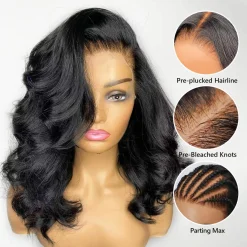
HD lace wigs
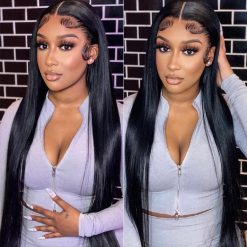
Glueless Straight Short Bob Wigs Brazilian Clear Lace 180% Density Hd Closure Wig Human Hair

HD lace wigs
The Four Details That Make a Wig Look Shiny and Artificial
There is a little secret that many experienced wig wearers eventually discover:
People usually do not notice a wig because it is a wig.
They notice it because one small detail does not match the way real hair behaves.
A wig can have beautiful density, expensive hair, and a well-installed lace front. But if the light reflection, movement, or hairline feels unnatural, the brain catches it.
When I evaluate why a wig looks shiny, I usually examine four “giveaway” areas.
These are the same details I look at during wig consultations.
1. The Reflection Pattern: Real Hair Has Soft Shine, Not Mirror Shine
The first giveaway is not actually the amount of shine.
It is how the shine moves.
Natural hair does reflect light.
Healthy hair can look glossy after conditioning. A fresh blowout can have a beautiful glow.
But natural hair has thousands of tiny differences between strands.
Some strands:
- bend slightly left
- curl differently
- absorb more light
- reflect light at different angles
This creates a soft, scattered reflection.
A wig that looks artificial often has what I call “surface shine.”
The entire hairstyle reflects light in the same way.
Imagine a group of people walking outside wearing different fabrics.
A cotton shirt absorbs and softens sunlight.
A plastic raincoat creates a strong reflection.
Synthetic fiber can sometimes behave more like the second example.
How to Test Your Wig’s Shine at Home
Try this simple test.
Stand near a window during daytime.
Do not use bathroom lighting because many LED bulbs create unnatural reflections.
Look at your wig from three angles:
Front view
Ask:
Does the hair look soft?
Or does the top layer look coated?
Side view
Move your head slowly.
Does the shine move naturally?
Or does the whole wig flash like one smooth surface?
Camera flash test
Take a photo with flash.
Flash photography is not always flattering, but it reveals strong artificial reflection.
If your wig suddenly looks much shinier in photos than in person, the problem is often surface reflection.
2. Hair Density and Layering: Too Much Hair Creates a Plastic Helmet Effect
One of the biggest misunderstandings about wigs is:
“More hair equals more luxury.”
Not always.
Real human hair grows from the scalp with natural distribution.
The crown area is not identical to the ends.
The front hairline is usually lighter.
The middle has movement.
The ends become thinner.
A wig with excessive density can create a heavy reflection because there is simply too much hair sitting together.
Think about a forest.
A natural forest has different heights, spaces, and movement.
A field of identical artificial plants looks different because everything is too consistent.
The same principle applies to wigs.
A very dense wig can create:
- thick shiny blocks of hair
- unnatural movement
- heavy-looking bangs
- difficulty blending with your face
This is especially common with:
- straight wigs
- long wigs
- blunt-cut bob wigs
Short bob wigs are a perfect example.
A bob wig should have shape.
It should frame the jawline.
But if the density is too high, the ends can become too full and reflect light like a solid surface.
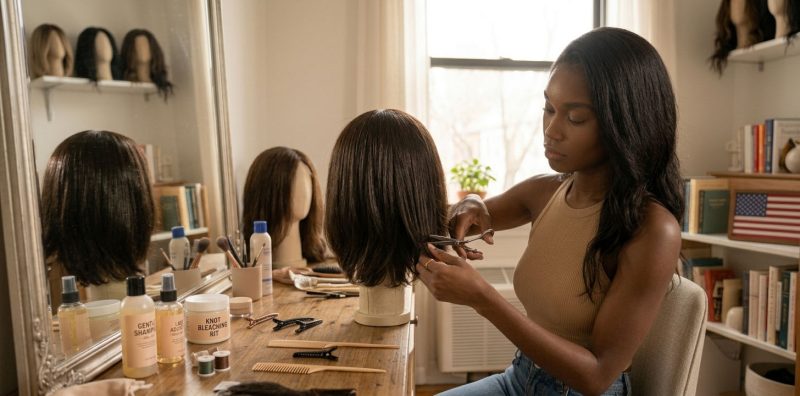
This is why some women search for solutions to bulky short wigs. Small adjustments in density, trimming, and styling can make a huge difference. You can also read more about this issue in this guide about why does my bob wig look bulky.
3. The Hairline Problem: Shine Becomes More Noticeable When the Wig Does Not Blend
A shiny wig is not always caused by the hair.
Sometimes the hairline creates the illusion.
Why?
Because our eyes judge realism by comparing the wig’s front area with the skin.
The hairline is where the brain asks:
“Does this hair actually grow here?”
A realistic lace front wig needs several elements working together:
- lace color
- lace transparency
- knot appearance
- baby hair placement
- density near the forehead
- adhesion method
If the hairline is too perfect, too thick, or too separated from the skin, even beautiful hair can appear artificial.
Why HD Lace Helps Reduce the “Wig Line” Effect
HD lace is designed with a thinner, more delicate structure.
Its purpose is not to make hair less shiny.
Its purpose is to make the transition between:
skin → lace → hair
less noticeable.
When the lace disappears properly, the eye focuses on the hairstyle instead of the construction.
However, HD lace still requires proper installation.
Common mistakes include:
Too much adhesive
Excess glue can create a visible shiny line.
Incorrect lace color
A lace shade that does not match your skin can create contrast.
Hairline too dense
A thick straight line of hair rarely looks natural.
Many beginners think bleaching knots is the only solution.
It is not.
Knots, lace, density, and placement all work together.
For women learning lace installation, understanding secure application techniques can prevent many common mistakes. A detailed guide on lace installation methods can be found here: how to install your lace front wigs.


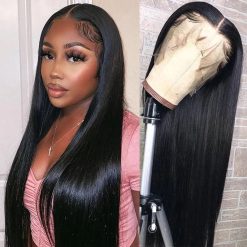
HD lace wigs
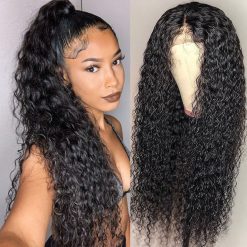
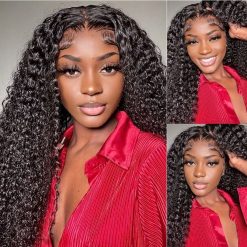
Pre-bleached Knots Straight HD Lace Frontal Wig 180% Density 6×5 Pre-cut Lace Wear & Go Glueless Wig

4. Styling Habits: The Products That Make Your Wig Too Glossy
Many women accidentally create shine while trying to create softness.
This happens because wig care is different from natural hair care.
Your natural hair receives:
- scalp oils
- natural moisture balance
- daily movement
A wig does not.
Especially synthetic wigs.
They need lighter maintenance.
The Correct Way to Reduce Wig Shine Step by Step
Here is the routine I usually recommend.
Step 1: Remove excess surface coating
If your wig looks shiny immediately after purchase:
Do not panic.
Sometimes manufacturers apply a protective coating.
For synthetic wigs:
- Fill a basin with cool water.
- Add a small amount of wig shampoo.
- Gently soak for 5–10 minutes.
- Do not rub aggressively.
- Rinse with cool water.
- Let it air dry naturally.
Avoid:
- hot water
- strong shampoo
- rough towel drying
Heat can permanently change synthetic fibers.
Step 2: Use powder carefully
A small amount of translucent powder can reduce excessive reflection.
Apply:
- near the part area
- around the crown
- lightly on the top layers
Do not cover the entire wig.
Too much powder creates dullness and residue.
Step 3: Break up perfect texture
This is one of the tricks professional stylists use.
Fresh-out-of-the-box hair often looks too organized.
Real hair is not perfectly arranged.
Try:
- separating a few strands around the face
- adding slight bends with heat-safe tools if appropriate
- changing the part position
- trimming overly perfect ends
Small irregularities create realism.
Real Case Study #2: Jasmine’s Synthetic Wig Transformation
Jasmine, a 27-year-old college student in California, purchased a synthetic lace front wig for daily wear.
She loved the convenience.
She could put it on quickly before class.
But she stopped wearing it after two weeks.
Her reason?
“It looks like everyone knows it’s a wig.”
When she brought it to me, the wig itself was not the problem.
The style actually suited her.
The issues were:
Problem one: Factory shine
The synthetic fibers had a strong reflective finish.
Problem two: Too much density around the crown
The top looked flat and heavy.
Problem three: No texture variation
Every strand was positioned exactly the same.
We made three adjustments:
- Washed the wig using a gentle synthetic wig cleaning method.
- Reduced the shine using light powder application.
- Added natural separation and movement around the face.
After the adjustment, Jasmine said something interesting:
“My friends didn’t say my wig looked different. They just said my hair looked better.”
That is usually the goal.
The best wig compliment is not:
“Your wig looks amazing.”
It is:
“Your hair looks beautiful.”

Human Hair Wig vs Synthetic Wig: Which One Is More Likely to Look Shiny?
When someone tells me:
“I want a wig that looks natural. Should I buy human hair?”
My answer is usually:
“Human hair can help, but it is not a magic solution.”
This is one of the biggest misunderstandings in the wig world.
A human hair wig can look incredibly natural because the fiber behaves like biological hair.
It can:
- absorb moisture differently
- respond to heat styling
- move naturally
- reflect light in a softer way
But human hair can still look shiny if:
- it has too much silicone coating
- it has excessive product buildup
- it is styled too flat
- the density is too high
- the texture does not match the wearer’s natural appearance
On the other hand, a synthetic wig can look surprisingly realistic when:
- the fiber has a matte finish
- the density is balanced
- the style has natural movement
- the hairline is well designed
The question is not simply:
“Human hair or synthetic?”
The better question is:
“What kind of reflection does this hair create?”
Human Hair Wig Shine: Soft Glow vs Over-Conditioned Shine
Human hair wigs are popular because they behave similarly to natural hair.
A quality human hair wig contains real cuticle structure.
The cuticle layer affects:
- how light reflects
- how smooth the hair feels
- how the hair responds after washing
Healthy human hair usually creates a soft glow.
But there is a difference between:
healthy shine
and
surface shine
Healthy shine:
- appears differently from different angles
- looks softer outdoors
- moves naturally
- does not overpower the face
Surface shine:
- looks like a coating
- appears stronger under flash
- stays in one direction
- makes strands look artificial
This is why some brand-new wigs actually need a little “wearing in.”
Real hair becomes more natural as it develops slight irregularity.
A completely untouched wig can sometimes look too polished.
Synthetic Wig Shine: How to Make Synthetic Hair Look More Natural
Synthetic wigs require a different mindset.
You are not trying to make them behave exactly like human hair.
You are trying to make them look believable.
A few professional techniques:
Choose the right texture
Straight synthetic hair reflects the most light.
Curly, wavy, and textured styles often hide shine better because the curves interrupt reflection.
For example:
A straight bob wig with a sharp, perfectly smooth surface may show more shine than a loose wave style.
That does not mean one is better.
It depends on your lifestyle.
Someone working in an office may prefer:
- shoulder-length waves
- natural layers
- medium density
Someone attending events may enjoy:
- sleek straight styles
- bold colors
- polished finishes
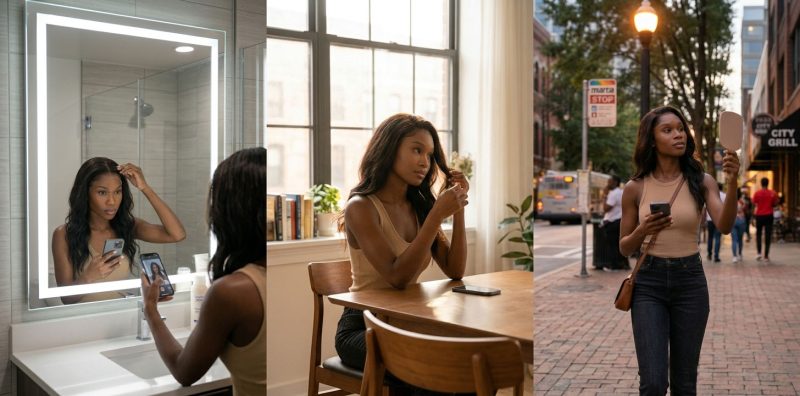
Why Some Wigs Look Shiny Under Different Lighting
Many women tell me:
“My wig looks fine at home but strange outside.”
This happens because different lights reveal different problems.
A bathroom mirror and natural sunlight are completely different environments.
Indoor LED Lighting
Modern homes often use LED bulbs.
They create concentrated light.
A wig with smooth fibers may reflect this strongly.
Common signs:
- bright crown area
- shiny part line
- noticeable top layer reflection
Solution:
Move away from direct overhead lighting and check your wig near a window.
Sunlight
Sunlight is the most honest test.
Outdoor light reveals:
- fiber texture
- density
- movement
- product buildup
This is why some wigs that look perfect in selfies appear different during daytime activities.
Camera Flash
Flash photography exaggerates shine.
Even natural hair can appear glossy with flash.
The goal is not to remove every reflection.
The goal is to avoid a reflection pattern that looks different from human hair.
Different Wig Styles and Their Shine Challenges
Not every wig has the same shine problem.
The construction, texture, and styling method all influence the final appearance.
Lace Front Wig: The Shine Problem Is Usually Not the Hair Alone
A lace front wig combines:
- lace material
- hair knots
- hair density
- adhesive
- styling
When someone says:
“My lace front wig looks fake,”
I rarely look only at the hair.
I check:
Is the lace visible?
A visible lace edge creates contrast.
Is the hairline too straight?
Natural hairlines have variation.
Is the front too dense?
Too much hair near the forehead creates a heavy appearance.
For women who want a more natural blend, lace selection matters.
A 13×4 lace front wig gives flexibility around the front area.
A 13×6 lace front wig provides deeper parting space.
A full lace wig offers even more styling freedom.
But each option still requires proper customization.
Bob Wig: Why Short Hair Shows Shine Faster
Bob wigs are beautiful because they frame the face.
But they are also less forgiving.
Why?
Because short hair creates stronger visual structure.
Every detail becomes obvious:
- the cut line
- the density
- the ends
- the movement
A straight bob with too much volume can look like a helmet.
A natural bob usually has:
- slightly uneven movement
- softer ends
- balanced density
A little trimming can completely change the appearance.
HD lace wigs
Glueless Straight Short Bob Wigs Brazilian Clear Lace 180% Density Hd Closure Wig Human Hair

13x4 Lace Front Wig
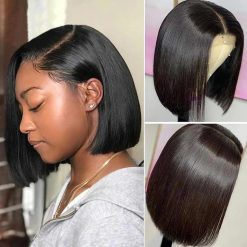
Straight Short Bob Wig 13×4 Transparent Lace Frontal Human Hair Wigs
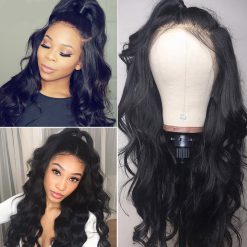
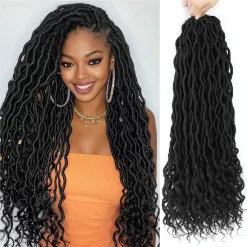
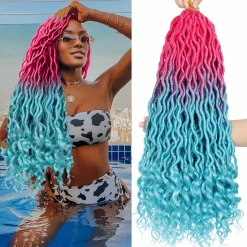
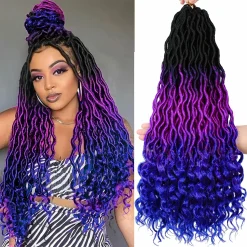
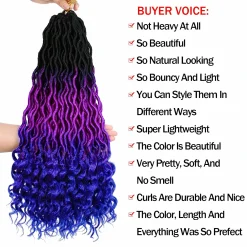
Braiding Hair, Passion Twist Hair, and Faux Locs: Shine Is About Texture
Not every artificial hair product has the same shine challenge.
Braiding hair, Passion Twist Hair, and Faux Locs are different because texture is the main visual feature.
For protective styles, too much shine can make synthetic fibers look obvious.
Natural-looking protective styles usually have:
- dimensional texture
- realistic irregularity
- balanced color transitions
Passion Twist Hair
Passion Twist Hair works best when the twists have movement.
If every twist is identical and extremely glossy, the style can look manufactured.
A more natural approach:
- separate twists slightly
- avoid heavy shine sprays
- soften the finish after installation
Faux Locs Hair
Faux locs naturally have texture.
This can help reduce artificial reflection.
However, overly smooth faux locs may look unrealistic.
The beauty of loc-inspired styles comes from:
- variation
- texture
- individuality
Not perfect uniformity.
A Simple Professional Checklist: How to Reduce Wig Shine Today
If your wig looks shiny right now, try this order.
Step 1: Identify the source
Ask:
Is the shine coming from:
- the fiber?
- hair products?
- lighting?
- excessive density?
Do not fix the wrong problem.
Step 2: Remove unnecessary products
For human hair wigs:
- wash gently
- avoid heavy oils
- use lightweight conditioner
- rinse thoroughly
For synthetic wigs:
- use products designed for synthetic fibers
- avoid natural hair styling products unless recommended
Step 3: Create natural separation
Real hair is not perfectly arranged.
Use your fingers to:
- separate sections
- soften the part
- create slight movement
Step 4: Check your hairline
A realistic hairline often matters more than the amount of shine.
Look at:
- lace visibility
- baby hair placement
- knot appearance
- density
Step 5: Match the wig to your lifestyle
A dramatic glossy style may look beautiful for photography.
But everyday wear often benefits from:
- softer texture
- natural movement
- comfortable density
Choosing the right wig category based on your lifestyle can prevent many problems before they happen. For example, exploring different wig constructions such as lace front, glueless wigs, and full lace options can help you understand what matches your daily needs. You can browse different wig styles here: https://www.msaloe.com/category/wigs.
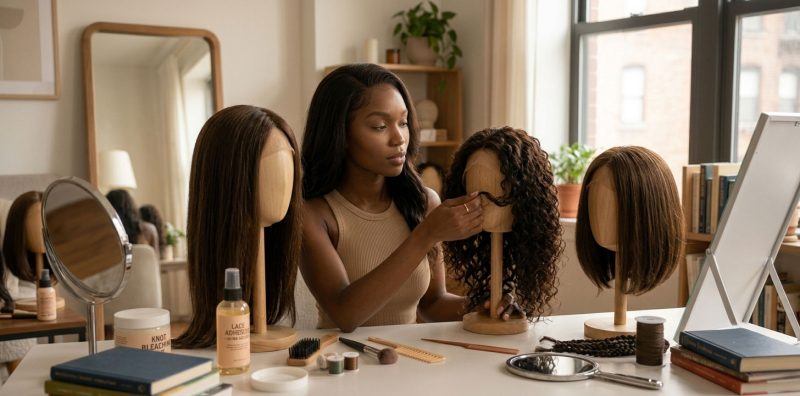
A Little Friend-to-Friend Reminder Before You Give Up on Your Wig
If you are reading this because you are disappointed with your wig, I want to tell you something I tell many clients:
Do not judge a wig after only five minutes in front of the mirror.
A wig is not a hat.
It is something that needs adjustment.
Sometimes the difference between “this looks fake” and “this looks like my hair” is:
- removing one layer of product
- trimming two centimeters
- changing the part
- softening the hairline
- choosing better lighting
Many experienced wig wearers do not wear their wigs exactly as they arrive.
They customize them.
They make them belong to them.
That small process is part of the beauty.
FAQ: Why Does My Wig Look Shiny?
Why does my synthetic wig look shiny when I first open the package?
Many synthetic wigs have a factory coating that protects the fibers during production and shipping.
A gentle wash with synthetic-safe products can reduce the initial shine.
Avoid aggressive washing because it can damage the fiber structure.
Does baby powder remove wig shine?
A small amount can reduce excessive reflection, especially around the crown and part area.
However, too much powder can create buildup.
Use a light hand.
Does human hair wig mean it will never look shiny?
No.
Human hair wigs can also become overly shiny from:
- silicone products
- oils
- heavy conditioners
- incorrect styling
The material helps, but maintenance matters.
Why does my wig look fake only in sunlight?
Sunlight exposes reflection patterns that indoor lighting may hide.
Check:
- product buildup
- fiber texture
- density
- hairline blending
How can I make my lace front wig look more natural?
Focus on:
- choosing the right lace type
- adjusting density
- blending the lace
- creating a natural part
- avoiding excessive shine products
If the lace itself is the concern, you may also find this guide helpful: why does my lace not melt properly.
Final Thoughts: The Most Natural Wig Is the One That Stops Looking Like a Wig
The goal of wearing a wig has never been to create something perfect.
Real hair is not perfect.
It has movement.
It has texture.
It changes depending on the weather, lighting, and the way you move.
A natural-looking wig follows the same idea.
If your wig looks shiny, do not immediately assume you made the wrong choice.
Start with the small things:
Check the products.
Check the lighting.
Check the density.
Check the hairline.
Adjust before replacing.
Sometimes the most beautiful transformation is not buying something new.
It is learning how to make what you already have feel like it belongs to you.
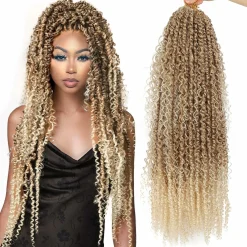
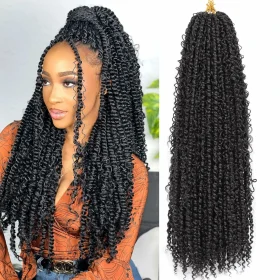

Synthetic Extensions


Synthetic Extensions

Synthetic Extensions
Synthetic Extensions