
Why does my wig slip off? The Real Reasons Your Wig Won’t Stay Secure

Why does my wig slip off?
Have you ever put on your wig in the morning, looked in the mirror, and thought:
“Finally. Today my hair feels like me.”
Then three hours later, while walking outside, you quietly touch the front of your hairline because something feels different.
The lace has moved.
The wig feels looser.
The confidence you had in the bathroom mirror suddenly becomes a small worry sitting in the back of your mind.
A strange thing happens with wigs:
A wig can look perfectly secure when you first install it, yet slowly begin moving during the day.
And many women immediately blame the wig.
They think:
“Maybe this wig is too heavy.”
“Maybe I bought the wrong size.”
“Maybe wigs just never stay in place.”
But after working with wig wearers for many years, I have found something much more interesting.
Most slipping problems are not caused by one single issue.
A wig is a system.
The cap construction, your natural hair preparation, scalp condition, adhesive method, wig density, and even the weather all work together.
A little mistake in one area can create movement somewhere else.
It is similar to wearing a beautiful pair of shoes that are one size too large.
The shoes themselves may be high quality.
But if the fit is wrong, your feet will still slide.
A wig works the same way.
The goal is not simply making the wig “stick.”
The goal is creating a balanced relationship between:
- your scalp;
- your natural hair underneath;
- the wig cap;
- the lace;
- the adhesive;
- your lifestyle.
The Four Hidden Reasons Your Wig Keeps Moving
Reason 1: Your Wig Size Is Wrong Even If It Looks Close
One of the most overlooked reasons a wig slips is incorrect cap sizing.
Many beginners assume:
“If I can put the wig on my head, the size must be correct.”
Not exactly.
A wig can physically fit but still not fit correctly.
Most wigs are designed with adjustable straps, combs, and elastic structures.
These features help create a customized fit.
However, they cannot completely solve a size mismatch.
Case Study One: Jasmine’s Everyday Lace Front Problem
Jasmine, a 34-year-old office professional from Atlanta, purchased her first human hair lace front wig.
When she installed it at home, everything looked beautiful.
The hairline looked natural.
The style matched her face.
But after commuting to work, she noticed something frustrating.
By lunchtime, the back of the wig felt loose.
The front was lifting slightly.
Her first thought was:
“The adhesive must be bad.”
But after checking her installation, the real issue appeared.
The wig cap was slightly larger than her head.
Because the cap had extra space, the wig was creating small movements every time she walked.
The adhesive was trying to hold an unstable foundation.
How to Check Wig Fit at Home
Before applying glue or adhesive, place the wig on your head.
Check these areas:
Front hairline
The lace should naturally reach your preferred hairline position.
It should not sit too far behind your natural hairline.
Ear tabs
The ear tabs should sit close to your temples.
If they float away from your head, the wig may shift.
Crown area
Press gently at the top.
If you feel extra air space, the cap may be too large.
Nape area
The back should feel secure.
If the back moves when you shake your head gently, the foundation needs adjustment.

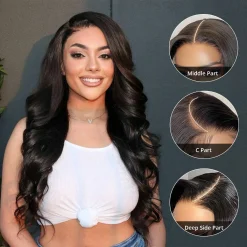


HD lace wigs
Glueless Straight Short Bob Wigs Brazilian Clear Lace 180% Density Hd Closure Wig Human Hair

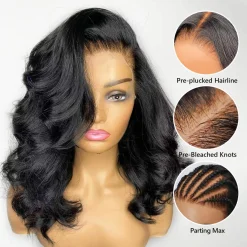
HD lace wigs
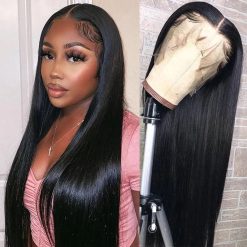

Reason 2: Your Natural Hair Underneath Creates an Uneven Foundation
A wig does not sit directly on “nothing.”
It sits on whatever is underneath.
This is one detail many new wig wearers underestimate.
Your natural hair affects:
- wig height;
- pressure points;
- grip;
- movement.
Imagine placing a thin sheet over a pillow with wrinkles.
The sheet cannot become completely smooth.
The same idea applies to wig installation.
Thick Hair Problems
Women with thick natural hair often try to compress everything underneath into one tight bun.
This seems logical.
But it can create a large bump.
That bump pushes the wig upward.
The wig may slowly move because the cap is fighting against the shape underneath.
Better Preparation Sequence
For thick hair:
Step 1:
Separate hair into small sections.
Step 2:
Create flat braids close to the scalp.
Step 3:
Distribute volume evenly.
Step 4:
Use a wig cap that matches your comfort level.
The goal is not making your hair disappear.
The goal is creating a smooth surface.
A helpful resource about preventing wig movement and improving installation technique can be found here:
Reason 3: Your Adhesive Method Does Not Match Your Lifestyle
A common misunderstanding about wig installation is that stronger adhesive always means better security.
It sounds logical.
If a wig moves, add more glue.
But this is where many women accidentally create new problems.
A secure wig is not created by using the largest amount of adhesive.
It comes from choosing the right method for:
- your scalp condition;
- how often you wear the wig;
- your activity level;
- the type of lace;
- the climate where you live.
Think about skincare.
A person with dry skin and a person with oily skin do not use the same moisturizer.
The product is not necessarily the problem.
The match is.
Wig adhesion works the same way.
Understanding Wig Adhesion: Why Some Wigs Move After a Few Hours
When a lace front wig is installed, the adhesive needs to create a connection between:
- your scalp;
- the adhesive layer;
- the lace material.
For this connection to work, several things need to happen.
Clean Scalp Surface
Oil is one of the biggest reasons wigs lose grip.
Your scalp naturally produces sebum.
Add:
- moisturizer;
- sunscreen;
- sweat;
- hair products;
and the adhesive may not bond properly.
Before installation:
- Wash or cleanse your hairline area.
- Remove oil completely.
- Allow the skin to dry.
- Avoid applying heavy skincare products directly near the lace area.
Many beginners prepare their face beautifully but forget that their hairline is also skin.
Correct Adhesive Layer Thickness
Another common mistake:
Applying too much adhesive.
A thick adhesive layer may feel stronger at first.
But after several hours:
- it can become soft;
- sweat can affect it;
- movement increases.
A thin, even layer often performs better.
Professional installers usually build adhesion gradually instead of creating one thick layer.
Allow Proper Drying Time
This step is often skipped.
Many people apply adhesive and immediately press down the lace.
But many adhesives need time to become tacky.
The texture should change from wet to slightly sticky before the lace touches it.
If the adhesive is too wet:
The lace can slide.
If it dries completely:
The connection may become weaker.
Reason 4: Your Wig Construction Does Not Match Your Movement
This is a topic many wig discussions ignore.
A wig is not only a beauty choice.
It is also a lifestyle choice.
The wig that works beautifully for a quiet dinner may not be the same wig that works for:
- dancing;
- workouts;
- outdoor activities;
- long work shifts;
- humid weather.
Case Study Two: Monica’s Summer Wedding Experience
Monica chose a long human hair lace front wig for her sister’s outdoor wedding.
She loved the look.
The hair moved beautifully.
The lace looked natural.
But after several hours outside in summer heat, she noticed the wig shifting.
The problem was not the wig quality.
The issue was the environment.
Heat increases:
- scalp moisture;
- sweat production;
- adhesive breakdown.
A style designed for indoor comfort may need a different installation approach for outdoor events.
Choosing the Right Wig Type for Your Lifestyle
Glueless wigs
Best for:
- daily changes;
- beginners;
- sensitive scalps;
- short wearing periods.
They usually rely on:
- adjustable straps;
- combs;
- elastic bands.
Lace front wigs with adhesive
Best for:
- longer wear;
- more secure styling;
- exposed hairlines.
They require more preparation.
HD lace wigs
HD lace is thinner and more transparent.
This can create a more natural transition.
But thinner lace also requires careful handling.
Because the material is delicate, installation technique becomes even more important.

The Four “Giveaway” Areas That Make a Wig Look Like It Is Moving
Sometimes a wig is technically secure but visually appears unstable.
These small details often reveal the installation.
Giveaway Area 1: The Front Hairline Lifting
The front hairline receives the most attention.
When people look at a wig, their eyes naturally go toward:
- forehead;
- temples;
- baby hair area.
A small lifted edge can change the entire appearance.
Common causes:
- adhesive not fully attached;
- skin oil;
- incorrect lace placement;
- too much tension from styling.
Fix Sequence
- Clean the hairline.
- Remove old adhesive residue.
- Reapply a thin adhesive layer.
- Wait until tacky.
- Press lace gently.
- Style baby hairs softly.
Avoid repeatedly pressing the lace throughout the day.
Constant touching can actually loosen the bond.
Giveaway Area 2: The Wig Moving During Head Turning
A wig should move with your head.
Not separately from your head.
If the hair swings but the cap underneath shifts, the installation balance is incorrect.
Check:
- adjustable strap tension;
- comb position;
- elastic band placement.
Giveaway Area 3: The Crown Area Looks Raised
Sometimes the wig is not sliding.
It is sitting too high.
This happens when:
- natural hair underneath is bulky;
- cap size is large;
- density is too high;
- wig construction does not match head shape.
A raised crown creates a “helmet” effect.
Giveaway Area 4: The Back of the Wig Feels Loose
Many women focus only on the front.
But the back controls overall stability.
If the nape area is loose:
The entire wig can gradually move upward.
Check:
- strap adjustment;
- nape coverage;
- elastic band tension.


HD lace wigs
Pre-bleached Knots Straight HD Lace Frontal Wig 180% Density 6×5 Pre-cut Lace Wear & Go Glueless Wig

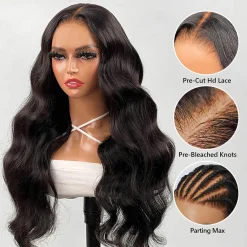
HD lace wigs
HD lace wigs
Glueless Straight Short Bob Wigs Brazilian Clear Lace 180% Density Hd Closure Wig Human Hair
HD lace wigs


The Professional Wig Security Sequence
When clients ask me:
“How do I stop my wig from slipping?”
I do not start with products.
I start with sequence.
Because order matters.
Step 1: Prepare the Foundation
Before wearing:
- flatten natural hair;
- clean scalp;
- check cap size.
Do not rush this stage.
A strong installation starts before the wig touches your head.
Step 2: Adjust Before Adhesive
Place the wig without glue.
Move your head.
Smile.
Turn left.
Turn right.
Check comfort.
If it does not fit correctly without adhesive, glue will not magically fix it.
Step 3: Install the Hairline
Work slowly.
The lace edge should follow your natural face shape.
Avoid pulling the lace too far forward.
Too much tension can create lifting later.
Step 4: Secure the Interior Structure
Adjust:
- straps;
- combs;
- elastic band.
The inside structure creates long-term support.
Step 5: Test Your Movement
Before leaving home:
Try:
- shaking your head gently;
- bending forward;
- walking around;
- touching your hair naturally.
Your wig should survive normal life.
How to Keep Your Wig Secure Without Feeling Like You Are Wearing a Helmet
There is a small moment that many wig wearers understand.
You are getting ready for dinner with friends.
Your makeup is finished.
Your outfit feels right.
Your hair looks beautiful.
Then a tiny thought appears:
“Will my wig still be in the same place when I come home?”
That feeling can take away some of the joy.
A wig should not make you constantly monitor yourself.
It should become part of your routine, like putting on earrings or applying your favorite lipstick.
The goal is not to make the wig feel glued to your head like a costume.
The goal is to create enough stability that you can forget about it.
Finding the Balance Between Security and Comfort
Some women believe a secure wig must feel extremely tight.
This is one of the biggest myths.
A wig that is too tight can create different problems:
- scalp pressure;
- headaches;
- discomfort around the temples;
- tension on the lace;
- faster lifting around stressed areas.
A comfortable installation usually has three qualities:
The wig stays stable.
It does not shift when you move normally.
The scalp feels relaxed.
You can wear it without constantly feeling pressure.
The hairline looks natural.
The lace sits flat instead of creating visible edges.
A good installation feels almost boring.
And that is actually the goal.
When everything is working correctly, you stop thinking about the wig.

Choosing a Wig Construction That Reduces Slipping Problems
Not every wig design works the same way.
Many installation problems happen because the wig construction does not match the person wearing it.
A woman who needs a wig for everyday work may have completely different needs from someone preparing for a photo session.
Lace Front Wig: Natural Hairline but Requires Proper Preparation
A lace front wig creates the illusion that hair is growing directly from your scalp.
The lace area usually covers the front hairline and temples.
This allows:
- middle parts;
- side parts;
- pulled-back styles;
- more natural movement.
But because the front lace is responsible for the realistic hairline, it requires attention.
Common mistakes:
- placing the lace too far forward;
- skipping scalp preparation;
- using too much adhesive;
- not trimming excess lace correctly.
A lace front wig is not difficult because the material is bad.
It is difficult because the hairline area is where small mistakes are easiest to notice.
HD Lace: Beautifully Natural, But More Sensitive
HD lace is popular because it is very thin and blends well with many skin tones.
However, thin lace needs careful handling.
The installation process should avoid:
- aggressive brushing near the lace;
- pulling the lace when styling;
- removing adhesive too quickly.
When cleaning adhesive residue:
Use gentle methods.
Do not scrape the lace edge.
The lace is designed to disappear visually, but it still needs protection physically.
Glueless Wig: Easy Maintenance With Different Expectations
Glueless wigs have become popular because many women want flexibility.
They can be removed easily.
They can be adjusted.
They are comfortable for many daily situations.
However, glueless does not mean “cannot move.”
The security depends on:
- correct cap size;
- strap adjustment;
- comb placement;
- natural hair preparation.
A glueless wig that fits properly often feels more secure than an incorrectly installed glued wig.




Synthetic Extensions


Synthetic Extensions


Synthetic Extensions
Synthetic Extensions


A Friend-to-Friend Guide: What I Would Tell My Best Friend Before She Leaves Home
If my friend called me ten minutes before a party and said:
“My wig keeps moving. I am afraid everyone will notice.”
I would not tell her to panic.
I would tell her to check these five things.
1. Touch the Hairline, Not the Hair
Most people immediately grab the hair.
But the problem is usually the connection point.
Check:
- Is the lace edge flat?
- Is the adhesive still attached?
- Is there oil near the hairline?
2. Check Your Scalp Temperature
If you are sweating, the adhesive may behave differently.
This does not mean you cannot wear wigs in warm weather.
It means your installation needs to match your environment.
For hot climates:
- avoid heavy products near the hairline;
- allow adhesive enough drying time;
- carry a small touch-up kit.
3. Do Not Add More Product Immediately
This is a common reaction:
“The wig moved, so I need more glue.”
Sometimes that makes the situation worse.
First remove the cause.
Ask:
- Is the scalp oily?
- Is old adhesive underneath?
- Is the wig size correct?
4. Protect Your Lace During Removal
A damaged lace edge can create future slipping problems.
Repeatedly pulling lace can stretch the material.
When removing:
- Apply adhesive remover.
- Wait several minutes.
- Slowly loosen the edge.
- Clean residue gently.
Patience during removal protects your next installation.
Frequently Asked Questions About Wig Slipping
Why does my wig slide backward after a few hours?
Usually because the foundation underneath is moving.
Possible causes:
- cap too large;
- loose straps;
- slippery natural hair;
- sweat;
- weak adhesive connection.
Start by checking fit before changing products.
Can I wear a wig without glue and still keep it secure?
Yes.
Many women wear glueless wigs successfully.
The important factors are:
- correct size;
- proper adjustment;
- suitable wig construction.
A well-fitted glueless wig can feel very natural for everyday wear.
Why does my lace front wig lift at the corners?
The temple area experiences a lot of movement.
Common reasons:
- natural oils;
- adhesive not reaching the corners;
- lace tension;
- incorrect placement.
The corners should be installed with careful attention because they follow the curves of the face.
Does a heavier wig slip more easily?
Sometimes.
A very dense or long wig creates more pulling force.
This does not mean long wigs cannot stay secure.
It means the installation method should support the weight.
How often should I reinstall my lace front wig?
It depends on:
- adhesive type;
- lifestyle;
- scalp condition;
- wearing frequency.
Some people reinstall frequently.
Others maintain longer wear periods.
The healthiest approach is paying attention to your scalp and lace condition rather than forcing a fixed schedule.
A Gentle Reminder Before Your Next Installation
A wig slipping does not mean you are doing everything wrong.
Many women need time to learn how their own scalp, hair texture, and lifestyle interact with different wig systems.
The most natural-looking wig is not always the one with the strongest hold.
It is the one that fits your life.
A mother running errands.
A professional heading into an office.
A woman meeting friends for dinner.
A person traveling, dancing, laughing, and living.
Your wig should support those moments, not make you worry through them.
If you are still learning how to create a secure lace installation, this guide on how to secure a lace front wig properly offers additional techniques for improving stability and avoiding common mistakes:
Final Friend-to-Friend Checklist
Before leaving home, ask yourself:
✓ Does my wig size actually fit my head?
✓ Is my natural hair underneath smooth and balanced?
✓ Is my scalp clean and free from excess oil?
✓ Did I allow adhesive enough time to become tacky?
✓ Does the lace sit flat around my temples?
✓ Can I move naturally without feeling the wig shifting?
✓ Am I wearing a wig construction that matches my lifestyle?
A secure wig is not about fighting the wig all day.
It is about creating harmony between the wig and the woman wearing it.
When the foundation is right, the little moments return:
Walking outside without checking.
Laughing without worrying.
Taking photos without wondering if your hairline looks different.
That quiet confidence is what most women are really looking for when they choose a wig.
