
How to Wear a Wig Naturally for Beginners: A Complete Guide to Looking Like Yourself, Not Like You Are Wearing a Wig
Why Does Your Wig Look Like A Wig When You First Put It On?

Have you ever placed a wig on your head, looked into the mirror, and thought:
“Something feels different… but I cannot explain what it is.”
The wig may be beautiful.
The hair texture may be soft.
The length may be exactly what you wanted.
But somehow, it does not feel like you yet.
This is one of the most common experiences for beginners.
And it is also one of the biggest misunderstandings about wearing wigs.
Many people think a natural-looking wig depends only on buying expensive hair.
But after years of helping women install and style wigs, I have learned something:
A natural wig appearance is created by small details working together.
It is the position of the hairline.
The way the lace melts into your skin.
The amount of baby hair.
The direction of the part.
The relationship between the wig density and your own face shape.
A beginner does not need to become a professional stylist overnight.
You simply need to understand what the eye notices first.
Because when a wig looks natural, people usually do not notice the wig.
They notice the woman wearing it.
The Four Things People Notice First About A Wig
When someone sees a wig, their brain does not analyze every strand of hair.
It quickly evaluates a few visual signals.
These signals determine whether the wig feels natural.
1. The Hairline
The hairline is usually the first place people look.
A wig can have beautiful hair, but if the hairline looks too straight, too dense, or too far forward, it may feel unnatural.
A realistic hairline usually has:
- slight irregularity;
- different hair directions;
- softer density near the forehead;
- natural baby hairs.
Real human hairlines are not perfectly symmetrical.
Small imperfections often create realism.
2. The Lace Blending
Many beginners focus only on the hair.
But the lace is the bridge between the wig and your skin.
A 13×4 lace front wig can help beginners create a more natural-looking hairline because the lace area allows more realistic parting and styling flexibility:
- matches your skin tone;
- sits flat;
- disappears under proper preparation;
- follows your natural forehead shape.
For beginners, understanding the difference between lace types can make installation much easier. Learning about the difference between full lace wigs and lace front wigs can help you choose a construction that matches your lifestyle and styling goals. the difference between full lace wigs and lace front wigs
3. The Wig Density
A common beginner mistake is choosing very high density because they think more hair means more beauty.
But natural hair does not always look extremely full.
Density affects:
- face balance;
- movement;
- realism;
- styling difficulty.
| Density | Appearance | Beginner Friendly |
| 130% | Lightweight and natural | Yes |
| 150% | Fuller but realistic | Yes |
| 180% | Glamorous volume | Requires more styling |
| 200%+ | Very dramatic | More difficult to make natural |
For a first wig, many women feel more comfortable starting with a balanced density because it is easier to style and easier to make part of their everyday look.
4. Hair Direction And Parting
A wig does not look natural simply because the hair is expensive.
It looks natural because the hair behaves like it grows from your scalp.
Small details matter:
- where the part begins;
- how the roots fall;
- whether the hair moves naturally;
- whether the front layers frame your face.
A perfectly flat part can sometimes look artificial.
A slightly softened part often feels more realistic.
Beginner Mistake #1: Wearing The Wig Straight Out Of The Package
This is probably the most common mistake.
A new wig often arrives compressed because of:
- shipping;
- packaging;
- storage.
The hair may look too perfect.
The curls may look stiff.
The part may not sit naturally.
This does not mean the wig is wrong.
It means the wig needs to become part of your styling routine.
What To Do Before Your First Wear
Before putting it on:
Step 1: Let The Hair Relax
Place the wig on a mannequin head or clean surface.
Allow the hair to return to its natural shape.
For wavy or curly wigs, gently separate the curls with your fingers.
Avoid immediately brushing through the entire wig.
Step 2: Adjust The Part
Most wigs look more natural after the part is customized.
You can:
- move the part slightly;
- remove excessive hair around the part;
- add gentle volume.
Step 3: Trim Baby Hair Carefully
Baby hairs should not look like a thick line.
The goal is softness.
Use small scissors and remove only small amounts.
Natural baby hairs are:
- uneven;
- fine;
- lightweight.


HD lace wigs
Pre-bleached Knots Straight HD Lace Frontal Wig 180% Density 6×5 Pre-cut Lace Wear & Go Glueless Wig
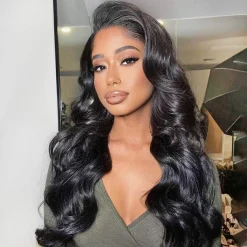
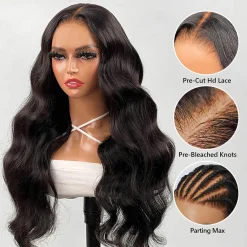
HD lace wigs

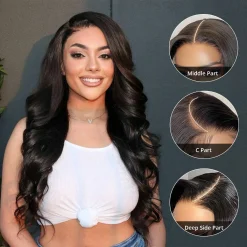


HD lace wigs
Glueless Straight Short Bob Wigs Brazilian Clear Lace 180% Density Hd Closure Wig Human Hair

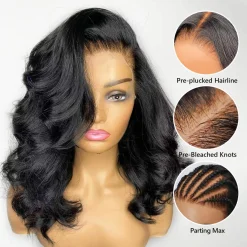
HD lace wigs

Choosing The Right Wig Type For Beginners
Not every wig construction creates the same beginner experience.
Different designs solve different problems.
| Wig Type | Beginner Experience | Best Feature |
| Lace Front Wig | Easy to learn | Natural front hairline |
| Full Lace Wig | More styling freedom | Can part almost anywhere |
| Glueless Wig | Convenient | Easy daily removal |
| Bob Wig | Simple styling | Less maintenance |
Many beginners prefer starting with a style that balances realism and convenience.
For example, a 13×4 HD lace front wig provides a natural-looking front hairline while still being manageable for someone learning installation techniques. 13×4 HD lace front wig
The Beginner Installation Routine: Step By Step
A natural wig installation does not require complicated techniques.
It requires patience.
Step 1: Prepare Your Natural Hair
Your natural hair should create a smooth foundation.
Options include:
- flat braids;
- cornrows;
- low ponytail with controlled volume.
The goal is not to completely hide your hair.
The goal is to create an even surface.
Step 2: Protect Your Hairline
Before using adhesive products, protect your skin and hairline.
Clean skin helps products perform better.
Remove:
- oils;
- makeup residue;
- skincare products near the forehead.
Step 3: Position Before Securing
Never immediately glue or secure the wig.
First check:
- hairline placement;
- ear tabs;
- part position;
- overall balance.
A few minutes of adjustment can prevent a very unnatural result.
Adhesive, Glueless, Or Both? Choosing The Right Wig Security Method
One of the first questions beginners ask is:
“How do I make my wig stay in place without making it look obvious?”
The answer depends on your lifestyle.
There is no single perfect installation method.
Some women want a wig they can put on quickly before work.
Others enjoy spending time creating a flawless hairline for special occasions.
The right method should fit your routine.
Glueless Wig Installation: The Beginner-Friendly Option
A glueless wig is often the easiest starting point because it does not require adhesive.
Instead, it usually relies on:
- adjustable straps;
- combs;
- elastic bands;
- proper cap construction.
Advantages:
| Benefit | Why Beginners Like It |
| Easy removal | Can take off daily |
| Less commitment | No glue learning curve |
| Gentle on skin | Less product exposure |
| Faster routine | Good for busy mornings |
A glueless wig is especially helpful for someone who is still learning:
- placement;
- styling;
- part adjustment;
- hairline customization.
Adhesive Installation: Creating A More Secure Look
Adhesive can help create a very realistic melt because it allows the lace to sit closer to the skin.
However, the process requires more attention.
A natural adhesive installation depends on:
- Clean skin.
- Correct adhesive amount.
- Proper drying time.
- Careful lace placement.
Common Beginner Adhesive Mistakes
Using Too Much Glue
More adhesive does not automatically mean better hold.
Too much product can create:
- visible residue;
- white buildup;
- difficult removal.
Applying Before The Adhesive Becomes Transparent
Many adhesives need time to become tacky.
Placing lace too early can cause:
- lifting;
- uneven lace texture;
- cloudy appearance.
Ignoring Skin Preparation
Oil and skincare products can interfere with adhesion.
Before installation:
- cleanse the forehead area;
- dry completely;
- avoid heavy moisturizer near the lace area.
How To Make A Lace Front Wig Look Like It Is Growing From Your Scalp
The biggest beginner goal is usually:
“How do I make people stop noticing the wig?”
The answer is not making the wig disappear.
The answer is making the transition between wig and skin look natural.
Step 1: Match The Lace To Your Skin Tone
Lace comes in different shades.
A mismatch can make the lace more noticeable.
Common adjustments include:
- lace tinting;
- foundation matching;
- powder application.
The goal is not to color the lace heavily.
The goal is to reduce contrast.
Step 2: Create A Natural Hairline Shape
Many beginners leave the hairline exactly as it arrives.
However, factory hairlines are often designed for general fit.
A more natural appearance may require:
- slight plucking;
- adjusting density;
- softening the front.
Step 3: Avoid Creating A Perfect Straight Hairline
A natural forehead line usually has variation.
Look closely at natural hairlines.
They have:
- small gaps;
- different strand lengths;
- uneven growth patterns.
A perfectly symmetrical hairline can sometimes look less realistic.
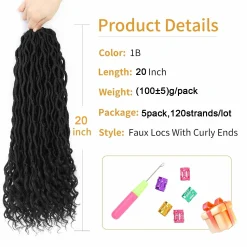
Synthetic Extensions


Synthetic Extensions
Synthetic Extensions
Synthetic Extensions

How Much Should You Customize A Beginner Wig?
This is where many beginners become nervous.
They see professional stylists doing advanced customization and think:
“I need to completely rebuild this wig.”
You do not.
A beginner-friendly approach is gradual.
| Customization Level | Suitable For | What To Adjust |
| Basic | First-time wearers | Part, brushing, baby hairs |
| Medium | Regular wig users | Hairline softness, lace tint |
| Advanced | Experienced users | Density reduction, major redesign |
For most beginners, small changes create the biggest improvement.
A slightly softened hairline often makes a bigger difference than hours of complicated styling.
Real Case Study #1: Sarah Thought Her First Wig Looked “Too Obvious”
Sarah was a first-time wig wearer.
She purchased a shoulder-length human hair wig because she wanted a protective style during a busy season at work.
When she first tried it on, she said:
“I feel like everyone can tell I am wearing a wig.”
But when we looked carefully, the problem was not the wig.
The hair quality was fine.
The color matched her.
The issue was three small details.
Problem 1: The Wig Sat Too Low
The wig was positioned slightly forward.
This changed her forehead proportion and made the hairline appear less natural.
Solution:
We moved the wig back slightly and adjusted the front placement.
Problem 2: The Part Was Too Perfect
The center part looked very straight.
Solution:
We softened the part by adding slight movement and adjusting the root direction.
Problem 3: The Hair Was Too Flat
The wig arrived compressed.
Solution:
A gentle wash, air dry, and light styling created more natural movement.
Two weeks later, Sarah shared something simple:
“I stopped checking whether people noticed the wig. I just started wearing it.”
That is usually the goal.
Not perfection.
Comfort.
Beginner Styling Techniques That Make A Wig Look More Natural
Small styling choices can completely change the final impression.
Add Natural Movement
Real hair is rarely completely motionless.
Try:
- loose waves;
- soft layers;
- face-framing pieces.
Movement helps the wig blend into your overall appearance.
Avoid Excessive Shine
Some wigs can appear unnatural because the surface reflects too much light.
This is especially common with:
- certain synthetic fibers;
- heavily styled hair;
- product buildup.
A softer finish often looks more realistic.
Blend The Front Layers With Your Face
The front area creates the connection between the wig and your features.
Consider:
- trimming face-framing layers;
- adjusting length around cheeks;
- creating softness near the temples.
Synthetic Wig vs Human Hair Wig: Which Is Easier For Beginners?
Many beginners assume human hair is always easier.
The reality is more balanced.
| Feature | Synthetic Wig | Human Hair Wig |
| Styling | Usually keeps original style | Can be restyled |
| Maintenance | Lower | Requires more care |
| Texture | Consistent | More natural variation |
| Heat styling | Limited | More flexible |
| Color appearance | More uniform | More dimensional |
Synthetic wigs can be convenient because the style often stays consistent.
Human hair wigs require more care but usually provide more natural movement.
For beginners who want a realistic everyday appearance with styling flexibility, many choose human hair wigs because they can adjust the texture, part, and finish according to personal preference.
Beginner Wig Routine: A Simple Weekly Schedule
A natural wig does not require complicated maintenance.
Consistency matters more.
| Frequency | Task |
| Daily | Brush gently, adjust placement |
| After wearing | Air out and store properly |
| Weekly | Check dryness and tangles |
| Every few weeks | Deep condition if needed |
For beginners exploring protective styling options, choosing the right wig construction is just as important as learning installation. Different designs, such as lace front wigs for beginners, can provide different levels of realism and convenience depending on your experience.
The Four “Giveaway Points” That Make A Wig Look Unnatural
When beginners ask:
“Why does my wig look fake?”
They often think the answer is the wig itself.
But after years of helping women adjust wigs, I have noticed that the problem usually comes from four small visual areas.
These are the places where the human eye naturally looks first.
Giveaway Point 1: An Unnatural Hairline
The hairline is the most sensitive area because it connects the wig to your identity.
People naturally notice the forehead area because it helps them recognize faces.
A wig hairline can look less natural when:
- the lace sits too far forward;
- the density is too thick near the front;
- baby hairs are too uniform;
- the lace color contrasts with the skin.
How To Fix It
Adjust The Placement
Before securing the wig:
- find your natural hairline;
- leave enough forehead space;
- check both sides for balance.
A common beginner mistake is pulling the wig too far forward because they want maximum coverage.
But a natural hairline needs breathing room.
Soften The Front Density
Many factory wigs are created with enough hair for customization.
You can make the front softer by:
- lightly tweezing excessive strands;
- creating small irregular sections;
- avoiding a completely straight front edge.
Keep Baby Hair Subtle
Baby hair should support realism, not become the main feature.
Natural baby hair is:
- thin;
- irregular;
- soft.
Too much styled baby hair can create the opposite effect.
Giveaway Point 2: The Wig Does Not Match Your Face Shape
A wig can look beautiful on a model but feel different on you.
Why?
Because face shape changes how hairstyles are perceived.
Face Shape And Wig Placement Guide
| Face Shape | Styles That Often Work Well | Beginner Adjustment |
| Oval | Most styles | Focus on balance |
| Round | Layers, volume at top | Avoid excessive width at cheeks |
| Square | Soft waves, face framing | Add movement around jaw |
| Heart | Chin-length styles | Balance forehead area |
| Long | Bangs, volume on sides | Avoid too much height |
The goal is not to hide your face.
The goal is to create harmony.
Giveaway Point 3: Too Much Hair Density
This is one of the biggest beginner misunderstandings.
Many women think:
“More hair equals more luxury.”
But natural hair has movement.
When density is too high, the wig may:
- sit away from the head;
- look heavy around the face;
- lose natural flow.
How To Make A High-Density Wig More Natural
Try:
- thinning the interior layers;
- adding layers around the face;
- avoiding excessive root volume.
A professional-looking wig usually has balance.
Not simply maximum fullness.
Giveaway Point 4: The Hair Texture Does Not Match The Style
Another common issue:
The wig itself is good, but the styling feels disconnected.
Examples:
A very sleek straight wig with a casual beach outfit may feel less natural.
A highly glamorous curl pattern may feel unusual for someone who normally wears simple hairstyles.
Natural appearance comes from consistency.
Your:
- hairstyle;
- clothing;
- makeup;
- lifestyle;
all communicate together.
Real Case Study #2: Amina Learned That The Wig Was Not The Problem
Amina moved to the United States several years ago and wanted a hairstyle that made her feel comfortable during a new stage of life.
She chose a long body wave human hair wig.
The online photos looked elegant:
- soft waves;
- natural movement;
- beautiful volume.
But when she first wore it, she felt uncomfortable.
She said:
“It looks beautiful, but it does not look like me.”
Step One: Finding The Real Issue
We looked at three things.
Hairline
The placement was slightly too low.
The wig covered too much forehead area.
Parting
The middle part was very sharp.
Her natural hairstyles usually had softer movement.
Volume
The density was higher than what she normally wore.
The hair looked glamorous, but it did not match her everyday style.
The Changes Made
Instead of replacing the wig, we adjusted:
- the placement;
- the part;
- the front layers;
- the overall volume.
The result was much more natural.
Amina later described the difference:
“Before, I felt like I was wearing someone else’s hairstyle. After adjusting it, it felt like my own hair.”
That is an important beginner lesson:
A natural wig is not only about the wig.
It is about making the wig work with you.
How To Make A Wig Feel Like Your Own Hair In The First Week
The first few days are usually the adjustment period.
Many beginners expect instant perfection.
But even natural hair requires styling.
A wig needs time to become familiar.
Day 1: Focus On Comfort
Do not immediately try complicated styling.
Focus on:
- comfortable fit;
- correct placement;
- secure adjustment.
A comfortable wig is easier to style naturally.
Day 3: Adjust The Shape
After wearing it a few times, you may notice:
- too much volume;
- uneven layers;
- parting issues.
Now is the time to make small changes.
Day 7: Create Your Signature Style
Most women eventually develop small habits:
- favorite part position;
- preferred volume;
- favorite styling products.
This is when the wig begins feeling less like an accessory and more like part of your routine.
Beginner Tools That Make Wig Styling Easier
You do not need a professional salon kit.
A few simple tools can make a big difference.
| Tool | Purpose |
| Wide-tooth comb | Reduces pulling and tangling |
| Edge brush | Controls baby hairs |
| Wig stand | Helps maintain shape |
| Spray bottle | Refreshes texture |
| Heat protectant | Protects human hair |
| Satin bag | Prevents friction during storage |
How To Store A Wig So It Keeps Looking Natural
A beautiful installation can lose its shape if the wig is stored incorrectly.
Avoid:
- throwing it into a drawer;
- placing heavy items on top;
- leaving it exposed to dust.
Better Storage Method
Human Hair Wig
Store on:
- mannequin head;
- wig stand.
Keep:
- gently brushed;
- dry;
- protected from direct sunlight.
Synthetic Wig
Store:
- away from heat;
- loosely arranged;
- without crushing the fibers.
HD lace wigs
Pre-bleached Knots Straight HD Lace Frontal Wig 180% Density 6×5 Pre-cut Lace Wear & Go Glueless Wig
HD lace wigs
HD lace wigs
Glueless Straight Short Bob Wigs Brazilian Clear Lace 180% Density Hd Closure Wig Human Hair
HD lace wigs
Choosing Your First Wig: Beginner-Friendly Recommendations
For a first wig, many women benefit from choosing styles that allow learning without too much complexity.
Good beginner choices often include:
- medium density;
- natural colors;
- manageable lengths;
- realistic lace construction.
A shorter style such as a bob wig can be easier because there is less hair to manage while learning placement and styling.
For women who want more flexibility, human hair wigs allow adjustments in parting, styling, and finishing because the hair behaves more like natural hair.
A Beginner-Friendly Wig Routine That Takes Less Than 15 Minutes
A natural wig does not need a long daily process.
A simple routine:
Minute 1–3
Check placement.
Make sure:
- hairline sits correctly;
- wig feels comfortable.
Minute 4–8
Refresh the style.
Depending on texture:
- finger comb curls;
- brush waves;
- smooth straight hair.
Minute 9–12
Adjust face framing.
Move:
- front layers;
- part;
- baby hairs.
Minute 13–15
Final check.
Look at:
- natural movement;
- overall balance;
- comfort.
Synthetic Extensions
Synthetic Extensions
Synthetic Extensions
Synthetic Extensions
FAQ: How To Wear A Wig Naturally For Beginners
How long does it take to learn wearing a wig naturally?
Most beginners improve quickly after practicing placement and styling.
The biggest changes usually come from understanding:
- hairline position;
- lace blending;
- density;
- styling.
Should beginners choose lace front wigs?
Many beginners like lace front wigs because they provide a realistic front hairline while remaining easier to manage than some advanced constructions.
Should I glue my wig as a beginner?
Not necessarily.
A glueless wig can be a comfortable starting point.
Once you understand placement, you can explore adhesive methods if needed.
Why does my wig look bulky on my head?
Common reasons include:
- too much density;
- incorrect cap adjustment;
- too much volume near the roots.
Small adjustments can often solve the issue.
How do I make a synthetic wig look more natural?
Focus on:
- reducing excessive shine;
- adjusting the part;
- adding natural movement;
- choosing realistic density.
Can beginners wear human hair wigs?
Yes.
Many beginners choose human hair wigs because they can be customized and styled similarly to natural hair.
The Small Details That Help A Wig Become Part Of Your Identity
There is a moment that many new wig wearers describe.
At first, they are very aware of the wig.
They think about:
- Is it sitting correctly?
- Can people see the lace?
- Does the hair look too full?
- Does the part look natural?
Then, after some practice, something changes.
They stop thinking about the wig.
They start thinking about their day.
That is usually the point when a wig begins to feel natural.
A realistic wig is not about hiding something.
It is about creating a hairstyle that feels comfortable, familiar, and connected to you.
The Beginner’s Natural Wig Checklist Before Leaving Home
Before walking out the door, take two minutes for a quick check.
| Area To Check | Ask Yourself |
| Hairline | Does the lace blend naturally? |
| Part | Does the part look soft instead of perfect? |
| Volume | Does the hair balance my face? |
| Texture | Does the style match my personality? |
| Comfort | Can I move naturally without adjusting constantly? |
A wig that looks natural should also feel natural.
Confidence often comes from comfort first.
How To Make Different Wig Textures Look More Natural
Different textures require different styling approaches.
A straight wig, curly wig, and braided style do not need the same routine.
Straight Wig Styling Tips
Straight wigs often reveal details because the hair surface reflects more light.
To make straight hair look natural:
- avoid making every strand perfectly flat;
- add slight movement around the face;
- soften the ends.
A little imperfection creates realism.
Natural hair is rarely a perfectly smooth curtain.
Wavy Wig Styling Tips
Waves usually have a more relaxed appearance.
To maintain natural waves:
- separate waves gently with fingers;
- avoid over-brushing;
- refresh with light moisture when needed.
The goal is movement, not perfect uniform curls.
Curly Wig Styling Tips
Curly wigs can look extremely natural because curls naturally create dimension.
However, beginners sometimes make one mistake:
They brush curls too aggressively.
This can create:
- excessive frizz;
- undefined curls;
- larger-than-expected volume.
For curly textures:
- reshape curls individually;
- use lightweight products;
- avoid disturbing the curl pattern too much.
How To Wear A Wig Naturally In Different Situations
A wig that works for a special event may not be the same wig you want for everyday life.
Your styling approach can change depending on where you are going.
| Situation | Natural Styling Direction |
| Work | Soft volume, natural colors, simple part |
| Date night | Face-framing layers, polished texture |
| Travel | Comfortable glueless styles |
| Events | More volume and defined styling |
| Everyday errands | Easy, relaxed appearance |
Beginner-Friendly Wig Maintenance Habits That Protect A Natural Look
Many people focus on installation but forget maintenance.
A wig that was natural on day one may look different after weeks if it is not cared for properly.
Clean Without Overwashing
Overwashing can affect:
- softness;
- texture;
- movement.
Human hair wigs especially benefit from gentle care.
Avoid treating wig hair exactly like your natural hair.
The hair is no longer attached to a scalp producing natural oils.
Detangle From The Ends Up
This small habit prevents unnecessary stress.
Instead of pulling from the roots:
- Start at the ends.
- Remove small tangles.
- Slowly move upward.
This helps protect the hair structure.
Store With Shape Protection
A wig loses realism when its structure changes.
Good storage helps maintain:
- hairline shape;
- part placement;
- curl pattern;
- overall silhouette.
For beginners who want a more detailed maintenance routine, learning how to take care of a human hair wig can help prevent dryness, tangling, and premature wear while keeping the style looking natural. how to take care of a human hair wig
How To Choose Your First Wig Without Feeling Overwhelmed
Walking into the wig world can feel like entering a room full of possibilities.
There are:
- lace types;
- densities;
- textures;
- lengths;
- colors;
- cap constructions.
For beginners, simplicity usually works best.
Start with the questions that matter most.
Question 1: What Is Your Main Goal?
Do you want:
Convenience?
Consider:
- glueless designs;
- easy lengths;
- low-maintenance textures.
Maximum realism?
Consider:
- lace front construction;
- natural density;
- human hair options.
Styling freedom?
Consider:
- flexible parting;
- longer lengths;
- customizable textures.
Question 2: How Much Time Do You Want To Spend Styling?
A beautiful wig should fit your actual life.
If your mornings are busy:
A simple bob or shoulder-length style may be easier.
If you enjoy styling:
A longer human hair wig may give more creative options.
Beginner Wig Buying Guide: Features That Matter Most
| Feature | Beginner Recommendation |
| Length | Medium length is easier to manage |
| Density | 130%-150% often feels natural |
| Color | Natural shades are easier to blend |
| Lace | HD lace or transparent lace can create a softer hairline |
| Cap | Adjustable construction improves comfort |
| Texture | Choose a style close to your normal preference |
A realistic-looking wig is usually not created by choosing the most dramatic option.
It is created by choosing the option that fits your habits.
A Beginner’s Guide To Building Confidence With Wigs
The emotional side of wearing wigs is often overlooked.
Many women wear wigs because they want:
- a new hairstyle;
- protective styling;
- convenience;
- confidence during a transition;
- freedom to experiment.
But the first few times can feel unfamiliar.
That is normal.
A wig is a new styling skill.
Just like learning makeup, skincare, or a new hairstyle, confidence comes through repetition.
HD lace wigs
Pre-bleached Knots Straight HD Lace Frontal Wig 180% Density 6×5 Pre-cut Lace Wear & Go Glueless Wig
HD lace wigs
HD lace wigs
Glueless Straight Short Bob Wigs Brazilian Clear Lace 180% Density Hd Closure Wig Human Hair
HD lace wigs
Final Friend-To-Friend Advice: Your Wig Should Support You, Not Distract You
If I could sit with a beginner wig wearer and share one piece of advice, it would be this:
Do not chase perfection on the first day.
A natural wig is built through small adjustments.
Move the part.
Adjust the volume.
Soften the hairline.
Find the texture that feels like you.
The women who look the most comfortable in wigs are usually not the ones who created the most complicated installation.
They are the ones who learned how to make the wig fit into their own lives.
A wig should not make you feel like you are wearing a costume.
It should feel like another way to express yourself.
Final Thoughts: Learning To Wear A Wig Naturally Takes Practice, Not Perfection
For beginners, wearing a wig naturally is a combination of:
- choosing the right construction;
- understanding hairline placement;
- learning lace blending;
- adjusting density;
- styling according to your face and lifestyle.
The first wig does not have to be perfect.
It only needs to become familiar.
With time, the small details become easier:
The placement becomes faster.
The styling becomes more intuitive.
The confidence becomes natural.
And eventually, the question changes from:
“Can people tell I am wearing a wig?”
to:
“Which hairstyle do I feel like wearing today?”
That is when a wig becomes more than a hairstyle.
It becomes part of your everyday routine.
Additional FAQ: Beginner Questions About Wearing Wigs Naturally
How do beginners make wigs look real?
Beginners can improve realism by focusing on:
- proper placement;
- natural hairline shape;
- lace blending;
- suitable density;
- realistic styling.
What type of wig is easiest for a first-time wearer?
Many beginners start with:
- glueless wigs;
- lace front wigs;
- medium-length styles;
- moderate density.
These options usually provide a balance between realism and convenience.
How do I stop my wig from looking too big?
Check:
- cap size;
- density;
- root volume;
- styling direction.
Sometimes reducing volume around the crown creates a much more natural shape.
Can people tell when someone wears a wig?
A properly fitted and styled wig can look very natural.
The biggest differences usually come from:
- placement;
- customization;
- styling habits.
How long does it take to install a wig as a beginner?
It depends on the method.
A glueless wig may take only a few minutes.
A more customized lace installation can take longer while learning.
Speed usually improves with practice.
Should my first wig be expensive?
Price is only one factor.
A beginner should focus on:
- suitable construction;
- realistic density;
- comfortable fit;
- manageable maintenance.
The right wig is the one that fits your lifestyle.
Synthetic Extensions
Synthetic Extensions
Synthetic Extensions
Synthetic Extensions
