
Why Does My Wig Color Look Different Online? Understanding Screen Differences, Lighting, Hair Fiber, and How to Choose the Right Shade
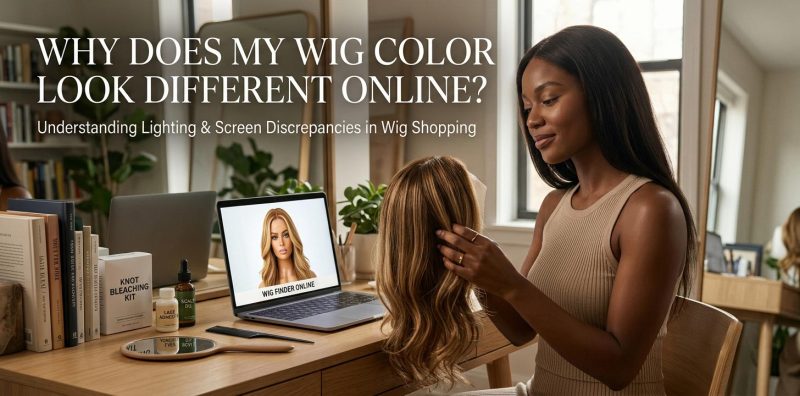
The Color You Loved Online Is Not Always The Color You Receive — Why Does This Happen?
Have you ever opened a wig package, carefully lifted the hair from the box, and had the strange feeling that you were looking at a completely different wig?
The style is right.
The length is right.
The texture is beautiful.
But the color?
It feels… different.
Maybe the blonde looks warmer than you expected.
Maybe the brown seems darker.
Maybe the highlighted wig you imagined as soft honey suddenly looks closer to caramel.
Many women experience this moment, and the first reaction is often:
“Did I choose the wrong color?”
But here is the surprising truth:
Sometimes the wig did not change.
Your eyes are seeing a different environment.
Color is not a fixed object. Color is a relationship between:
- the hair fiber;
- the lighting around it;
- the screen displaying it;
- the camera settings;
- your own visual perception.
This is why two women can look at the same wig photo and describe it differently.
One person may say:
“This looks like a natural dark brown.”
Another may say:
“I see more chocolate tones.”
Both can be correct.
Why Online Wig Colors Can Look Different From Real Life
When shopping for a wig online, many people assume the product image represents one exact color.
But professional wig specialists know that color is influenced by multiple layers.
Think about a white shirt.
Under:
- sunlight;
- bathroom lights;
- office lighting;
- a candle-lit dinner;
it can appear slightly different.
A wig works the same way.
Except hair is even more complicated because hair is not a flat surface.
It reflects and absorbs light through thousands of individual strands.
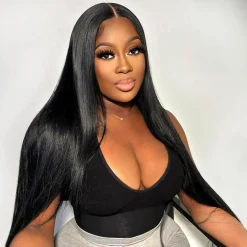
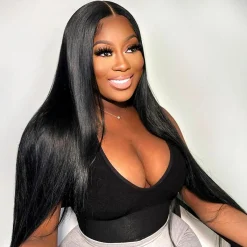
HD lace wigs
Pre-bleached Knots Straight HD Lace Frontal Wig 180% Density 6×5 Pre-cut Lace Wear & Go Glueless Wig
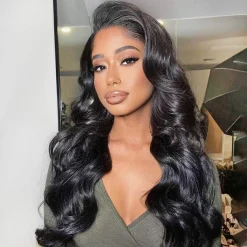
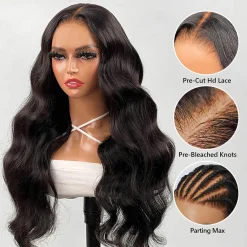
HD lace wigs
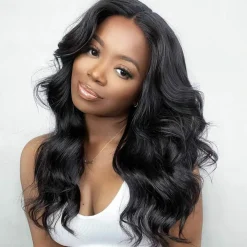
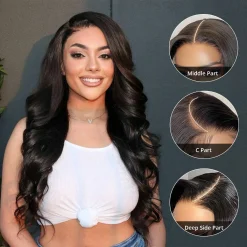
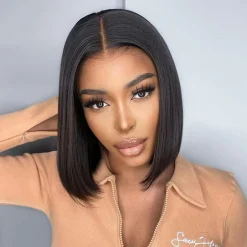
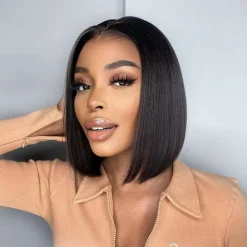
HD lace wigs
Glueless Straight Short Bob Wigs Brazilian Clear Lace 180% Density Hd Closure Wig Human Hair
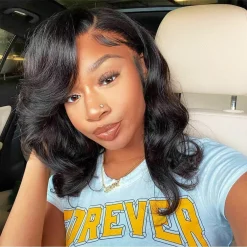
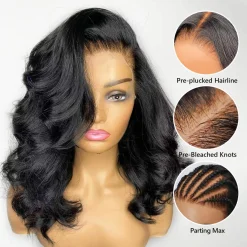
HD lace wigs
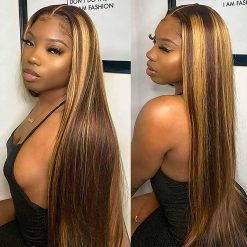
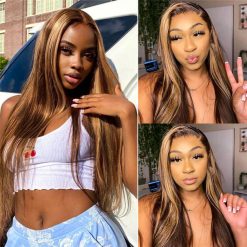
The Four Main Reasons Your Wig Color Looks Different Online
Reason 1: Your Screen Changes The Color
The first thing many shoppers forget:
You are not looking directly at the wig.
You are looking at a digital interpretation of the wig.
Your:
- phone;
- laptop;
- tablet;
- monitor;
all reproduce color differently.
A newer phone with a bright OLED display may make colors appear:
- richer;
- brighter;
- more saturated.
An older laptop may make the same wig appear:
- darker;
- flatter;
- less vibrant.
Screen Settings That Affect Wig Color
Several display settings can change how you see color:
| Screen Setting | How It May Affect Wig Color |
| Brightness | Higher brightness can make blonde shades look lighter |
| Night mode | Can add warmer orange/yellow tones |
| Color temperature | Cool settings may make hair appear ashier |
| Saturation | Higher saturation can make highlights look stronger |
| HDR display | May increase contrast between light and dark tones |
For example:
A #613 blonde wig displayed on a highly saturated phone screen may appear like a bright platinum blonde.
On another screen, the same wig may look like a softer golden blonde.
Neither image is necessarily wrong.
The display is simply interpreting the color differently.
Human Hair Wig Color Is More Complex Than A Single Shade
A common misunderstanding is thinking a wig color is only one color.
Professional colorists rarely describe hair that way.
A natural-looking wig color usually contains several layers:
- base color;
- highlights;
- lowlights;
- undertones;
- dimension.
A “brown” wig may actually contain:
- chocolate brown;
- ash brown;
- warm caramel;
- subtle golden reflections.
This complexity is what makes hair look realistic.
It is also what makes online shopping challenging.
Human Hair vs Synthetic Wig Color: Why They Reflect Light Differently
One of the most overlooked reasons for color differences is the material itself.
Human hair and synthetic fibers interact with light differently.
| Feature | Human Hair Wig | Synthetic Wig |
| Light reflection | Natural, uneven reflection | More uniform reflection |
| Color depth | Often has more dimension | Usually appears more consistent |
| Movement effect | Color changes as strands move | Less variation |
| Styling impact | Heat and products may influence appearance | Fiber structure remains more fixed |
| Photography result | Can appear different from angle to angle | Often appears closer to original shape |
Human hair has natural irregularities.
Each strand may reflect light slightly differently.
This creates depth.
Synthetic fibers are manufactured, so their surface behavior is often more predictable.
Neither is automatically better.
They simply create different visual experiences.
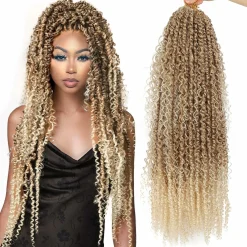
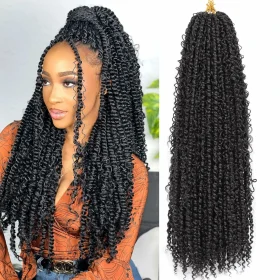
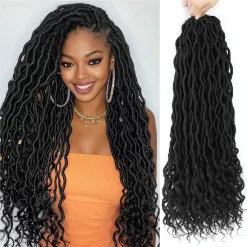
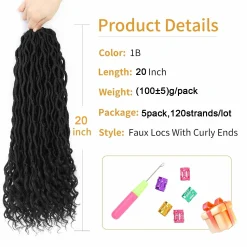
Synthetic Extensions
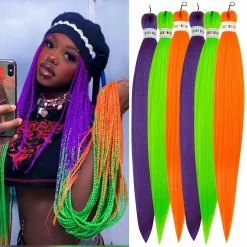
Synthetic Extensions
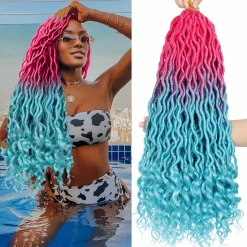
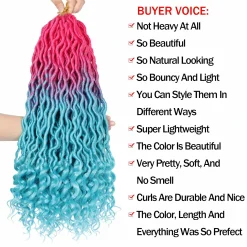
Synthetic Extensions
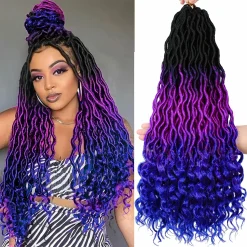
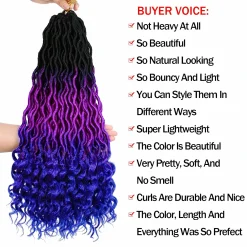
Synthetic Extensions
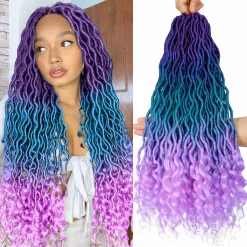
Lighting Is The Secret Reason Many Wig Colors Look Different
Have you ever tried on clothes in a store fitting room and then wondered why they looked different outside?
Hair color behaves the same way.
Professional photographers know that lighting can completely change the appearance of hair.
Warm Light vs Cool Light
Lighting temperature is measured in Kelvin (K).
Different environments create different impressions.
| Lighting Environment | Approximate Effect On Hair Color |
| Warm indoor bulbs | Makes hair appear richer and more golden |
| Natural sunlight | Shows the most balanced color |
| Cloudy daylight | Can make colors appear softer and cooler |
| Fluorescent office lighting | May create green or gray shifts |
| Ring light photography | Often increases brightness and clarity |
A honey blonde wig photographed under warm studio lighting may look more golden.
The same wig near a window may appear more neutral.
How Professional Wig Buyers Evaluate Color Before Purchasing
Experienced wig wearers usually don’t ask:
“Does this wig look exactly like the picture?”
Instead, they ask:
“Does this color match the overall look I want?”
Because small differences are normal.
A better evaluation process focuses on:
- undertone;
- depth;
- highlight pattern;
- contrast.
Color Depth: The Detail Most Buyers Ignore
Many color problems are actually depth problems.
A buyer thinks:
“I ordered brown, but it looks black.”
Often the issue is not the color family.
It is the depth level.
Hair color depth is commonly described from:
- Level 1 = deepest black
- Level 10 = lightest blonde
For example:
| Color Description | Approximate Level |
| Natural Black | 1-2 |
| Dark Brown | 3-4 |
| Medium Brown | 5 |
| Light Brown | 6 |
| Dark Blonde | 7 |
| Medium Blonde | 8 |
| Light Blonde | 9 |
| Platinum Blonde | 10 |
A level 6 brown can appear dramatically different depending on lighting.
Understanding Hair Undertones: The Hidden Reason Colors Feel Different
Many wig shoppers focus only on the main color name:
- blonde;
- brown;
- black;
- burgundy;
- copper.
But professional color matching depends on something deeper:
undertone.
Undertone is the subtle color underneath the main shade.
It is the reason two wigs labeled “brown” can feel completely different.
One may feel:
- rich and chocolate-like;
- soft and neutral;
- slightly golden;
- cool and smoky.
The name may be similar.
The visual feeling can be completely different.
Warm, Cool, and Neutral Wig Colors Explained
Warm Undertones
Warm shades contain colors like:
- gold;
- honey;
- caramel;
- copper;
- red.
Examples:
- honey blonde;
- caramel brown;
- auburn;
- chestnut.
Warm colors often look brighter under sunlight because golden tones naturally reflect light.
They can create a softer, warmer appearance.
Cool Undertones
Cool shades contain:
- ash;
- beige;
- silver;
- smoky tones.
Examples:
- ash blonde;
- mushroom brown;
- cool espresso;
- platinum blonde.
Cool colors often appear different depending on lighting.
Under warm indoor lights, an ash blonde wig may suddenly appear more beige or golden.
Neutral Undertones
Neutral shades sit between warm and cool.
They are often easier for many people because they do not strongly lean in one direction.
Examples:
- natural brown;
- balanced blonde;
- soft black.
| Color Family | Warm Appearance | Cool Appearance | Neutral Appearance |
| Blonde | Honey, golden blonde | Ash, platinum blonde | Beige blonde |
| Brown | Chocolate, caramel | Espresso, ash brown | Natural brown |
| Black | Soft black with brown reflection | Blue-black | Neutral black |
| Red | Copper, auburn | Burgundy, wine | Balanced red |
Why 613 Blonde Wigs Often Surprise Buyers
The color “613 blonde” is one of the most searched and misunderstood wig colors.
Many customers imagine one exact blonde.
But in reality, 613 can vary.
It may appear:
- creamy blonde;
- pale golden blonde;
- champagne blonde;
- almost platinum under bright lighting.
Why?
Because the final appearance depends on:
- bleaching level;
- toning process;
- hair origin;
- lighting;
- photography.
The Role of Toning in Blonde Wigs
After hair is lightened, many professional color processes use toners to adjust unwanted tones.
For example:
Yellow undertones can be balanced with:
- purple-based toners;
- ash pigments;
- beige tones.
This creates different blonde personalities.
A cool-toned 613 may look softer and more icy.
A warmer 613 may feel sunnier and more golden.
Neither is wrong.
They simply create different impressions.
Four Color Checkpoints Before Buying A Wig Online
Before choosing a wig color, experienced buyers usually evaluate four things.
Checkpoint 1: Compare The Wig To Your Own Skin Undertone
A common mistake is choosing a color because it looks beautiful on a model.
But the same shade may create a different feeling on you.
Ask:
Do I usually look better wearing:
- gold jewelry?
- silver jewelry?
Gold often suggests warmer undertones.
Silver often suggests cooler undertones.
This is not a strict rule, but it can provide a useful starting point.
Checkpoint 2: Look At Multiple Photos, Not One Image
A single product photo can be misleading.
Professional shoppers compare:
- front view;
- side view;
- indoor lighting;
- outdoor lighting;
- close-up texture photos.
A color that looks dark in one image may reveal highlights in another.
Checkpoint 3: Consider Hair Density
This is something many beginners never think about.
The same color can look different depending on density.
A high-density wig may appear darker because there are more strands absorbing light.
A lower-density wig may appear brighter because more light passes through the hair.
Example:
A 180% density brown wig may appear deeper than a 150% density brown wig from the same color batch.
Checkpoint 4: Think About Your Styling Plans
Color changes visually depending on hairstyle.
A straight wig:
- reflects more direct light;
- often looks smoother;
- may appear brighter.
A curly wig:
- creates shadows;
- has more dimension;
- may appear slightly deeper.
This is why the same shade can feel completely different on a straight style versus a curly texture.
Real Case Study #1: Sarah Expected Ash Blonde But Received Beige Blonde
Sarah ordered her first HD lace blonde wig after seeing a model wearing a cool-toned blonde style online.
The photo looked perfect.
Soft.
Elegant.
Almost silver.
When the wig arrived, Sarah felt disappointed.
She described it as:
“Too warm. Almost golden.”
At first, she thought the product photo was inaccurate.
But after reviewing the images together, we noticed something.
The original photo was taken:
- near a window;
- with cool daylight;
- using professional camera settings.
Sarah was viewing the wig under:
- warm bedroom lighting;
- a yellow-toned mirror light.
The hair was reflecting two completely different environments.
What Changed?
Sarah did three things:
- She checked the wig near natural daylight.
- She compared the color beside neutral clothing.
- She adjusted her expectations from “silver blonde” to “soft beige blonde.”
The result?
She actually preferred the real-life color.
The problem was not the wig.
The problem was the expectation created by one image.
How Camera Technology Changes Wig Color Online
Professional product photography is designed to show details:
- texture;
- movement;
- lace;
- highlights.
But cameras also interpret color.
Different cameras process:
- white balance;
- contrast;
- saturation;
- shadows.
A camera may automatically make blonde hair appear:
- brighter;
- warmer;
- cleaner.
This is why experienced shoppers avoid judging a wig from only one photograph.
Product Photography vs Real-Life Viewing: What Changes?
| Element | Online Photo | Real Life |
| Lighting | Controlled studio lighting | Changing environments |
| Camera | Color processing applied | Direct visual perception |
| Background | Selected to enhance product | Your own surroundings |
| Distance | Professional composition | Personal viewing distance |
| Movement | Captured moment | Hair moves naturally |
Choosing The Right Wig Color When Shopping Online
A practical approach is:
Don’t ask:
“Will this look exactly like the picture?”
Ask:
“Does this shade match the feeling I want?”
For example:
If you want:
Soft and natural
Consider:
- natural black;
- brown blends;
- subtle highlights.
Bright and noticeable
Consider:
- blonde;
- honey tones;
- dimensional colors.
Elegant and mature
Consider:
- ash brown;
- deep chocolate;
- neutral shades.
HD lace wigs
Pre-bleached Knots Straight HD Lace Frontal Wig 180% Density 6×5 Pre-cut Lace Wear & Go Glueless Wig
HD lace wigs
HD lace wigs
Glueless Straight Short Bob Wigs Brazilian Clear Lace 180% Density Hd Closure Wig Human Hair
HD lace wigs
Human Hair Processing History Can Change How Color Looks
When shopping for a human hair wig, many people focus on the color name.
But experienced wig consultants also pay attention to something less obvious:
the journey the hair went through before becoming a wig.
Two wigs may both be labeled:
- natural brown;
- blonde;
- burgundy;
- balayage;
yet look different because the hair has different processing histories.
Human hair is not a manufactured material with perfectly identical strands.
It has its own characteristics.
The final color appearance can be influenced by:
- original hair pigment;
- bleaching level;
- dye absorption;
- toning process;
- moisture condition;
- cuticle condition.
Why The Same Wig Color Can Look Different Between Brands
Many customers assume:
“Chocolate brown should look the same everywhere.”
In reality, color names are not universal formulas.
One brand’s chocolate brown may lean:
- warmer;
- richer;
- closer to espresso.
Another brand’s chocolate brown may lean:
- lighter;
- more neutral;
- slightly caramel.
This happens because hair color descriptions are often visual categories rather than strict laboratory measurements.
| Color Name | Brand A Interpretation | Brand B Interpretation | What You May Notice |
| Chocolate Brown | Deep warm brown | Medium neutral brown | One appears darker |
| Honey Blonde | Golden blonde | Beige blonde | One feels warmer |
| Burgundy | Red wine tone | Purple-red tone | Different undertones |
| Natural Black | Soft black | Very dark black | Different depth |
Why Human Hair Wig Colors Have More Dimension Than Photos Show
One of the reasons people love human hair wigs is that they do not look flat.
Natural hair contains variation.
When light touches real hair, some strands reflect more light while others create shadows.
This creates:
- movement;
- depth;
- softness.
A photograph freezes one moment.
Your eyes see the wig moving.
That difference matters.
A highlighted wig may look subtle in a photo but reveal beautiful dimension when you move under sunlight.
Synthetic Wig Color vs Human Hair Wig Color Online
Another reason online expectations can be different is the material itself.
Synthetic wigs are made from manufactured fibers.
Their color is often created during fiber production.
Human hair wigs, however, behave more like natural hair.
| Feature | Human Hair Wig | Synthetic Wig |
| Color behavior | Changes with light and movement | Usually more consistent |
| Reflection | Natural variation | More uniform |
| Dye possibility | Can often be colored professionally | Usually cannot be dyed traditionally |
| Texture effect | Influences color depth | Fiber texture affects shine |
| Online appearance | May vary more | Often closer to photographed color |
This is why a human hair wig may surprise you in a good way.
It may reveal small tones that were invisible online.
How To Compare Wig Colors Before Buying Online
Instead of looking at a single image and making a quick decision, use a more professional approach.
Step 1: Identify The Color Family First
Before worrying about the exact shade, decide:
Do you want:
- warm?
- cool?
- neutral?
For example:
A customer searching for “natural blonde” may actually want one of three different things:
| Desired Feeling | Better Color Direction |
| Sunny and youthful | Honey blonde, golden blonde |
| Soft and elegant | Beige blonde, neutral blonde |
| Modern and cool | Ash blonde, platinum |
Step 2: Compare Against Multiple References
Professional color matching rarely uses only one photo.
Look for:
- customer photos;
- videos;
- different angles;
- outdoor images.
A video can sometimes reveal more than a perfectly edited product photo.
Movement shows:
- highlights;
- lowlights;
- density;
- undertone.
Step 3: Think About Your Wardrobe
This is a small trick many stylists use.
Imagine the wig with clothes you already own.
Some colors naturally pair differently.
For example:
Warm caramel tones often complement:
- cream;
- beige;
- brown;
- gold accessories.
Cool ash tones often pair well with:
- gray;
- black;
- silver accessories.
Real Case Study #2: Jasmine Thought Her Burgundy Wig Was Too Dark
Jasmine ordered a burgundy human hair wig for a birthday event.
Online, the color looked vibrant.
Almost like a rich cherry wine shade.
When she received it, she immediately thought:
“This looks almost brown. Did I get the wrong color?”
Before returning it, we looked at the conditions.
The product photo had:
- bright studio lighting;
- direct front illumination;
- light background.
Jasmine was viewing the wig in:
- a darker bedroom;
- evening lighting;
- against dark clothing.
The color appeared deeper because less light was reflecting from the strands.
The Solution
Jasmine placed the wig near a window during daytime.
The burgundy tones appeared immediately.
She also noticed something else:
The deeper base actually made the highlights look more natural.
The wig was not a bright costume red.
It was a wearable wine-toned color.
How Lighting Affects Different Wig Colors
Different colors react differently to light.
| Wig Color | Under Warm Light | Under Natural Light | Under Cool Light |
| Blonde | More golden | Balanced | More beige/ash |
| Brown | Richer, deeper | Natural | Slightly cooler |
| Black | Softer | True depth | May appear blue-black |
| Red/Burgundy | Warmer | More balanced | More purple |
Choosing A Wig Color For Photos, Events, and Daily Wear
Your ideal shade depends on where you plan to wear it.
Everyday Office Wear
Many women prefer:
- natural black;
- chocolate brown;
- subtle highlights.
These colors usually transition easily between indoor and outdoor environments.
Special Events
Events often involve:
- cameras;
- artificial lighting;
- evening environments.
Dimensional colors can photograph beautifully because they create depth.
Examples:
- balayage;
- highlighted brown;
- honey blonde blends.
Social Media Content
If you create videos or photos:
Remember:
Your camera will also influence color.
Consider testing the wig:
- under your normal filming light;
- with your phone camera;
- in your usual environment.
Professional Tips To Reduce Color Surprises
Here are habits experienced wig buyers use:
Check the product description carefully
Look for:
- color name;
- highlight description;
- base color;
- model photos.
Read customer reviews
Real customer photos often show:
- natural lighting;
- everyday environments;
- different skin tones.
Ask before customizing
If you are choosing a highly specific shade, asking for additional photos or videos can prevent disappointment.
If you are still deciding between different textures and colors, choosing from a collection of human hair lace front wigs with natural color options can make comparison easier because the construction and color presentation are designed for realistic daily wear.
A Practical Color-Checking Method Before You Buy A Wig Online
After years of helping women choose wigs, I have noticed something interesting.
Most color disappointments do not happen because someone chose a “wrong” color.
They happen because the shopping process focused on only one moment:
a single picture on a screen.
A better approach is to treat online wig shopping almost like a consultation.
Instead of asking:
“Is this exactly the same color as the photo?”
Ask:
“Does this shade fit the look I want in my everyday life?”
That small mindset change can prevent many surprises.
The Three-Photo Rule For Better Color Decisions
Before purchasing a wig color online, try to find three types of images.
Photo One: Professional Product Image
This helps you understand:
- the intended shade;
- the overall style;
- highlight placement;
- texture.
However, remember that professional photos usually use controlled lighting.
Photo Two: Customer Photos
Customer images often reveal:
- natural room lighting;
- real-world color;
- how the shade looks on different skin tones.
They may not be as polished, but they often provide valuable information.
Photo Three: Video Content
Video is especially helpful for dimensional colors.
Movement allows you to see:
- hidden highlights;
- darker underneath layers;
- how the color changes while the hair moves.
A balayage wig can look almost like one solid shade in a still image but reveal several tones in motion.
The Wig Color Decision Checklist
Before clicking “buy,” check these questions:
| Question | Why It Matters |
| Is the color warm, cool, or neutral? | Helps match your undertone preference |
| Does the photo show natural lighting? | Reduces unrealistic expectations |
| Is the wig straight, wavy, or curly? | Texture changes color depth |
| Is the density high or low? | Density affects how much light reaches the strands |
| Are customer photos available? | Shows real-life appearance |
| Does the color description mention highlights? | Reveals whether the shade has dimension |
Why Curly and Wavy Wigs Often Look Darker Than Straight Wigs
This is a detail many shoppers overlook.
The texture of the hair changes how light travels.
A straight wig creates a smoother surface.
Light reflects more directly.
A curly or wavy wig creates:
- curves;
- shadows;
- overlapping sections.
Because some areas receive less direct light, the same color can appear deeper.
| Texture | How Color Usually Appears |
| Straight | Brighter, smoother reflection |
| Body Wave | Soft dimension |
| Deep Wave | Slightly deeper due to shadows |
| Curly | Richer and more dimensional |
For example:
A honey blonde straight wig may look bright and luminous.
The same color in a curly texture may appear like a softer golden blonde.
The pigment did not change.
The light interaction changed.
HD lace wigs
Pre-bleached Knots Straight HD Lace Frontal Wig 180% Density 6×5 Pre-cut Lace Wear & Go Glueless Wig
HD lace wigs
HD lace wigs
Glueless Straight Short Bob Wigs Brazilian Clear Lace 180% Density Hd Closure Wig Human Hair
HD lace wigs
How To Choose Between Similar Wig Colors
Sometimes the hardest decision is not choosing between blonde and black.
It is choosing between two very similar shades.
For example:
- natural black vs jet black;
- chocolate brown vs dark brown;
- honey blonde vs beige blonde.
Natural Black vs Jet Black
| Color | Appearance | Best For |
| Natural Black | Softer, more realistic | Everyday wear |
| Jet Black | Deeper, stronger contrast | Bold appearance |
Natural black often contains subtle brown reflections.
Jet black appears more dramatic.
Honey Blonde vs Beige Blonde
| Color | Appearance | Feeling |
| Honey Blonde | Golden, warm | Sunny and soft |
| Beige Blonde | Balanced, neutral | Elegant and natural |
Chocolate Brown vs Ash Brown
| Color | Undertone | Visual Effect |
| Chocolate Brown | Warm | Rich and cozy |
| Ash Brown | Cool | Modern and smoky |
How To Make Your Wig Color Look More Like The Online Photo
Sometimes the wig itself is correct, but your environment changes the appearance.
You can improve color accuracy by:
Using neutral lighting
Natural daylight is usually the easiest reference.
Avoid judging color under:
- yellow bathroom lights;
- colorful LED lights;
- dark rooms.
Comparing Against neutral backgrounds
A white or gray background helps your eyes judge the color more accurately.
Bright-colored clothing can influence perception.
Checking from different angles
Hair reflects light differently depending on movement.
Rotate the wig.
Move near a window.
Look at the highlights.
Caring For Colored Human Hair Wigs To Preserve Their Shade
Color maintenance is another part many buyers forget.
A wig may not arrive looking different.
It may simply change over time.
Colored human hair requires attention because:
- UV exposure can fade pigments;
- frequent washing can gradually soften color;
- heat styling can affect processed strands.
Simple Color Preservation Routine
Wash less aggressively
Over-washing can gradually affect color vibrancy.
Use gentle products
Harsh cleansing formulas may strip moisture and make colored hair appear dull.
Protect from excessive heat
High temperatures can affect both texture and visual appearance.
Store properly
Direct sunlight can gradually influence color.
For women who want to maintain both color and softness, learning proper human hair wig maintenance techniques can help extend the life of colored wigs while keeping the shade looking balanced.
FAQ: Why Does My Wig Color Look Different Online?
Why does my wig look darker than the picture online?
A wig may look darker because of:
- different lighting;
- screen brightness;
- higher hair density;
- darker indoor environments.
Check the wig near natural daylight before deciding.
Why does my blonde wig look yellow instead of blonde?
Blonde shades contain different undertones.
A warm blonde may appear golden.
A cool blonde may appear beige or ash.
The word “blonde” alone does not describe the entire color.
Can my monitor really change wig color that much?
Yes.
Screens vary in:
- brightness;
- color temperature;
- saturation;
- display technology.
Two people can view the same image and see slightly different colors.
Why does my wig color look different indoors and outdoors?
Because lighting changes how hair reflects light.
Sunlight usually reveals more balanced tones.
Warm indoor lighting often makes hair appear richer and more golden.
Are human hair wigs more likely to look different than synthetic wigs?
Often, yes.
Human hair has natural variation and reflects light differently from synthetic fibers.
This creates a more dimensional appearance but can also create more visual changes.
How can I know if a wig color will suit me?
Consider:
- your skin undertone;
- your wardrobe;
- your daily environment;
- whether you prefer warm or cool shades.
A color consultation approach works better than copying one photo.
Should I choose a wig color based only on the model photo?
No.
Model photos are useful, but they should be combined with:
- product videos;
- customer photos;
- color descriptions;
- lighting examples.
Why does my highlighted wig look different from the photo?
Highlights are affected by:
- placement;
- movement;
- density;
- styling direction.
A highlighted wig rarely looks identical from every angle.
That variation is actually part of what creates a natural appearance.
A Little Reminder From One Wig Lover To Another
I think every woman who wears wigs has had this experience:
You imagine a certain version of yourself when you click the order button.
Maybe you picture soft honey blonde waves.
Maybe you imagine a rich chocolate brown bob.
Maybe you want a little confidence boost before a new chapter in life.
Then the package arrives, and the color feels unexpected.
That moment can be disappointing.
But color is not just a number on a screen.
It is light.
It is texture.
It is movement.
It is the way hair interacts with your own world.
The goal is not to find a wig that looks identical to a computer image.
The goal is to find a color that feels like you when you wear it.
Final Thoughts: Choosing Wig Color With Confidence
A wig color looking different online is not unusual.
It happens because many factors work together:
- screen settings;
- photography;
- lighting;
- hair fiber;
- texture;
- density;
- undertones.
The best online wig shoppers do not search for a perfect picture.
They learn how to read the information behind the picture.
When you understand:
- warm vs cool tones;
- human hair behavior;
- lighting effects;
- color depth;
you can make choices with much more confidence.
A beautiful wig color is not only about what appears on your screen.
It is about how that color lives with you.
Synthetic Extensions
Synthetic Extensions
Synthetic Extensions
Synthetic Extensions
