
Why Is My Lace Front Wig Lifting? The Real Reasons Behind a Wig That Won’t Stay Flat
Introduction

Why does a $500 human hair lace front wig sometimes look less natural than a wig that costs much less?
It is a question many women quietly ask themselves after looking in the mirror.
The hair itself may be beautiful. The curls may be soft. The color may be exactly what you imagined. But then you notice that little shadow near your forehead. A tiny gap. A corner that starts lifting after a few hours. Suddenly, the wig that was supposed to make you feel confident becomes the one thing you keep checking.
I have heard this story many times from women wearing lace front wigs for the first time.
One woman told me she spent an entire morning installing her wig before attending her cousin’s wedding. She carefully applied adhesive, styled her baby hairs, and checked everything under bathroom lighting. At home, it looked perfect.
Then, halfway through the reception, she felt something was wrong.
The front of her lace had started separating from her skin.
She kept adjusting her hair all night, worried someone would notice.
The interesting thing?
Her wig was not the problem.
The lace was not the problem.
The adhesive was not necessarily the problem either.
The real issue was that several small details were working against each other.
A lace front wig is not just a piece of hair placed on your head. It is a system. The lace, scalp preparation, adhesive, hairline customization, cap construction, and even your daily environment all affect whether the lace stays flat.
Think of it like wearing a beautiful dress. The fabric can be expensive, but if the size is wrong or the zipper is not properly adjusted, the whole outfit feels uncomfortable.
A lace front wig works the same way.
The good news is that lace lifting is usually a solvable problem.
Once you understand why it happens, you stop fighting your wig and start working with it.
What Actually Causes a Lace Front Wig to Lift?
Many people immediately blame the glue.
“I need stronger adhesive.”
“I need more spray.”
“I need extra layers.”
But adding more adhesive is often like putting more tape on a wall that has dust underneath. It may hold temporarily, but the foundation is still wrong.
A secure lace installation depends on four things:
- Clean skin surface
- Correct adhesive choice
- Proper lace placement
- Matching the wig construction to your lifestyle
Let’s look deeper.
The Hairline Connection: Why Your Lace May Not Be Sitting Flat
The front hairline is where most lace problems begin.
A natural-looking lace front wig depends on the lace creating the illusion that hair is growing directly from your scalp.
That illusion requires the lace edge to disappear.
But when the lace lifts, several things become visible:
- The lace edge catches light
- The adhesive line becomes noticeable
- The transition between forehead and wig becomes less natural
- The hairline may appear too straight or too thick
Many beginners focus only on the hair.
They ask:
“Does the wig have enough density?”
“Is the hair soft?”
“Are the curls beautiful?”
Those things matter, but the eye naturally goes to the hairline first.
A realistic hairline usually has small irregularities. Real human hair does not grow in a perfectly symmetrical row. Professional wig customization often involves adjusting the density around the front, creating small baby hairs, and making the hairline look less artificial.
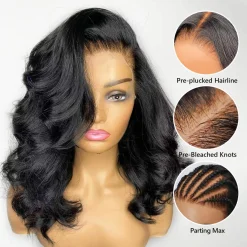
For beginners who want easier installation, pre-plucked HD lace options can reduce some of the customization work. For example, some HD lace frontal wig designs are created with pre-plucked hairlines and pre-bleached knots to create a softer transition between lace and skin. Straight HD Lace Frontal Wig
However, even the most natural lace cannot compensate for incorrect preparation.
The Four Hidden Reasons Your Lace Front Wig Keeps Lifting
Reason One: Your Skin Has Invisible Barriers
Your forehead looks clean, but your skin may still have things that interfere with adhesion.
Common examples:
- Skincare moisturizer
- Sunscreen
- Makeup residue
- Natural oils
- Sweat
- Hair products near the hairline
These create a thin invisible layer between your skin and adhesive.
Imagine trying to stick a sticker onto a glass window covered with lotion. The sticker may attach at first, but it will slowly peel away.
Your forehead works the same way.
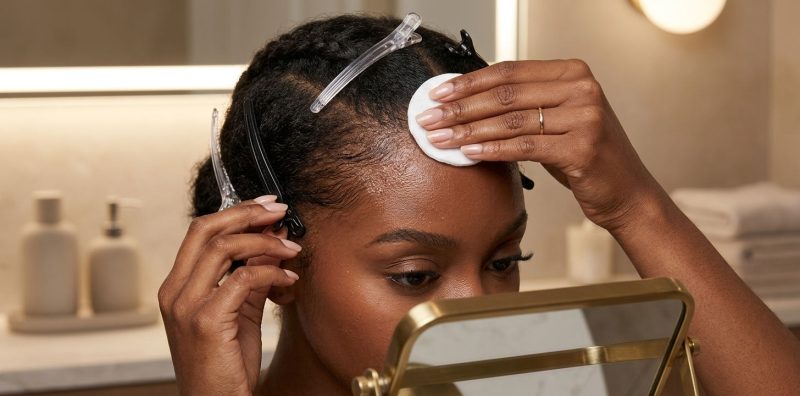
Before installation, the hairline area should be properly cleaned.
A simple preparation sequence:
Step 1:
Push your natural hair completely away from the installation area.
Step 2:
Clean the forehead and hairline using an oil-free cleanser or alcohol-based preparation product designed for wig installation.
Step 3:
Allow the skin to completely dry.
Step 4:
Avoid touching the cleaned area with your fingers.
This last step is often forgotten.
Your fingertips contain natural oils. Even a quick touch can reduce adhesive performance.
Reason Two: Using the Wrong Adhesive for Your Lifestyle
Not every woman needs the strongest possible hold.
This is one of the biggest misunderstandings in lace wig installation.
The “strongest” adhesive is not always the best choice.
Your lifestyle matters.
Someone working from home has different needs from someone:
- exercising regularly
- living in a humid climate
- working outdoors
- wearing a wig for long events
There are generally several types of attachment methods:
Temporary Hold
Usually suitable for:
- occasional wear
- weekends
- events
Advantages:
- easier removal
- less stress on the lace
- beginner-friendly
Extended Hold
Suitable for:
- several days of wear
- active schedules
Requires:
- better skin preparation
- careful maintenance
- proper removal technique
Glueless Options
Many women prefer glueless lace wigs because they provide flexibility.
They allow easier removal while still creating a natural appearance when the cap construction and fit are correct.
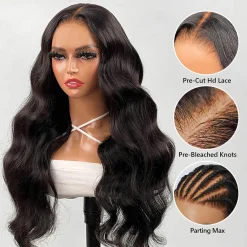
A well-designed glueless HD lace wig can be especially helpful for beginners who want a realistic look without daily adhesive application. Body Wave Glueless HD Lace Frontal Wig

HD lace wigs
The question is not:
“What adhesive is strongest?”
The better question is:
“What attachment method matches my daily life?”
Reason Three: Your Wig Cap Size Is Fighting Against You
This is a problem many people never consider.
They assume lifting means they need more glue.
But sometimes the wig itself is creating tension.
A lace front wig that is too small may pull backward at the hairline.
That constant pressure can slowly lift the lace.
Signs your cap may not fit correctly:
- The lace looks stretched near the temples
- The wig feels tight after several hours
- The front lifts first while the back stays secure
- You constantly adjust the wig position
A properly fitted wig should feel secure but comfortable.
Your scalp should not feel like it is being pulled.
This is why measuring your head circumference, ear-to-ear distance, and forehead-to-nape length matters before choosing a wig.
Reason Four: Sweat and Humidity Change the Installation
Many women discover their lace looks perfect indoors but starts lifting outside.
Why?
Because heat changes everything.
Sweat contains water, salt, and oils.
When sweat reaches the adhesive area, it can weaken the bond.
Humidity can also affect how certain adhesives behave.
This does not mean you cannot wear lace wigs in warm climates.
It means you need realistic expectations and proper preparation.
For example:
Before a summer event:
- Wash your skin and avoid heavy moisturizer near the hairline
- Install the wig several hours before leaving
- Allow adhesive layers to fully dry
- Carry a small touch-up kit
A few minutes of preparation can prevent hours of worrying later.

A Professional Wig Consultant’s View: The Lace Is Not the Enemy
After working with many wig wearers, one pattern appears again and again:
People blame the lace when the real issue is the relationship between the lace and the wearer’s routine.
HD lace is designed to be thin and natural-looking.
That thinness is its beauty.
But it also means installation technique matters.
A lace front wig is different from a traditional wig because the front area is designed to disappear into your skin. The closer the lace matches your skin tone and the flatter it sits, the more realistic the result becomes.
The goal is not to make the lace invisible through endless layers of products.
The goal is to create harmony between:
- your skin
- your wig
- your adhesive
- your lifestyle
That is when the wig stops feeling like something you are wearing and starts feeling like part of your personal style.
Real Stories: Two Lace Front Wig Problems That Looked Like Installation Failures (But Were Not)
Sometimes the fastest way to understand a wig problem is through another woman’s experience.
Because behind every “my lace is lifting” question, there is usually a real moment:
A first date.
A job interview.
A family gathering.
A vacation photo.
A day when someone simply wants to stop thinking about their hair and enjoy their life.
Here are two common situations I have seen repeatedly.
Case Study One: The Wedding Guest Who Kept Checking Her Hairline
Maria, a 34-year-old woman living in Texas, bought her first human hair lace front wig for her sister’s wedding.
She chose a beautiful body wave style because she wanted something elegant but not overly styled.
Before the wedding, she watched several installation videos.
Her routine looked correct:
- She cleaned her forehead.
- She applied adhesive.
- She pressed the lace down carefully.
- She styled baby hairs.
At home, everything looked beautiful.
But after several hours outdoors, she noticed the lace near her temples beginning to lift.
Her first thought was:
“My wig must not be good quality.”
After checking the installation, the problem became clear.
The issue was not the wig.
The issue was the combination of:
- Texas heat
- outdoor photos
- natural forehead oil
- too much skincare product applied before installation
She had applied moisturizer and sunscreen close to her hairline because she was preparing her skin for photographs.
The products were good for her skin, but they created a barrier between the lace adhesive and her forehead.
The solution was simple:
Before future installations, she changed her sequence:
- Complete skincare first.
- Leave a clean area around the hairline.
- Clean the installation zone afterward.
- Apply adhesive only after the skin is completely dry.
The difference was immediate.
The important lesson?
A beautiful installation starts before the wig touches your head.
Case Study Two: The Beginner Who Used Too Much Glue
Another customer, Jasmine, had the opposite problem.
She believed stronger hold meant more adhesive.
Her routine was:
- Apply glue.
- Add another layer.
- Add spray.
- Add another layer “just to be safe.”
The first few hours looked secure.
But by the end of the day:
- The lace edge became visible.
- The adhesive turned white.
- The hairline looked heavy.
- Removal became difficult.
She was not lacking effort.
She was actually doing too much.
Adhesive works best when applied in controlled layers.
Too much product can create the opposite effect.
Instead of creating a seamless connection, excess adhesive creates texture and buildup.
This is similar to makeup.
A foundation layer can create a smooth finish.
Ten thick layers usually make the skin texture more obvious.
Lace installation follows the same principle.
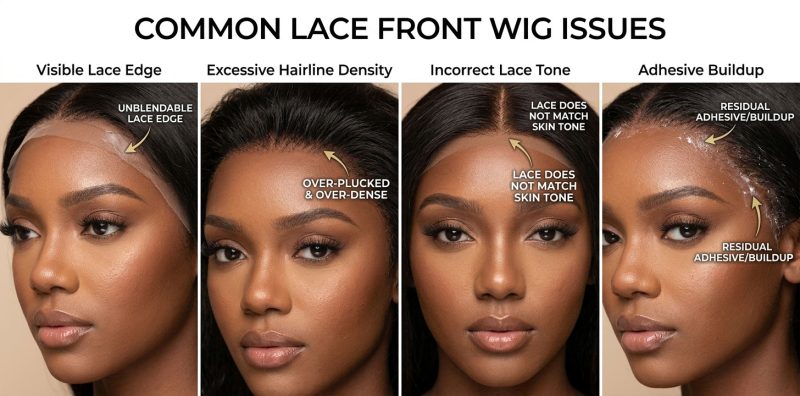
Four Ways a Lace Front Wig Can “Give Itself Away”
Many women describe the problem as:
“My wig looks fake.”
But “fake” can mean several different things.
A professional wig evaluation usually looks at four separate areas.
Understanding these areas makes troubleshooting much easier.
Problem Area One: Visible Lace Edge
The most common giveaway is a visible lace border.
This happens when:
- The lace is not fully melted into the skin
- Adhesive has not dried properly
- The lace color does not match the wearer’s skin tone
- Too much tension pulls the lace upward
A natural lace edge should gradually disappear.
Think about a contact lens.
You notice it when something is sitting on the surface.
You do not notice it when it blends with the eye.
The same idea applies to lace.
Possible solutions:
- Choose lace that matches your complexion
- Customize the lace tint if necessary
- Avoid placing the lace too far forward
- Allow adhesive to become tacky before pressing lace down
Problem Area Two: Unrealistic Hairline Density
A common mistake is thinking:
“More hair means more luxury.”
Actually, excessive density near the front hairline can make a wig look less realistic.
Natural hairlines usually have:
- lighter density at the very front
- gradual increase behind the hairline
- small irregular patterns
If the front is too thick, the eye immediately recognizes that the hair is not growing naturally.
Customization options include:
- carefully thinning the front area
- creating softer baby hairs
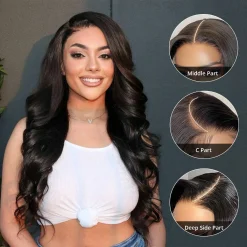
- adjusting the parting area
The goal is not making the wig thinner.
The goal is creating a natural transition.
Problem Area Three: Incorrect Lace Color Match
HD lace is popular because it is thin and flexible.
But “HD” does not automatically mean invisible on every person.
Lace still interacts with:
- skin undertone
- lighting
- foundation shade
- camera flash
For example:
A warm golden complexion may require different lace customization compared with a cooler undertone.
A lace that looks perfect under bedroom lighting may appear different under sunlight.
This is why many experienced wig wearers check their installation in multiple environments:
- bathroom mirror
- natural window light
- outdoor lighting
A wig should not only look good in one room.
Problem Area Four: Adhesive Residue and Maintenance Issues
Sometimes the lace is installed correctly, but maintenance creates problems.
Common signs:
- white adhesive buildup
- sticky hairline
- dirt trapped near the lace
- uneven lifting after several wears
This usually happens because removal is rushed.
Many beginners pull the lace upward quickly.
That can stretch the lace and damage delicate knots.
A better removal sequence:
Step 1:
Apply lace adhesive remover around the hairline.
Step 2:
Wait several minutes.
Step 3:
Slowly loosen the lace instead of pulling.
Step 4:
Clean adhesive residue before reinstalling.
Your lace front wig is an investment. Gentle handling extends its lifespan.
The Professional Installation Sequence: How To Stop Lace From Lifting
Here is the complete installation sequence I recommend for a more secure and natural-looking lace front wig.
Step 1: Prepare Your Natural Hair
Your foundation matters.
If your natural hair creates bumps underneath, the lace will not lay flat.
For longer hair:
- Create flat braids or cornrows.
- Avoid bulky sections near the front.
- Secure loose hairs completely.
For shorter hair:
- Use a wig cap if needed.
- Make sure edges are protected.
The goal is a smooth surface.
Step 2: Clean the Hairline Correctly
Remove:
- oil
- skincare products
- makeup
- sweat
Do not rush this step.
Many lifting problems begin here.
The forehead should feel clean and dry before adhesive application.
Step 3: Test Placement Before Adhesive
This step is often skipped.
Place the wig without glue first.
Check:
- hairline position
- temple area
- part location
- overall balance
A wig should sit where your natural hairline would realistically begin.
Step 4: Apply Adhesive in Thin Layers
More is not better.
Thin, even layers usually create a cleaner result.
Allow each layer to become slightly tacky before adding the next.
Wet adhesive often creates slipping.
Dry adhesive creates better grip.
Step 5: Press Lace Down Carefully
Do not aggressively rub.
Use gentle pressure.
A lace adhesive band or clean comb can help press the lace into place.
Focus especially on:
- corners
- temples
- front center
These areas usually experience the most movement.
Step 6: Finish With Hairline Customization
After the lace is secure:
- style baby hairs if desired
- adjust parting
- blend the hairline
The goal is not perfection.
Real hair is not perfectly symmetrical.
A slightly natural irregularity often looks more believable.
How To Choose the Right Lace Wig for Your Lifestyle
The best wig is not always the most expensive one.
The best wig is the one that fits your routine.
For beginners who want easy daily styling, a glueless option may provide more flexibility.
For women who prefer longer wear periods, a traditional adhesive installation may be more suitable.
When choosing, consider:
- How often you wear wigs
- Whether you exercise regularly
- Your climate
- How much installation time you enjoy
MsAloe’s lace wig collection includes different constructions designed for different wearing preferences, making it easier to compare options based on lifestyle rather than appearance alone.


HD lace wigs
Pre-bleached Knots Straight HD Lace Frontal Wig 180% Density 6×5 Pre-cut Lace Wear & Go Glueless Wig
HD lace wigs



HD lace wigs
Glueless Straight Short Bob Wigs Brazilian Clear Lace 180% Density Hd Closure Wig Human Hair

HD lace wigs


For women who want to understand more about creating a natural-looking wig appearance, topics such as lace customization, hairline adjustment, and proper maintenance are also important parts of achieving realistic results.
FAQ: Questions Women Often Ask About Lace Lifting
Why does my lace front wig lift after only a few hours?
Usually because the adhesive connection is affected by oil, moisture, sweat, incorrect application, or wig tension.
Check the preparation process before changing products.
Can I fix lifting without removing the whole wig?
Sometimes yes.
Small areas near the temples can often be cleaned and reapplied.
However, repeated touch-ups over dirty adhesive usually create more buildup.
Does HD lace prevent lifting?
No.
HD lace improves the appearance of the hairline because it is thinner.
It does not replace proper installation.
Even premium lace needs correct preparation and maintenance.
Why does my lace look natural at home but fake outside?
Lighting changes everything.
Sunlight reveals details that indoor lighting hides.
Always check your wig in natural light before important events.
How often should I reinstall my lace front wig?
It depends on:
- adhesive type
- lifestyle
- maintenance routine
- wig construction
Some people reinstall frequently, while others prefer longer wear periods.
The healthier approach is paying attention to the condition of the lace and your scalp rather than forcing a specific schedule.
A Little Reminder From Someone Who Has Seen Many Wig Journeys
A lace front wig is supposed to make your life easier, not become another thing you worry about.
The women who achieve the most natural results are usually not the ones with the most products.
They are the ones who understand the small details.
They know their skin.
They know their lifestyle.
They know how their wig is constructed.
A lifting lace does not mean you failed at wearing wigs.
It simply means your installation system needs adjustment.
Once you understand the relationship between lace, adhesive, preparation, and maintenance, wearing a wig becomes much more relaxed.
The goal has never been hiding.
The goal is feeling like yourself.
