
Why Does My Wig Tangle So Fast? The Hidden Reasons Behind Knots, Matting, and Unmanageable Hair
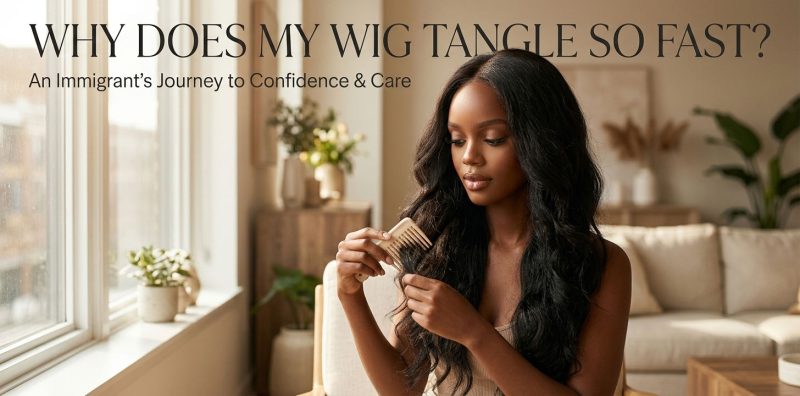
Why does a wig that feels like silk when you first take it out of the package sometimes become a tangled mess after only a few weeks?
This is one of those beauty questions many women ask quietly.
You run your fingers through the hair on day one, and it moves beautifully. The strands fall exactly the way you imagined. The texture feels soft. The movement feels natural.
Then life happens.
A busy morning.
A long commute.
A windy afternoon.
A night spent tossing and turning.
Suddenly, the same wig that made you feel polished now seems determined to create knots at the back of your neck.
You brush it.
The knots come back.
You add more products.
The hair feels heavier.
You wash it.
The texture does not feel the same.
And eventually, the frustrating thought appears:
“Did I buy the wrong wig?”
I have talked with many women who reached this point. They often assume tangling means the hair quality is poor. Sometimes that is true. But many times, the real answer is more complicated.
A human hair wig is not growing from your scalp anymore.
That one detail changes everything.
Your natural hair receives oils from your scalp every day. Those oils travel down the hair shaft and help keep strands flexible and protected.
A wig does not have that natural support system.
The hair needs us to replace what the scalp normally provides through careful washing, conditioning, storage, and handling.
Think of it like a beautiful silk blouse.
You would not throw it into a washing machine with rough towels and expect it to stay smooth forever.
A human hair wig deserves the same gentle attention.
The good news?
Fast tangling is usually a message.
The hair is telling you something.
It may be asking for:
- more moisture
- less friction
- gentler brushing
- better storage
- a different care routine
Once you understand the reason behind tangling, caring for your wig becomes much less stressful.
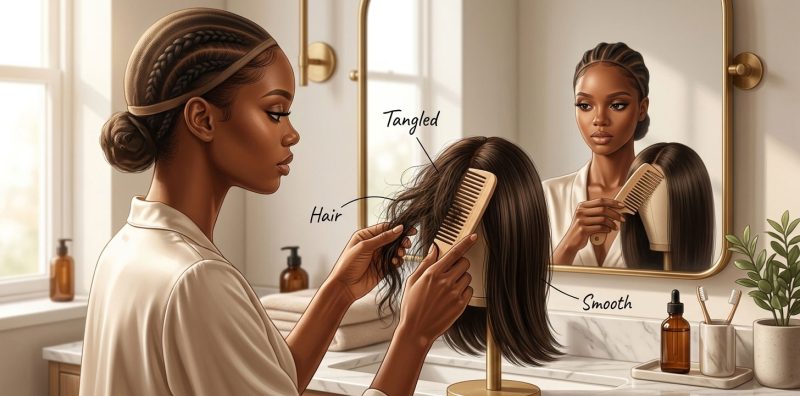
The Real Reason Your Wig Tangled Faster Than You Expected
Tangling Is Usually a Symptom, Not the Original Problem
When women ask:
“Why does my wig tangle so fast?”
The obvious answer seems simple:
“The hair is dry.”
But dryness is usually not where the story begins.
Tangling is often the final result of several smaller problems happening over time.
Imagine walking through a forest.
One small branch may not stop you.
But if hundreds of small branches grow together, your path becomes difficult.
Hair works similarly.
A single rough strand may not create a noticeable problem.
But thousands of strands with increased friction begin catching onto each other.
That is when you feel:
- knots
- matting
- rough ends
- difficult brushing
- loss of movement
A professional wig consultant usually looks at several factors before blaming the hair itself.
The questions are:
- How often is the wig worn?
- How is it stored?
- What products are being used?
- Is heat styling involved?
- Does the wearer sleep in it?
- What environment is it exposed to?
A 24-inch body wave wig worn daily in a humid city requires a different routine than a short straight wig worn occasionally for events.
The hair is not just hair.
It is part of a system.
The Four Hidden Causes Behind Fast Wig Tangling
Cause One: The Hair Cuticle Has Lost Its Smooth Surface
To understand tangling, it helps to understand what a single strand of hair looks like.
Human hair has three main layers:
The Cuticle
The outer protective layer.
Think of it like tiny overlapping roof tiles.
When the cuticle is healthy:
- the surface feels smooth
- strands slide easily
- light reflects evenly
- hair appears shiny
When the cuticle becomes damaged:
- the edges lift
- strands catch together
- friction increases
- tangling becomes easier
This is why two wigs with the same length can behave completely differently.
One may remain smooth.
Another may constantly knot.
The difference is often the condition of the hair fiber.
Common causes of cuticle stress:
Excessive Heat
Flat irons and curling irons can weaken the hair structure.
Especially when:
- temperatures are too high
- heat protection is skipped
- the same area is repeatedly styled
For human hair wigs, frequent heat above approximately 350°F (175°C) can gradually affect moisture balance.
This does not mean heat styling is impossible.
It means heat should be controlled.
A better approach:
- use lower temperatures when possible
- apply heat protectant
- avoid repeated passes over the same strand
- allow hair to cool before brushing
Chemical Processing
Color-treated hair requires additional care.
Bleaching changes the internal structure of hair because chemical processes open the cuticle layer to remove or deposit pigment.
After processing:
The hair often needs:
- moisture restoration
- protein balance
- reduced heat exposure
Many women focus only on shampoo.
But conditioner choice often makes a bigger difference for preventing tangles.
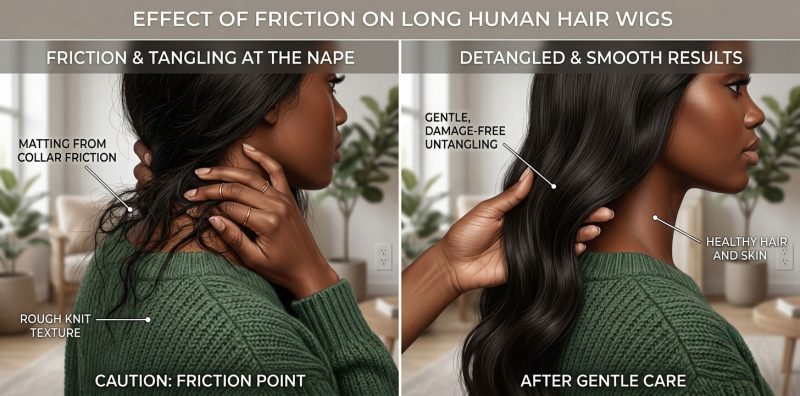
Cause Two: Everyday Friction Is Slowly Creating Knots
One of the most overlooked reasons for wig tangling is friction.
It is not dramatic.
It happens quietly.
Every day.
The most common place?
The nape area.
The hair at the back of your neck experiences constant movement against:
- collars
- scarves
- jackets
- sweaters
- car seats
- pillowcases
That repeated rubbing creates tiny amounts of damage.
Over time:
smooth strands become rougher.
rough strands grab each other.
knots appear.
This is why many women say:
“My wig only tangles at the back.”
That is not random.
That area simply experiences the most physical contact.
Small lifestyle changes can help:
Instead of sleeping directly on cotton:
Try:
- satin bonnet
- silk scarf
- satin pillowcase
Instead of letting long hair constantly rub against clothing:
Try:
- loose protective styles
- keeping hair away from rough fabrics
These small habits often make a bigger difference than adding more products.
Cause Three: Washing Your Wig Like Natural Hair
This is one of the most common mistakes.
Many women wash wigs the same way they wash their own hair.
They put shampoo directly on top.
They scrub.
They twist.
They squeeze.
But wigs need a gentler approach.
Remember:
The hair is attached to a cap.
Aggressive washing can create unnecessary stress.
A better washing sequence:
Step 1: Detangle Before Washing
Never begin washing a tangled wig.
Start from the ends.
Use a wide-tooth comb.
Work upward slowly.
If you start from the roots, knots become tighter.
Step 2: Use Lukewarm Water
Very hot water can make hair feel drier.
Lukewarm water helps cleanse without creating unnecessary stress.
Step 3: Shampoo in a Downward Motion
Do not rub hair into a ball.
Instead:
- wet the wig completely
- apply shampoo gently
- move hands downward following the hair direction
The goal is cleaning, not creating friction.
Step 4: Condition the Correct Areas
Conditioner should focus on:
- mid-lengths
- ends
Avoid heavy conditioner near lace and knots.
Product buildup near the base can affect:
- ventilation
- movement
- cleanliness
Step 5: Dry Correctly
Do not aggressively towel dry.
A better method:
- gently squeeze excess water
- place wig on a stand
- allow natural drying when possible
Wet hair is more vulnerable because strands stretch more easily.
Cause Four: Your Wig Construction Does Not Match Your Routine
Sometimes the issue is not maintenance.
It is compatibility.
A wig should match your lifestyle.
For example:
A woman who wears a wig every day, exercises frequently, and lives in a humid climate may need a different construction compared with someone who wears a wig twice a month.
Important factors include:
Length
Longer wigs naturally experience more friction.
A 28-inch wig has more surface area moving against clothing than a 12-inch bob.
Texture
Some textures require more maintenance.
Straight hair:
- easier daily brushing
- may show dryness faster
Curly or wavy textures:
- require curl preservation
- should not be brushed aggressively when dry
Density
Very high-density wigs can look beautiful but may require more care because there is more hair volume to maintain.
Choosing the right wig is not about finding the “best” one.
It is about finding the one that fits your daily rhythm.
For women who prefer easier maintenance, exploring different human hair wig constructions can help match the wig to their routine. A collection of lace wigs with different lengths, textures, and cap designs allows wearers to compare options based on how they actually live.


HD lace wigs
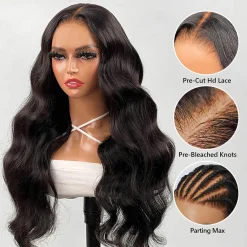
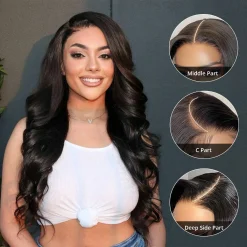
Pre-bleached Knots Straight HD Lace Frontal Wig 180% Density 6×5 Pre-cut Lace Wear & Go Glueless Wig
HD lace wigs



HD lace wigs
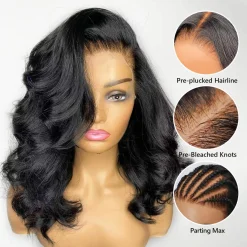
Glueless Straight Short Bob Wigs Brazilian Clear Lace 180% Density Hd Closure Wig Human Hair

HD lace wigs

Four Signs Your Wig Is Telling You Something Is Wrong
A tangled wig does not always announce the problem immediately.
Usually, there are small warning signs first.
Many women notice them but do not know what they mean.
They simply think:
“Maybe this wig just needs more brushing.”
But excessive brushing can sometimes make the situation worse.
Hair care is not about fighting the hair.
It is about understanding what the hair is communicating.
Here are four common “giveaway” signs experienced wig wearers learn to recognize.
Dimension One: The Ends Become Dry and Start Catching Together
The ends of a wig usually show damage first.
Why?
Because they are the oldest part of the hair.
Think about a long human hair wig.
The strand near the lace base is the newest section.
The ends may have been exposed to:
- processing
- coloring
- heat styling
- environmental stress
for much longer.
When the ends lose moisture, the cuticle becomes rough.
The result:
- hair feels straw-like
- brushing becomes difficult
- small knots appear repeatedly
Many women respond by adding heavy oils.
This sometimes creates another problem.
Too much oil can coat the hair and make it feel:
- greasy
- heavy
- difficult to style
A better approach is balance.
For dry ends:
- Apply lightweight leave-in conditioner.
- Focus on the lower half of the hair.
- Avoid applying thick products near the lace area.
- Trim severely damaged ends when needed.
A wig does not need to feel overloaded with products to feel healthy.
Sometimes it simply needs moisture restored.
Dimension Two: The Nape Area Becomes a Constant Knot Zone
If your wig always tangles at the back, pay attention to your daily habits.
The nape area experiences the most movement.
Imagine wearing a long scarf.
Every time you turn your head, the fabric moves.
Your wig experiences similar friction.
Common triggers:
- high collars
- wool sweaters
- winter jackets
- car headrests
- sleeping without protection
One customer I worked with described her routine:
She loved wearing a 24-inch straight wig to work.
Every morning, she styled it beautifully.
But every afternoon, the back became tangled.
She changed products several times.
Nothing helped.
The real solution was surprisingly simple.
She wore a rough wool coat every day during winter.
The hair was constantly rubbing against the collar.
After changing to a smoother jacket lining and protecting the wig at night, the tangling reduced dramatically.
The lesson?
Sometimes the problem is not what you put on your wig.
It is what your wig touches every day.
Dimension Three: The Hair Loses Movement and Starts Looking Heavy
A healthy wig should move naturally.
When you turn your head, the hair should follow.
When a wig becomes overloaded, the movement changes.
It may:
- stick together
- separate into thick sections
- lose softness
- look flat
Common causes:
Product Buildup
Repeated use of:
- oils
- styling creams
- sprays
- silicone-heavy products
can create a coating.
The hair may feel soft temporarily but eventually becomes harder to manage.
Incorrect Conditioning
More conditioner does not always mean softer hair.
Too much conditioner can weigh down strands.
Especially on:
- fine textures
- straight wigs
- lower-density wigs
The goal is not maximum product.
The goal is the right amount.
Dimension Four: The Texture Changes After Washing
Many women feel disappointed when a wig does not look exactly the same after washing.
But washing changes the hair environment.
This is especially noticeable with:
- body wave
- loose wave
- curly textures
The original pattern may relax.
That does not always mean the hair is damaged.
It may simply need proper styling.
For example:
A body wave wig may need:
- gentle conditioning
- air drying
- light mousse
- heat styling only when necessary
Curly wigs may require:
- curl definition products
- finger styling
- avoiding aggressive brushing when dry
Understanding the personality of the texture helps maintain the original look.
Real Case Studies: Two Women Who Solved Their Wig Tangling Problems
Case Study One: “I Thought I Bought Bad Hair”
Angela, a first-time human hair wig wearer, purchased a long straight lace front wig.
She loved the first impression.
The hair looked smooth.
The movement felt natural.
But after one month, she became frustrated.
Every morning she spent extra time brushing.
The ends tangled.
The back became difficult.
She started thinking:
“Maybe expensive wigs are just not worth it.”
When we looked at her routine, the problem became clear.
Her care habits were based on natural hair.
She was:
- washing too frequently
- brushing from the top downward
- sleeping without protecting the hair
- using heavy hair oil every day
Her updated routine:
Morning:
- gently shake the wig
- brush from ends upward
- use minimal leave-in product
Night:
- remove the wig when possible
- store on a wig stand
- cover with satin protection
After changing her routine, the same wig became much easier to manage.
The hair was not the enemy.
The routine was simply mismatched.
Case Study Two: “My Busy Schedule Was Damaging My Wig”
Jasmine worked in healthcare.
Her schedule was unpredictable.
She often wore her wig for long shifts.
Because of her job:
- she moved constantly
- she wore uniforms with collars
- she experienced temperature changes throughout the day
Her wig always tangled near the neckline.
She tried:
- different shampoos
- expensive oils
- stronger brushes
But nothing solved the root problem.
The solution was lifestyle adjustment.
She changed to:
- shorter wig length for workdays
- protective nighttime storage
- regular conditioning schedule
For special occasions, she still enjoyed longer styles.
She simply stopped expecting one wig to handle every situation.
That small mindset change made wig ownership much easier.
The Professional Wig Care Sequence: How To Prevent Tangling Step by Step
Here is a practical routine many wig wearers can follow.
Step 1: Detangle Before Problems Become Visible
Do not wait until large knots appear.
Small daily maintenance is easier.
Correct method:
- Hold the wig near the lace base.
- Start brushing from the ends.
- Move upward slowly.
- Never pull aggressively.
A wide-tooth comb or soft detangling brush usually creates less stress.
Step 2: Wash According to Wear Frequency
There is no universal washing schedule.
It depends on:
- how often you wear it
- climate
- styling products
- sweating
A frequently worn wig may need more regular cleansing.
An occasional event wig may need less.
Overwashing can remove moisture unnecessarily.
Underwashing can create buildup.
The goal is balance.
Step 3: Condition With Intention
Conditioner should improve flexibility.
Apply mainly:
- middle sections
- ends
Avoid saturating:
- lace
- knots
- cap construction
because excessive moisture near these areas can affect longevity.
Step 4: Protect Hair During Sleep
If you sleep in your wig:
Reduce friction.
Helpful habits:
- satin bonnet
- silk scarf
- satin pillowcase
Long hair especially benefits from nighttime protection.
Step 5: Store Correctly Between Uses
A wig left randomly on furniture or inside a bag will develop unnecessary tangles.
Better:
- place on wig stand
- keep away from humidity
- avoid crushing the hair
- gently brush before storage
A few minutes of care can save much more time later.
Choosing a Wig That Matches Your Lifestyle
Sometimes preventing tangling starts before purchase.
Different women need different wig designs.
Consider:
If You Wear Wigs Daily
Look for:
- comfortable cap construction
- manageable length
- easy maintenance texture
If You Prefer Minimal Styling
Straight textures and moderate lengths are often easier to maintain.
If You Love Volume and Movement
Wave textures may require more refreshing and curl care.
If You Are New to Lace Wigs
A beginner-friendly lace construction can make daily maintenance easier.
MsAloe’s lace wig collection includes different styles and constructions that allow women to choose based on their wearing habits, preferred texture, and maintenance comfort rather than choosing only by appearance.
HD lace wigs
Pre-bleached Knots Straight HD Lace Frontal Wig 180% Density 6×5 Pre-cut Lace Wear & Go Glueless Wig
HD lace wigs
HD lace wigs
Glueless Straight Short Bob Wigs Brazilian Clear Lace 180% Density Hd Closure Wig Human Hair
HD lace wigs
For example, a straight HD lace frontal wig can be a practical option for women who prefer a smoother style with easier daily brushing because straight textures usually require less curl maintenance.
Women who enjoy softer movement may prefer body wave textures, but these styles benefit from proper moisture care and gentle styling habits.
For additional guidance about maintaining human hair wigs, related care articles can help explain washing, storage, and long-term maintenance routines.
FAQ: Why Does My Wig Tangle So Fast?
Why does my human hair wig tangle at the back?
The nape area receives the most friction from clothing, pillows, and daily movement.
Protecting this area usually makes the biggest difference.
Does expensive human hair mean it will never tangle?
No.
Higher-quality hair can still tangle if it is exposed to dryness, friction, or incorrect care.
Good maintenance protects the investment.
How often should I brush my wig?
Brush when needed, but avoid aggressive repeated brushing.
Frequent rough brushing can create more stress.
Gentle maintenance works better.
Can I fix a wig that has already become tangled?
Usually, yes.
Start slowly:
- Separate large knots with fingers.
- Apply lightweight conditioner or detangling spray.
- Work from ends upward.
- Avoid pulling.
Severely matted areas may require professional help.
Why does my wig feel dry after washing?
Possible reasons:
- shampoo too harsh
- insufficient conditioning
- excessive heat
- lack of moisture protection
Adjusting the routine often improves the texture.
A Small Reminder From Someone Who Has Seen Many Wig Journeys
There is a moment many women have with their wigs.
They stand in front of the mirror, holding a brush, wondering why something that was supposed to make mornings easier has become another task on the list.
But caring for a wig is not about perfection.
It is about learning its personality.
A long wave wig behaves differently from a short straight wig.
A daily wig behaves differently from a special-event wig.
A humid climate creates different challenges than a dry one.
The women who become comfortable wearing wigs are not the ones who never experience problems.
They are the ones who learn how to solve small problems before they become big ones.
A little patience.
A gentler routine.
A better understanding of the hair.
That is often what turns a tangled wig back into a style you enjoy wearing.
