
Why Does My Wig Knot So Easily? 11 Hidden Causes of Tangles and How to Keep Your Wig Smooth Longer
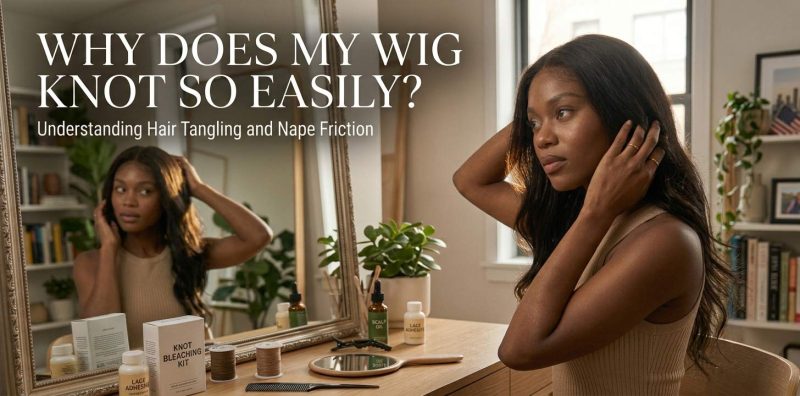
Why Does My Wig Knot So Easily?
Have you ever brushed your wig thoroughly before leaving the house, only to find it tangled again less than an hour later?
It can feel almost impossible.
One minute your hair looks smooth, glossy, and perfectly styled.
The next, you’re discreetly running your fingers through the ends during lunch, wondering how so many knots appeared so quickly.
If you’ve ever caught yourself thinking,
“Did I buy a bad-quality wig?”
you’re certainly not alone.
But here’s something that surprises many wig wearers:
Most tangles have very little to do with the quality of the wig itself.
Over the years, I’ve met women who were convinced they needed a brand-new wig because theirs had become “impossible to manage.”
Yet after taking a closer look, the real causes were often much smaller—and much easier to fix.
Sometimes it was a winter coat rubbing against the nape.
Sometimes it was too much leave-in conditioner.
Sometimes it was simply brushing the wrong way.
A wig that knots easily isn’t always damaged.
More often, it’s responding to tiny daily habits that quietly build up over time.
Understanding those habits is the key to enjoying a wig that feels soft, moves naturally, and stays manageable throughout the day.
Let’s start with something many people misunderstand.
What Does “Knotting” Really Mean?
People often use words like:
- tangling
- knotting
- matting
- shedding
as if they all describe the same problem.
They don’t.
Understanding the difference helps you solve the right issue instead of treating the wrong one.
Tangling
Tangling happens when neighboring hair strands wrap around one another.
It is completely normal.
Even healthy natural hair tangles.
The goal isn’t eliminating tangles entirely.
It’s reducing how often they happen and making them easier to remove.
Knotting
Knots occur when several tangled strands tighten together into one small section.
Unlike ordinary tangles, knots usually require more patience to remove.
Repeatedly pulling on them often causes unnecessary breakage or shedding.
Matting
Matting is far more severe.
Instead of a few tangled strands, large sections begin sticking together.
Matting often develops after prolonged friction, excessive product buildup, or sleeping in a wig without protection.
Fortunately, most everyday wig wearers never reach this stage if regular maintenance is part of their routine.
Shedding
Shedding isn’t a tangle at all.
It simply means hair strands are releasing from the wig cap or lace.
While excessive pulling on knots can increase shedding, the two issues have different causes and require different solutions.
Knowing which problem you’re dealing with makes every maintenance decision more effective.
Why Even Expensive Wigs Can Knot Easily
One of the biggest myths in the wig community is this:
“If I spend more money, my wig will never tangle.”
I wish that were true.
The reality is much more reassuring.
High-quality wigs don’t stay smooth because they’re magically immune to friction.
They stay smooth because their fibers are better able to resist the tiny stresses of daily life.
Every wig experiences friction.
Every wig experiences movement.
Every wig is exposed to weather, clothing, humidity, and styling.
The difference is simply how well the fibers recover afterward.
I’ve worked with clients who owned premium human hair wigs costing hundreds of dollars that tangled every afternoon.
I’ve also seen carefully maintained wigs last beautifully for years with minimal tangling.
Price matters.
Quality matters.
But daily habits matter just as much.


HD lace wigs
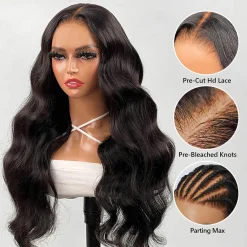
Pre-bleached Knots Straight HD Lace Frontal Wig 180% Density 6×5 Pre-cut Lace Wear & Go Glueless Wig
HD lace wigs



HD lace wigs
Glueless Straight Short Bob Wigs Brazilian Clear Lace 180% Density Hd Closure Wig Human Hair

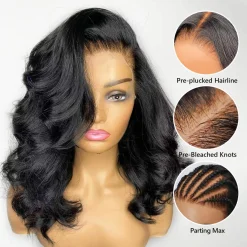
HD lace wigs
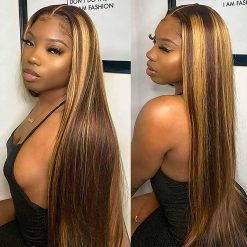

Why Does My Human Hair Wig Knot So Easily?
One reason human hair feels so natural is because it is natural.
That also means it behaves like natural hair.
It changes.
It ages.
It reacts to the environment.
Understanding the science behind those changes makes tangles much less mysterious.
The Direction of the Cuticle Matters
Every healthy human hair strand is protected by an outer layer called the cuticle.
Think of the cuticle as thousands of tiny overlapping roof shingles.
When all those shingles lie flat and point in the same direction, neighboring hairs slide smoothly against one another.
That smooth movement creates the silky feeling we associate with healthy hair.
Over time, however, daily brushing, UV exposure, heat styling, and ordinary wear gradually lift portions of those cuticles.
Once the surface becomes rougher, adjacent hairs begin catching against each other.
The more they catch, the easier they wrap together.
And the easier they wrap together, the more frequently small tangles develop into larger knots.
This is why human hair doesn’t suddenly become “bad.”
It gradually becomes less efficient at protecting itself from friction.
Porosity Quietly Changes Everything
Another concept that many wig wearers never hear about is hair porosity.
Porosity describes how easily moisture moves in and out of the hair shaft.
Imagine every strand has thousands of microscopic doors.
Healthy, balanced hair opens and closes those doors gradually.
Highly porous hair leaves them open much longer.
That means moisture escapes more easily.
Dryer strands create more friction.
More friction creates more tangles.
Ironically, many women respond by adding extra oils and leave-in conditioners.
While those products can certainly help, using too many without proper cleansing often creates a second problem:
Product buildup.
Instead of reducing friction, the hair begins sticking together.
Finding the right balance—not simply adding more products—is usually the better long-term solution.
The Ends Always Tell the Story First
Have you ever noticed that the roots still feel soft, but the last few inches seem impossible to brush?
That’s no coincidence.
The ends are the oldest part of every hair strand.
They’ve experienced the most:
- brushing;
- styling;
- heat exposure;
- sunlight;
- friction against clothing.
Over time, they naturally become more vulnerable.
That’s why professional wig maintenance often focuses more attention on the lower third of the hair than anywhere else.
A healthy crown cannot compensate for damaged ends.
Real Story: Sophia’s “Bad Wig” That Wasn’t Bad at All
Sophia had almost given up on her favorite 22-inch body wave wig.
“I swear this wig tangles every ten minutes,” she laughed as she placed it on the consultation table.
She was already shopping for a replacement.
Before recommending anything new, we walked through her daily routine together.
She commuted to work wearing a wool coat every morning.
She drove with the seat belt rubbing across one side of the hair.
She refreshed the waves twice a day with leave-in conditioner.
None of those habits seemed problematic on their own.
Together, however, they created constant friction and gradual product buildup.
After a clarifying wash, a light trim of the ends, and a few simple changes to her routine, the difference surprised even her.
A week later she sent me a message that made me smile:
“I thought I needed a new wig. Turns out I just needed new habits.”
That lesson has stayed with me ever since.
Sometimes the wig isn’t asking to be replaced.
It’s simply asking to be understood.
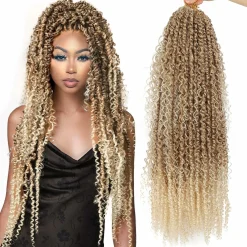
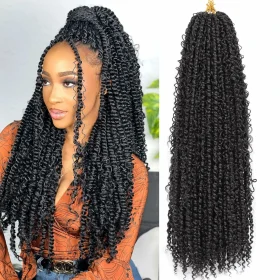
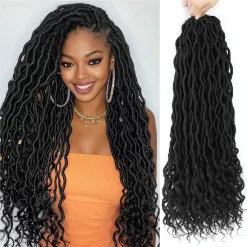
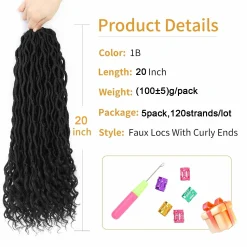
Synthetic Extensions


Synthetic Extensions
Synthetic Extensions
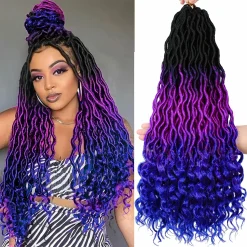
Synthetic Extensions
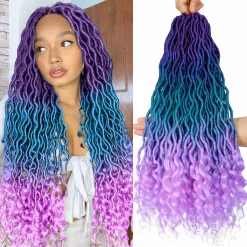
Why Synthetic Wigs Tangle Much Faster Than Human Hair
Many first-time wig wearers are surprised when their synthetic wig seems to knot after only a few hours of wear.
“It’s brand new,” they say.
“So why is it already tangling?”
The answer lies in how synthetic fibers are made.
Unlike human hair, synthetic fibers don’t have a cuticle.
Instead, they’re made from carefully engineered polymers designed to imitate the appearance of real hair.
These fibers are excellent at holding their style.
A curly wig stays curly.
A straight wig stays sleek.
A body wave often keeps its pattern far longer than natural hair.
But that convenience comes with a trade-off.
Synthetic fibers don’t have the same flexibility as healthy human hair.
Once friction begins roughening the surface, individual strands start catching on one another much more easily.
Because there’s no natural cuticle to smooth things out, tangles often appear faster—and once they tighten into knots, they can be much harder to remove.
Static Electricity Makes Everything Worse
Have you ever taken off a sweater in winter and felt your hair cling to your face?
The same thing happens to synthetic wigs.
Static electricity creates tiny invisible attractions between individual fibers.
Instead of falling naturally, strands begin sticking together.
That makes them more likely to:
- wrap around neighboring hairs;
- create tiny loops;
- tighten into knots as you move.
This is one reason many synthetic wigs seem perfectly manageable indoors but become noticeably more tangled after spending time outside on a cold, dry day.
Heat Changes the Surface of Synthetic Fibers
Many synthetic wigs today are labeled “heat friendly.”
That doesn’t mean unlimited heat.
Every synthetic fiber has a recommended temperature range.
Repeated styling beyond that range gradually alters the outer surface of the fiber.
Microscopically, those once-smooth strands become rougher.
Rough fibers create more resistance.
More resistance means more friction.
More friction means more tangles.
Unlike human hair, damaged synthetic fibers cannot restore themselves.
Protecting them from unnecessary heat is one of the simplest ways to extend the life of your wig.
The 11 Hidden Reasons Your Wig Knots So Easily
When clients ask me why their wig tangles constantly, the answer is rarely just one thing.
Usually, it’s several small habits working together.
Let’s look at the most common ones.
1. Dry Hair Creates More Friction
Healthy hair moves because each strand glides smoothly past the next.
As moisture decreases, that movement changes.
Dry strands develop a rougher surface, making it easier for neighboring hairs to catch and twist together.
This is especially common in:
- color-treated human hair wigs;
- high-porosity wigs;
- wigs exposed to frequent heat styling.
Moisture matters—but balanced moisture matters even more.
2. Product Buildup Makes Strands Stick Together
Many people respond to tangling by adding more products.
A little serum.
A little oil.
A little leave-in conditioner.
Individually, those products can be helpful.
Layered repeatedly without thorough cleansing, they begin coating each strand.
Instead of moving freely, neighboring hairs start sticking together.
Ironically, trying to solve tangles with more products often creates even more tangles.
3. Friction from Clothing
One of the biggest causes of knotting has nothing to do with your hair routine.
It’s your wardrobe.
Daily friction comes from:
- hoodies;
- wool sweaters;
- winter scarves;
- denim jackets;
- backpack straps;
- seat belts.
Every movement gently rubs the lower sections of the wig.
Thousands of tiny contacts each day gradually roughen the ends.
This is why tangles almost always begin underneath the hair rather than on top.
4. Sleeping in Your Wig
Even high-quality wigs aren’t designed to withstand eight hours of continuous friction against a pillow.
Every turn of your head twists the strands together.
By morning, those tiny twists often become noticeable knots.
If sleeping in your wig is unavoidable, protecting the hair with a satin bonnet or silk pillowcase can significantly reduce friction.
5. Brushing from the Roots Down
This is one of the most common mistakes I see.
Many people instinctively begin brushing near the scalp.
Unfortunately, every knot lower down gets pushed into the next one.
Instead, begin at the ends.
Work upward gradually.
Removing small tangles first prevents them from combining into larger ones.
Patience saves hair.
Force usually costs hair.
6. Washing Too Aggressively
Imagine washing a cashmere sweater by scrubbing it between your hands.
You probably wouldn’t.
Yet many people unknowingly do something very similar with wigs.
Twisting, rubbing, and bunching the hair together while shampooing encourages strands to wrap around one another.
A gentler approach keeps tangles from forming before the wig even begins drying.
7. Wind Is Stronger Than You Think
A breezy afternoon may feel refreshing.
Your wig experiences it differently.
Wind constantly lifts and crosses individual strands.
Longer wigs are especially vulnerable because the ends have more opportunities to wrap around each other.
After spending time outdoors, gently separating the hair with your fingers before brushing often prevents small tangles from becoming stubborn knots.
8. High Humidity
Moist air changes how both human hair and synthetic fibers behave.
For human hair, excess humidity can cause the cuticle to swell slightly, increasing friction.
For synthetic fibers, humidity can affect styling products, making the surface feel heavier or stickier.
Either way, movement becomes less fluid.
9. Split or Damaged Ends
Even if the rest of the wig looks beautiful, damaged ends behave differently.
They catch.
They wrap.
They cling to neighboring strands.
Keeping the ends healthy often reduces tangling more than changing any styling product.
10. Wearing the Wig Every Day Without Maintenance
Your favorite wig deserves regular care.
Daily wear means daily exposure to:
- dust;
- body oils;
- makeup;
- environmental pollution;
- friction.
Without routine maintenance, these small factors gradually accumulate until the wig begins tangling much more frequently.
11. The Wig Is Asking for a Simpler Routine
Sometimes the solution isn’t another product.
It’s fewer products.
Healthier habits.
Less heat.
Gentler brushing.
Regular cleansing.
The simplest routines are often the ones that produce the healthiest-looking hair.
HD lace wigs
Pre-bleached Knots Straight HD Lace Frontal Wig 180% Density 6×5 Pre-cut Lace Wear & Go Glueless Wig
HD lace wigs
HD lace wigs
Glueless Straight Short Bob Wigs Brazilian Clear Lace 180% Density Hd Closure Wig Human Hair
HD lace wigs
Why the Nape of Your Wig Always Tangles First
If you’ve ever reached behind your neck and found a cluster of stubborn knots while the rest of your wig still felt smooth, you’re not imagining things.
The nape is the hardest-working part of any wig.
It’s constantly rubbing against:
- shirt collars;
- hoodie hoods;
- blazer lapels;
- scarves;
- backpacks;
- car seats.
Unlike the top layers of hair, the nape rarely gets a chance to move freely.
Instead, every turn of your head creates gentle friction between the fibers and your clothing.
By the end of the day, hundreds—sometimes thousands—of these tiny movements have occurred.
Individually, they seem insignificant.
Together, they explain why the nape almost always tangles before any other area.
Professional stylists often recommend paying special attention to this section during your daily detangling routine.
Spending just one extra minute caring for the nape can prevent much larger problems later.
Human Hair vs. Synthetic: Which Wig Knots More Easily?
This is one of the questions I hear most often.
“Do human hair wigs tangle less than synthetic wigs?”
The honest answer is:
It depends on why the tangling is happening.
Neither type of wig is completely immune to knots.
They simply tangle for different reasons.
Human hair behaves like biological hair.
Synthetic hair behaves like engineered fiber.
Understanding those differences helps you choose the right maintenance routine instead of treating every wig the same way.
| Human Hair Wig | Synthetic Wig |
| Natural cuticles | Smooth polymer fibers |
| Moisture balance affects movement | Static electricity affects movement |
| Can become dry over time | Fibers gradually wear from friction |
| Responds well to deep conditioning | Cannot absorb conditioning products like natural hair |
| Heat styling can restore or reshape | Excessive heat permanently damages fibers |
| Usually lasts longer with proper care | Requires gentler daily handling |
Neither option is “better.”
They simply require different habits.
One of the biggest mistakes people make is using a human hair routine on a synthetic wig—or vice versa.
Heavy Tangles? Use This Diagnosis Guide First
Before buying another detangling spray or replacing your wig, spend a few minutes identifying what’s actually happening.
The symptoms often reveal the real cause.
| What You Notice | Most Likely Cause | What to Do |
| Knots only at the nape | Clothing friction | Detangle daily and reduce rubbing against collars |
| Hair tangles after washing | Improper washing or incomplete rinsing | Wash gently and rinse thoroughly |
| Hair feels sticky | Product buildup | Clarifying cleanse |
| Ends knot constantly | Dry or damaged ends | Trim lightly and apply conditioner to mid-lengths and ends |
| Wig tangles after flat ironing | Heat fatigue | Reduce styling temperature and frequency |
| Curly wig mats together | Over-brushing | Finger-detangle and reshape curls |
| Synthetic wig tangles in winter | Static electricity | Use anti-static techniques and minimize friction |
| Lace area feels rough | Adhesive residue | Clean the lace before reinstalling |
Sometimes solving tangles is less about buying another product and more about changing one small daily habit.
How the Seasons Affect Wig Tangles
One thing I love about working with women from different parts of the United States is seeing how differently wigs behave depending on the climate.
The exact same wig can feel completely different in Florida than it does in Arizona.
That’s because your wig responds to the environment just as much as it responds to your routine.
Summer Humidity
Warm, humid weather causes human hair to absorb moisture from the air.
As the cuticles swell slightly, neighboring hairs experience more friction.
The result?
More tangles.
More frizz.
Less movement.
Longer styles often become noticeably more difficult to manage by the end of the day.
Winter Dryness
Cold weather creates the opposite challenge.
Indoor heating removes moisture from both natural hair and human hair wigs.
Meanwhile, sweaters, coats, and scarves increase friction around the nape.
Static electricity makes synthetic wigs even more prone to tangling.
Many women blame their wig when the weather is actually the bigger factor.
Windy Days
A gentle breeze might look beautiful in photos.
Your wig usually disagrees.
Long hair constantly crossing over itself creates tiny loops that gradually tighten into knots.
If you’ve spent time outdoors, gently separating the hair with your fingers before brushing often saves a great deal of unnecessary pulling later.

How to Stop Your Wig From Knotting So Easily
The encouraging news is that most tangling problems can be improved.
Not overnight.
Not perfectly.
But significantly.
Professional wig care isn’t about eliminating every knot.
It’s about reducing the conditions that create them.
Step 1: Detangle Before Washing
Never begin washing a heavily tangled wig.
Remove small tangles first using:
- your fingers;
- a wide-tooth comb;
- a detangling brush designed for wigs.
Working slowly before washing prevents knots from tightening once the hair becomes wet.
Step 2: Wash Gently
Instead of scrubbing the hair together, let shampoo flow through the strands.
Think about washing delicate silk rather than heavy denim.
Gentle handling protects both the hair shaft and the lace.
Step 3: Condition Strategically
Apply conditioner primarily to:
- mid-lengths;
- ends.
Avoid coating:
- lace;
- knots;
- roots.
Heavy products around the base of the wig can create buildup over time.
HD lace wigs
Pre-bleached Knots Straight HD Lace Frontal Wig 180% Density 6×5 Pre-cut Lace Wear & Go Glueless Wig
HD lace wigs
HD lace wigs
Glueless Straight Short Bob Wigs Brazilian Clear Lace 180% Density Hd Closure Wig Human Hair
HD lace wigs
Step 4: Dry With Patience
Rubbing a wig vigorously with a towel creates unnecessary friction.
Instead:
- gently blot excess water;
- place the wig on a stand;
- allow it to air dry whenever possible.
The less stress placed on wet hair, the fewer tangles you’ll experience later.
Step 5: Brush the Right Way
Always begin at the ends.
Then gradually work upward.
This simple habit prevents small tangles from combining into larger knots.
Professional stylists follow this method because it protects both the hair and the wig cap.
Step 6: Store It Properly
Your maintenance routine doesn’t end when you remove the wig.
A quality wig stored carelessly can develop unnecessary tangles before you even wear it again.
Store your wig:
- on a wig stand;
- on a mannequin head;
- inside a satin storage bag if traveling.
Protecting the fibers overnight often saves time the next morning.
Real Story: Jasmine Changed One Habit—and Her Wig Changed Too (H2)
Jasmine wore her favorite 24-inch straight wig almost every day.
She took excellent care of it.
Or at least, she thought she did.
Every evening, she brushed it thoroughly before hanging it up.
Every morning, she added a little leave-in conditioner to “keep it soft.”
Still, by lunchtime, the nape was always tangled.
When we talked through her routine, one detail stood out.
She commuted to work wearing a backpack with wide fabric straps.
Every step caused the lower sections of the wig to rub against both the backpack and the collar of her jacket.
Instead of recommending a new product, we made three simple changes:
- She switched to a satin-lined collar on colder days.
- She reduced how often she applied leave-in conditioner.
- She gently detangled the nape before and after commuting.
Two weeks later, she told me something that perfectly summed up the experience:
“I kept searching for a miracle spray. It turned out my biggest problem wasn’t the hair—it was my routine.”
That conversation has stayed with me because it’s true for so many wig wearers.
Sometimes the smallest habits make the biggest difference.
Frequently Asked Questions
Why does the back of my wig always knot first?
The nape experiences constant friction from clothing, backpacks, scarves, and everyday head movement, making it the area most likely to develop tangles.
Why does my human hair wig tangle after washing?
Hair that isn’t fully detangled before washing, is rubbed too aggressively during cleansing, or isn’t rinsed thoroughly can develop knots as it dries.
Can conditioner stop wig tangles?
Conditioner helps reduce friction, but using too much can leave residue that eventually makes tangling worse. Balance is more important than quantity.
Why do curly wigs tangle more than straight wigs?
Curly strands naturally cross over one another more often, creating more opportunities for loops and knots to form during daily wear.
Should I brush a wet wig?
Yes—but gently. Start with your fingers or a wide-tooth comb and work from the ends upward to avoid unnecessary pulling.
Can humidity make my wig tangle?
Absolutely. Humidity affects both human hair and synthetic fibers by changing how the strands interact with each other, often increasing friction and reducing smooth movement.
A Friend-to-Friend Final Thought (H2)
If you’ve been frustrated because your wig seems to knot no matter what you do, I hope this gives you a little reassurance.
A wig that tangles easily isn’t automatically a low-quality wig.
More often, it’s simply responding to everyday life.
To the coat you wear.
The weather outside.
The products you’ve layered over time.
The way you brush it after a long day.
Beautiful wig care isn’t about chasing perfection.
It’s about understanding your wig well enough to work with it instead of constantly fighting against it.
When you make a few thoughtful adjustments, those frustrating knots become less frequent, your styling routine becomes easier, and wearing your wig starts feeling enjoyable again.
After all, the best wig is the one that lets you stop thinking about your hair—and simply enjoy your day.
Synthetic Extensions
Synthetic Extensions
Synthetic Extensions
Synthetic Extensions
