
Why Does My Wig Feel Itchy? The Hidden Reasons Behind Wig Irritation and How to Make Wearing Hair More Comfortable

The Wig Looks Beautiful… So Why Is Your Scalp Asking You to Take It Off?
Have you ever had this experience?
You put on a new wig.
The hair looks amazing.
The curls fall perfectly.
The color feels fresh.
You look in the mirror and think:
“This is exactly the style I wanted.”
Then, maybe thirty minutes later, something changes.
A small itch appears.
You touch your scalp.
A few minutes later, you touch it again.
Soon, you are no longer thinking about your hairstyle.
You are thinking:
“How long can I keep this on?”
This is one of the most common frustrations among wig wearers.
And interestingly, the problem is often not the wig itself.
Many women assume:
“The wig quality must be bad.”
“The lace must be wrong.”
“My scalp must not like wigs.”
But after years of helping women choose and wear wigs, I have found that itching usually comes from a combination of small details.
The relationship between:
- your scalp;
- the wig cap;
- the lace material;
- adhesive products;
- cleaning routine;
- wearing habits
creates the final comfort experience.
A wig is not just hair.
It is a small environment that sits close to your skin for hours.
Think about your favorite pair of shoes.
A beautiful pair of shoes can still hurt if the size, material, or shape does not fit your foot.
A wig works the same way.
The hairstyle may be beautiful.
But comfort determines whether you actually enjoy wearing it.
Why Does My Wig Feel Itchy? The Four Main Causes
Many people immediately search for a “softer wig.”
Sometimes that helps.
But first, it is important to understand where the irritation comes from.
The same wig can feel comfortable for one person and uncomfortable for another.
Reason One: The Wig Cap Is Rubbing Against Your Scalp
Understanding the Wig Cap Structure
The wig cap is the foundation underneath the hair.
It controls:
- how the wig sits;
- how air moves;
- how much pressure reaches your scalp.
Different wig constructions create different sensations.
A traditional cap wig may feel different from:
- lace front wig;
- full lace wig;
- glueless wig;
- HD lace wig.
The material touching your scalp matters.
Some people are sensitive to certain fibers or tighter constructions.
Why New Wigs Sometimes Feel More Irritating
A new wig may contain:
- manufacturing residue;
- styling products;
- packaging smell;
- temporary stiffness.
This does not mean the wig is defective.
It simply means the wig has not adjusted to your personal wearing routine yet.
Many experienced wig wearers wash or air out a new wig before the first long wear.
Reason Two: Your Natural Hair Underneath Creates Pressure Points
The Hidden Problem Under the Wig
Many itching problems actually start before the wig goes on.
Your natural hair underneath affects:
- pressure distribution;
- airflow;
- wig stability.
For example:
A thick bun at the back of the head may create one pressure point.
Small uneven braids may create several smaller pressure points.
The scalp notices these areas after several hours.
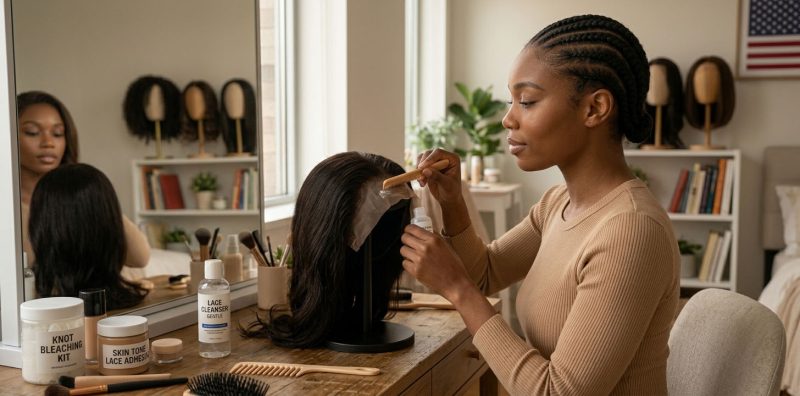
The Flat Foundation Method
A comfortable wig installation usually begins with a smooth base.
Common approaches include:
- flat cornrows;
- evenly distributed braids;
- wig caps designed for comfort.
The goal is not making the scalp tight.
The goal is reducing uneven pressure.
A wig should feel secure.
It should not feel like something squeezing your head.


HD lace wigs
Pre-bleached Knots Straight HD Lace Frontal Wig 180% Density 6×5 Pre-cut Lace Wear & Go Glueless Wig

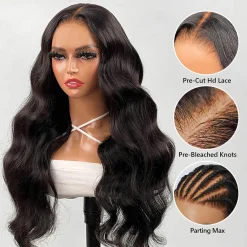
HD lace wigs

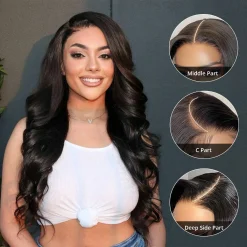


HD lace wigs
Glueless Straight Short Bob Wigs Brazilian Clear Lace 180% Density Hd Closure Wig Human Hair

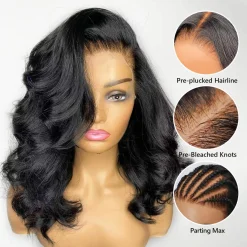
HD lace wigs
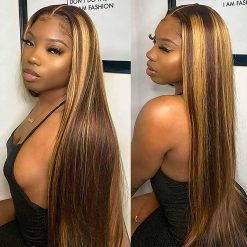

Reason Three: Lace and Adhesive Can Irritate Sensitive Skin
Lace Front Wig Comfort Depends on More Than Lace Thickness
Many women choose HD lace because it feels delicate and looks natural.
HD lace is thinner than many traditional lace materials.
However, comfort depends on the entire installation.
Factors include:
- how the lace contacts the skin;
- adhesive type;
- adhesive amount;
- removal process.
A thin lace installed with too much product can still create discomfort.
Adhesion Problems That Cause Itching
Adhesive is designed to hold the wig securely.
But some common mistakes can increase irritation.
Examples:
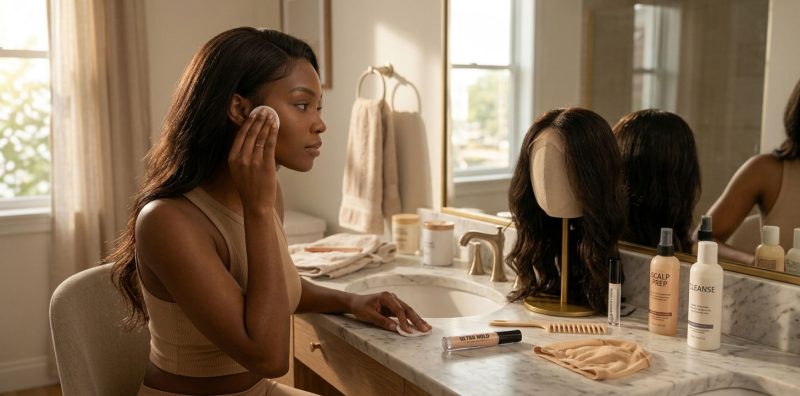
Applying adhesive directly on unprepared skin
Oil, sweat, or skincare products can change how adhesive behaves.
Leaving adhesive residue too long
Old adhesive buildup can collect:
- dirt;
- sweat;
- styling products.
Removing lace too aggressively
Pulling lace quickly can irritate the hairline area.
The removal process is just as important as installation.
Understanding Different Wig Types and Comfort Differences
Human Hair Wig vs Synthetic Wig
The material of the hair itself can influence the wearing experience.
Human Hair Wig
Human hair wigs usually offer:
- natural movement;
- flexible styling;
- realistic texture.
However, the cap construction still determines scalp comfort.
A beautiful human hair wig can still feel uncomfortable if:
- the size is wrong;
- the installation is too tight;
- the scalp preparation is poor.
Synthetic Wig
Synthetic wigs can provide:
- easy styling;
- consistent shape;
- lower maintenance.
But some synthetic fibers may feel different against sensitive skin.
Some wearers prefer adding a comfortable barrier between scalp and cap.
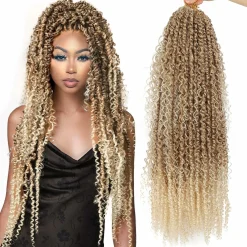
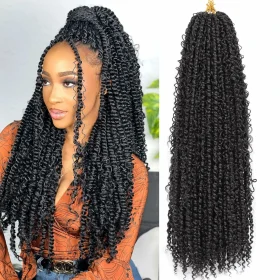
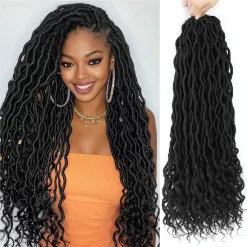
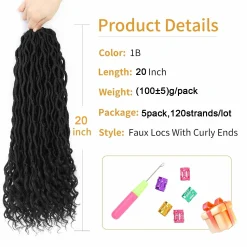
Synthetic Extensions

Synthetic Extensions
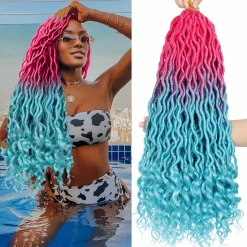
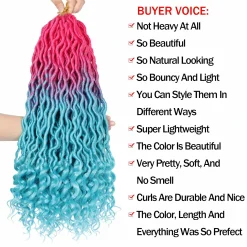
Synthetic Extensions
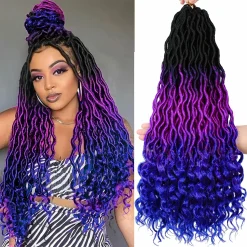
Synthetic Extensions
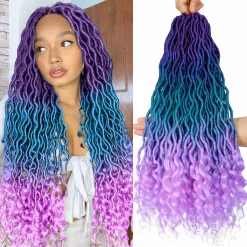
The Four Hidden “Itch Triggers” That Many Wig Wearers Miss
When someone tells me:
“My wig is beautiful, but I cannot wear it for more than a few hours.”
I rarely look at the hair first.
I look at the relationship between the wig and the scalp.
Comfort problems usually come from small details that are easy to ignore.
Here are four hidden triggers that often create itching.
Trigger One: Sweat and Heat Are Trapped Under the Wig
Your scalp is living skin.
It produces:
- natural oils;
- sweat;
- heat.
When a wig covers the scalp for several hours, especially during warm weather, the environment changes.
The area underneath becomes warmer.
Moisture may stay longer.
This can create an uncomfortable feeling.
Many women describe it as:
“My scalp feels like it needs to breathe.”
This does not always mean the wig is wrong.
Sometimes the issue is airflow.
Why Ventilation Matters in Wig Construction
Different wig constructions allow different levels of airflow.
For example:
A lace front wig allows ventilation in the lace area.
A full lace wig provides more lace coverage.
A traditional closed-cap synthetic wig may feel warmer for some wearers.
This does not mean one type is always better.
It depends on:
- your scalp sensitivity;
- how long you wear the wig;
- your environment;
- your activity level.
Someone wearing a wig for a dinner event may have completely different needs from someone wearing one during a long workday.
Trigger Two: Product Buildup Is Irritating Your Scalp
Sometimes the itch does not come from the wig.
It comes from everything added around the wig.
Common buildup sources include:
- adhesive residue;
- edge control;
- styling mousse;
- hairspray;
- dry shampoo;
- oils.
Each product may seem harmless.
But several layers together can create a different experience.
Think about wearing several lightweight sweaters.
Each one is thin.
But together, they become heavy.
Hair products can work the same way.
The Difference Between Wig Maintenance and Product Overuse
Many beginners think:
“If I add more products, my wig will stay better.”
But too much product can create problems.
Examples:
Too much adhesive:
- harder removal;
- residue around lace;
- possible irritation.
Too much styling spray:
- stiff hair;
- product flakes;
- buildup near roots.
Too much oil:
- reduced adhesive performance;
- dirt attraction.
A comfortable wig routine usually uses enough product to solve the problem, not enough to create another one.
HD lace wigs
Pre-bleached Knots Straight HD Lace Frontal Wig 180% Density 6×5 Pre-cut Lace Wear & Go Glueless Wig
HD lace wigs
HD lace wigs
Glueless Straight Short Bob Wigs Brazilian Clear Lace 180% Density Hd Closure Wig Human Hair
HD lace wigs
Trigger Three: The Wig Size Does Not Match Your Head Shape
This is one of the most overlooked reasons.
Many women focus on:
- hair texture;
- length;
- color;
- lace type.
But forget the most basic part:
The wig needs to fit your head.
How a Wrong Size Creates Itching
A wig that is too small may create:
- pressure around temples;
- tight feeling around ears;
- scalp discomfort after several hours.
A wig that is too large may create:
- movement;
- friction;
- repeated adjusting.
Both situations can lead to irritation.
Comfort starts with stability.
A wig should stay where it belongs without forcing your scalp to work against it.
Trigger Four: Your Removal Routine Is Damaging Your Hairline Area
Many women spend time learning installation.
But removal is often ignored.
This is a mistake.
The hairline is one of the most delicate areas.
Repeated aggressive removal can cause:
- sensitivity;
- dryness;
- discomfort.
A Gentler Removal Sequence
A professional removal routine usually looks like:
Step 1:
Use an appropriate adhesive remover.
Allow time for the product to soften the bond.
Step 2:
Do not pull the lace immediately.
The adhesive needs time to release.
Step 3:
Remove slowly from one side.
Avoid creating unnecessary tension.
Step 4:
Clean remaining residue.
Leaving old adhesive can affect the next installation.
Real Case Study One: Maya’s “Itchy New Wig” Was Not Actually the Wig
Maya purchased a beautiful human hair lace front wig.
She loved the style.
The hair movement was natural.
The lace looked soft.
But after wearing it for two hours, she felt constant itching around her forehead.
Her first thought was:
“Maybe my skin does not like this wig.”
During a consultation, we looked at her routine.
The problem was not the wig.
The problem was underneath.
Before installation, Maya applied a rich moisturizer around her forehead.
The moisturizer was excellent for her skin.
But it created a layer between her skin and adhesive.
The result:
- uneven bonding;
- slight lace movement;
- more friction.
The adjustment was simple:
- Move skincare products away from the installation area.
- Clean the hairline before applying adhesive.
- Allow the adhesive to properly set.
The same wig became much more comfortable.
The lesson:
Sometimes the solution is not replacing your wig.
It is adjusting the environment around it.
Real Case Study Two: Tasha’s Synthetic Wig Felt Hot and Uncomfortable
Tasha loved synthetic wigs because she enjoyed changing hairstyles frequently.
She had several:
- bob wigs;
- curly styles;
- straight styles.
But one particular wig always made her scalp uncomfortable.
After a few hours, she felt:
- heat;
- itching;
- the need to remove it.
At first, she assumed the synthetic fiber was the problem.
But after comparing her wigs, the difference became clear.
The issue was the cap construction.
The wig had less ventilation and created more heat around her scalp.
Her solution was not giving up synthetic wigs.
Instead, she changed how she used them:
- shorter wearing periods;
- better scalp preparation;
- more breathable wig options for longer days.
This is an important reminder:
The “best” wig is not only about appearance.
It also needs to match your lifestyle.
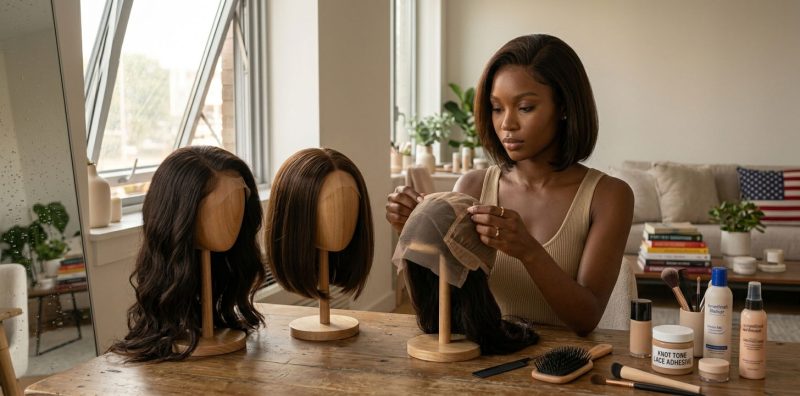
How to Make a Wig More Comfortable: A Professional Routine
Comfort is usually created before you put the wig on.
Here is a practical sequence.
Step 1: Prepare Your Scalp
Before installation:
Clean the hairline area.
Remove:
- oil;
- sweat;
- skincare residue.
Do not aggressively scrub.
The goal is a clean, balanced surface.
Step 2: Prepare Your Natural Hair
Your natural hair underneath should be:
- secure;
- flat;
- comfortable.
Avoid creating unnecessary pressure points.
If your braids feel painful before wearing the wig, the wig will usually make the discomfort stronger.
Step 3: Choose the Right Wig Construction
Ask yourself:
How do I actually wear my wig?
For occasional events:
A different construction may work.
For daily wear:
Comfort and ventilation become more important.
For people who prefer a natural hairline:
HD lace options may be worth considering.
MsAloe’s HD lace wig collection includes different lace constructions for wearers comparing comfort, styling flexibility, and hairline appearance:
https://www.msaloe.com/category/wigs/hd-lace-wigs
Step 4: Create a Healthy Maintenance Schedule
A wig is close to your skin.
It needs care.
Regular maintenance includes:
- cleaning the wig;
- removing adhesive residue;
- allowing the scalp to rest;
- checking the wig cap condition.
For more detailed human hair HD lace wig care methods, MsAloe also provides a maintenance guide covering cleaning and care routines:
The Comfort Checklist: Small Changes That Make a Big Difference
Sometimes the difference between “I love wearing wigs” and “I cannot wait to take this off” comes down to small habits.
A comfortable wig routine is not complicated.
It is about paying attention to what your scalp is telling you.
Check Your Wig Before Every Wear
Before putting on your wig, take a few minutes to inspect it.
Look for:
- dried adhesive around the lace;
- product buildup inside the cap;
- rough areas on the lace edge;
- changes in the cap elasticity.
A wig that felt comfortable last month may feel different after repeated use.
Materials change over time.
Adhesive residue becomes harder.
Lace edges can collect buildup.
The cap may stretch.
Small maintenance prevents bigger comfort problems.
Wash Your Wig, But Do Not Overwash It
One common question is:
“How often should I wash my wig?”
There is no single answer.
It depends on:
- whether it is human hair or synthetic;
- how often you wear it;
- how many styling products you use;
- your environment.
A human hair wig often needs care similar to natural hair.
A synthetic wig has different needs because the fibers do not behave exactly like human hair.
The goal is removing buildup without creating unnecessary stress on the fibers.
Human Hair Wig Care Basics
For human hair wigs:
Use gentle products.
Avoid:
- harsh shampoos;
- excessive heat;
- aggressive brushing when wet.
When washing:
- Detangle gently from the ends upward.
- Use lukewarm water.
- Apply shampoo carefully.
- Condition mainly the mid-lengths and ends.
- Allow the wig to dry properly.
The cap area should also be considered.
Many people clean the hair but forget the part touching the scalp.
Synthetic Wig Care Basics
Synthetic wigs require a different mindset.
The fiber has memory.
Too much heat can permanently change the texture.
Avoid:
- high-temperature styling tools;
- heavy oils;
- thick product layers.
A clean synthetic wig often feels more comfortable simply because there is less buildup.
HD lace wigs
Pre-bleached Knots Straight HD Lace Frontal Wig 180% Density 6×5 Pre-cut Lace Wear & Go Glueless Wig
HD lace wigs
HD lace wigs
Glueless Straight Short Bob Wigs Brazilian Clear Lace 180% Density Hd Closure Wig Human Hair
HD lace wigs
Choosing a Wig Based on Your Lifestyle, Not Just Appearance
One of the biggest mistakes new wig wearers make is choosing only with their eyes.
They see:
“This hairstyle is beautiful.”
“This curl pattern looks amazing.”
“This length is perfect.”
Those things matter.
But comfort matters too.
A wig should fit your real life.
If You Wear a Wig Every Day
Daily wearers often need to consider:
- scalp comfort;
- ventilation;
- easy maintenance;
- secure but gentle installation.
A lace front wig can be a good option for people who want a natural front hairline while maintaining styling flexibility.
However, daily wear also means paying attention to scalp care.
Your scalp needs breaks.
Your skin needs cleaning.
Your wig needs maintenance.
If You Change Hairstyles Often
Some women enjoy wigs because they allow creativity.
One week:
a sleek bob.
Another week:
long waves.
Another week:
a completely different color.
For this lifestyle, convenience becomes important.
A synthetic wig may provide easy style changes.
A human hair wig may offer more styling flexibility.
The right choice depends on how you actually use it.
If You Have Sensitive Skin
Sensitive skin requires more observation.
Pay attention to:
- adhesive ingredients;
- lace contact;
- cleaning products;
- wearing duration.
If irritation continues, consider changing one factor at a time.
Do not change:
- wig;
- adhesive;
- shampoo;
- styling products
all at once.
Otherwise, it becomes difficult to know what caused the reaction.
FAQ: Why Does My Wig Feel Itchy?
Is itching normal when wearing a new wig?
A small adjustment period can happen with a new wig.
Your scalp may simply be getting used to:
- the cap;
- the weight;
- the installation method.
However, constant itching, burning, or discomfort means something needs attention.
Check:
- fit;
- cleanliness;
- adhesive;
- scalp preparation.
Why does my lace front wig itch around the hairline?
The hairline area is sensitive because:
- skin is thinner;
- adhesive is often applied there;
- friction happens during movement.
Common causes:
- adhesive residue;
- skincare products under the lace;
- incorrect removal;
- too much tension.
Can HD lace cause itching?
HD lace itself is not automatically uncomfortable.
Many people choose HD lace because it is lightweight and delicate.
But comfort depends on:
- installation;
- adhesive;
- scalp condition;
- maintenance.
A comfortable lace wig is a combination of materials and habits.
Why does my wig itch more after several hours?
This often relates to environment.
During longer wear:
- heat increases;
- sweat accumulates;
- products mix with natural oils;
- pressure points become noticeable.
A wig that feels fine for thirty minutes may feel different after eight hours.
Should I wear a wig cap under my wig if my scalp itches?
It depends.
Some people find wig caps create a comfortable barrier.
Others feel extra layers create more heat.
Try different options and notice what your scalp prefers.
There is no universal rule.
How can I stop my lace front wig from irritating my forehead?
Start with the basics:
- Clean the hairline area.
- Avoid applying skincare directly under adhesive.
- Use appropriate adhesive amounts.
- Remove gently.
- Clean residue completely.
The goal is reducing unnecessary contact stress.
A Gentle Reminder From Someone Who Loves Hair
There is something interesting about wigs.
People often notice the hairstyle first.
But the wearer feels something deeper.
They notice:
“Can I forget I am wearing this?”
That is the real measure of comfort.
A wig should give you freedom.
Freedom to change your style.
Freedom to protect your natural hair.
Freedom to walk through your day without constantly adjusting something on your head.
The most beautiful wig is not always the most dramatic one.
Sometimes it is the one that quietly becomes part of you.
The one you stop thinking about.
The one that lets you focus on everything else happening in your life.
Final Thoughts: Finding the Balance Between Beauty and Comfort
If your wig feels itchy, do not immediately assume you chose the wrong wig.
Start by looking at the whole picture:
- Is the cap comfortable?
- Is the wig size correct?
- Is your scalp prepared?
- Is there product buildup?
- Is your adhesive routine working for your skin?
- Does your wig construction match your lifestyle?
A lace front wig, HD lace wig, synthetic wig, or human hair wig can all feel comfortable when the details work together.
The goal is not simply wearing hair.
The goal is wearing something that supports your everyday life.
Because the best hairstyle is not the one that makes you think about your wig all day.
It is the one that allows you to forget about it.
