
Why Does My Human Hair Wig Keep Shedding? Common Causes and Easy Solutions

Have you ever noticed a few strands of hair on your brush and immediately wondered if your expensive human hair wig was already falling apart?
It’s one of the fastest ways to ruin an otherwise good morning.
You finish getting ready, take one last look in the mirror, then glance down at your brush.
There they are.
Five hairs.
Maybe ten.
Your first thought is often:
“Did I buy a bad wig?”
Surprisingly, the answer is usually no.
One of the biggest misconceptions about human hair wigs is that they should never shed.
Real human hair sheds.
Natural hair sheds.
Even the highest-quality human hair wigs experience some shedding over time.
The real question isn’t:
“Is my wig shedding?”
It’s:
“Is my wig shedding normally, or is something actually wrong?”
Learning the difference can save you unnecessary worry—and sometimes save your wig.
I remember talking with a customer named Monica.
She had just purchased her very first human hair wig before starting a new job.
Three days later, she emailed in a panic.
“Every time I brush it, I see hair coming out. I think it’s defective.”
After asking her a few questions, we discovered something interesting.
She wasn’t experiencing excessive shedding at all.
She was brushing a brand-new curly wig from root to tip with a fine-tooth comb every morning.
Once she switched to a wide-tooth comb and changed her routine, the “problem” almost disappeared.
That conversation reminded me how often shedding isn’t caused by poor-quality hair.
It’s caused by misunderstanding how human hair wigs are actually made.
Understanding Human Hair Wig Shedding: What’s Actually Normal?
Before trying to stop shedding, it’s important to understand something many first-time wig owners never hear.
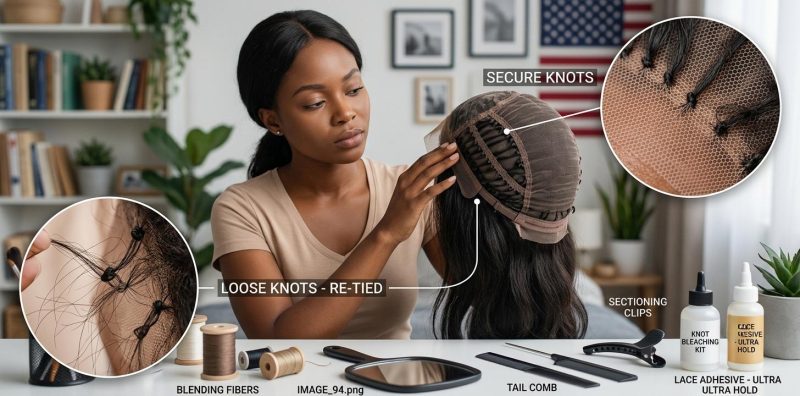
A human hair wig is not one continuous piece of hair.
Thousands of individual strands are ventilated into lace by hand.
Each strand is secured using tiny knots.
Unlike hair growing from your scalp, those strands aren’t constantly renewed by follicles.
Everything depends on the strength of the knots and how the wig is handled afterward.
This is why every human hair wig—even luxury ones—will naturally lose some hairs during its lifetime.
The goal isn’t zero shedding.
The goal is healthy, minimal shedding.
Normal Shedding vs. Excessive Shedding
One of the easiest ways to avoid unnecessary worry is learning what normal shedding actually looks like.
| What You Notice | Is It Normal? | Possible Cause | What To Do |
| A few hairs after brushing | ✅ Yes | Normal wear | Continue regular maintenance |
| Several hairs after washing | ✅ Usually | Loose strands from manufacturing | No immediate concern |
| Small clumps coming out | ❌ No | Loose knots or construction damage | Inspect the lace immediately |
| Hair continuously shedding every day | ⚠ Not usually | Incorrect maintenance or damaged knots | Identify the source before styling again |
| Bald spots appearing | ❌ No | Knot failure or excessive tension | Repair may be necessary |
Many women become anxious after seeing five or six hairs.
In reality, that’s often completely normal.
The warning sign isn’t a few strands.
It’s a noticeable increase over time.
The Science Behind Wig Shedding
One reason wig shedding feels mysterious is because most people only see the finished hairstyle.
They never see how the wig is built.
Understanding that construction changes everything.
Every Hair Is Tied By Hand
A premium lace wig isn’t made by simply attaching a sheet of hair onto lace.
Instead, trained ventilators insert individual hairs through tiny holes in the lace.
Each strand is then tied into one or more knots.
Thousands of times.
Those knots become the foundation of your wig.
Every styling decision later depends on them remaining secure.
Single Knots vs. Double Knots
Not every knot is the same.
| Knot Type | Advantages | Trade-Off |
| Single Knot | Creates an extremely natural hairline | Slightly easier to loosen over time |
| Double Knot | Holds hair more securely | Slightly more visible if placed at the front |
This is why many premium lace wigs combine both methods.
The front hairline often uses finer knots for realism.
The back and crown may use stronger knots for durability.
Neither method is “better.”
They’re designed for different purposes.
Why Bleached Knots Can Increase Shedding
Many people love the natural appearance of bleached knots.
Properly bleached knots help create the illusion that hair is growing directly from the scalp.
However, there’s an important trade-off.
Bleaching uses chemicals to lighten the knot.
If over-processed, those chemicals can slightly weaken the hair at its most vulnerable point.
That doesn’t mean bleached knots are bad.
It simply means they deserve gentler care.
Excessive pulling, aggressive brushing, or repeated high heat near the lace can shorten their lifespan.
If you’re considering different lace options, understanding how HD lace human hair wigs are constructed can help you choose the right balance between realism and durability.
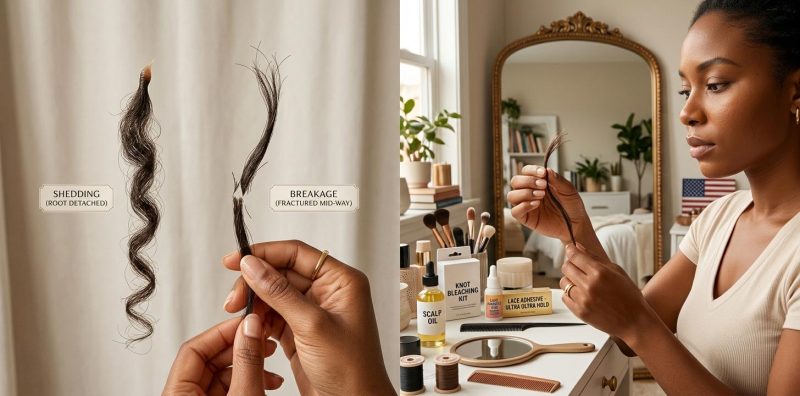
Hair Shedding vs. Hair Breakage: They Are Not The Same Thing
One of the biggest mistakes people make is treating every loose strand as shedding.
Sometimes it isn’t shedding at all.
Sometimes it’s breakage.
And the solution is completely different.
| Hair Shedding | Hair Breakage |
| Hair comes out from the knot | Hair snaps somewhere along the strand |
| Usually related to knot security | Usually related to dryness or damage |
| Often begins near the lace | Can happen anywhere |
| Requires knot protection | Requires moisture balance |
Knowing the difference helps prevent solving the wrong problem.
A dry wig doesn’t necessarily need stronger knots.
A shedding wig doesn’t necessarily need more conditioner.
It first needs the correct diagnosis.
The First Hidden Cause: Aggressive Brushing
Monica’s story isn’t unusual.
Many women treat wigs exactly like natural hair.
But human hair wigs require a different mindset.
Imagine pulling a thread from a knitted sweater.
One gentle pull probably changes nothing.
Repeated pulling in the same area eventually loosens the structure.
Knots inside a lace wig behave similarly.
Every force applied during brushing transfers directly to the tiny knots securing each strand.
That’s why brushing technique matters just as much as brush quality.
Signs You’re Brushing Too Aggressively
Ask yourself these questions:
- Do I brush from the roots downward?
- Do I detangle while the hair is still tangled?
- Do I use a fine-tooth comb on curly textures?
- Do I rush through knots instead of separating them first?
If you answered “yes” to any of these, your brushing routine—not your wig—may be the real reason you’re seeing extra shedding.


HD lace wigs
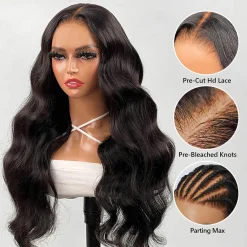
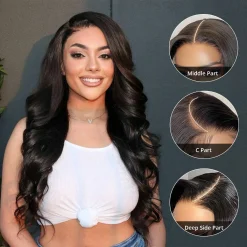
Pre-bleached Knots Straight HD Lace Frontal Wig 180% Density 6×5 Pre-cut Lace Wear & Go Glueless Wig

HD lace wigs



HD lace wigs
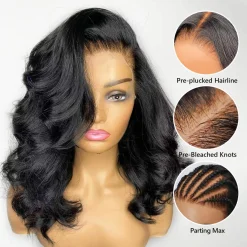
Glueless Straight Short Bob Wigs Brazilian Clear Lace 180% Density Hd Closure Wig Human Hair

HD lace wigs


The Second Hidden Cause: Friction Happens More Often Than You Think
Many women assume shedding only happens when they brush their wigs.
In reality, some of the biggest causes happen when you aren’t styling your wig at all.
Think about everything your hair touches during a normal day:
- your sweater collar;
- a winter scarf;
- your car seat;
- a backpack strap;
- your office chair;
- your pillow.
Every point of contact creates friction.
A single moment isn’t enough to loosen a knot.
But hundreds of tiny moments, repeated every day, gradually increase wear.
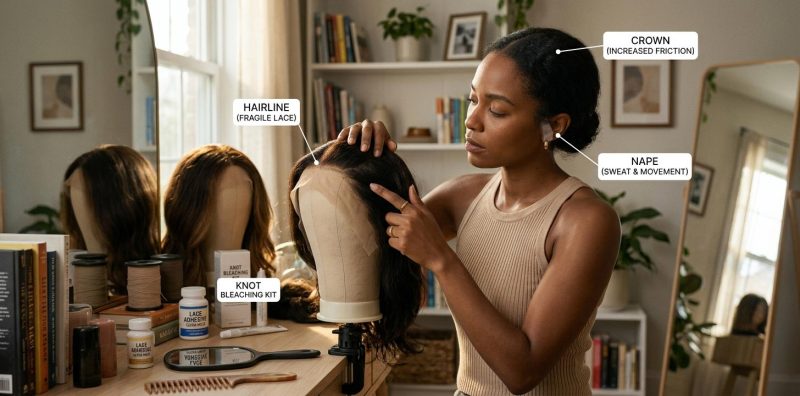
This is why shedding often appears first around:
- the nape;
- behind the ears;
- the neckline.
These are the areas experiencing the most movement.
Dimension 1: Shedding Mainly Around the Nape
What You Notice
The front of your wig still looks beautiful.
The crown is full.
But when you wash or brush the wig, most loose hairs seem to come from the back.
Possible Cause
Continuous rubbing against:
- hoodies;
- wool coats;
- backpacks;
- high-neck sweaters.
Long wigs are especially affected because the longer the hair, the greater the friction.
Easy Solution
Instead of trying to brush harder:
- wear smoother fabrics whenever possible;
- gently lift long hair over thick collars;
- braid very long wigs before wearing heavy coats;
- detangle the nape every evening instead of waiting several days.
Dimension 2: Shedding Mostly Around the Hairline
What You Notice
Loose hairs appear mainly near the lace front.
The rest of the wig remains stable.
Possible Cause
This area experiences the greatest stress.
Reasons include:
- repeatedly lifting the lace;
- removing adhesive too aggressively;
- scratching the lace;
- pulling while adjusting the hairline.
Women who frequently reposition their wigs sometimes create unnecessary tension around the front knots.
Easy Solution
Whenever removing adhesive:
Never pull the lace first.
Instead:
- soften the adhesive;
- allow it to release naturally;
- support the lace with your fingers.
Gentle removal protects the tiny ventilation knots.
Dimension 3: Shedding Increases After Every Wash
What You Notice
Every wash seems to produce more loose hair than the previous one.
Possible Cause
Usually this isn’t because washing is harmful.
It’s because of what happens during washing.
Common mistakes include:
- rubbing the hair in circles;
- piling the wig on top of itself;
- twisting the hair to squeeze out water;
- brushing while soaking wet.
Wet hair stretches more easily.
Pulling on stretched hair transfers more force to the knots.
Better Washing Routine
Professional stylists usually recommend:
- Brush gently before washing.
- Wet the hair in one downward direction.
- Massage shampoo through the hair instead of scrubbing.
- Rinse in the same downward direction.
- Press excess water out with a towel.
Notice one recurring theme:
Everything follows the direction of the hair.
Dimension 4: Hair Comes Out During Every Styling Session
What You Notice
Every time you curl or straighten your wig, you find loose strands on your styling tools.
Possible Cause
This often points to repeated heat stress combined with mechanical pulling.
High temperatures alone rarely cause immediate shedding.
But repeated heat can gradually weaken processed hair, making strands more vulnerable where they are tied into the lace.
If styling is part of your daily routine, rotate hairstyles whenever possible instead of applying heat to exactly the same sections every day.
A Quick Self-Diagnosis Guide
Before assuming your wig has a manufacturing issue, spend a few minutes observing where the shedding occurs.
| Where You Notice Shedding | Most Likely Reason | First Thing To Check |
| Hairline | Frequent adjustment or adhesive removal | Lace handling |
| Nape | Clothing friction | Daily wear habits |
| Crown | Aggressive brushing | Detangling technique |
| Entire wig | Product buildup or age | Overall maintenance routine |
| One small section | Localized knot damage | Inspect lace carefully |
This simple table often helps narrow down the cause before making unnecessary repairs.
Does Wig Construction Affect Shedding? Absolutely.
Two wigs can be made from 100% human hair and still perform very differently.
Why?
Because the construction beneath the hair matters just as much as the hair itself.
Professional wig makers consider factors such as:
- lace material;
- ventilation density;
- knot size;
- hair density;
- cap construction;
- distribution of tension.
Many first-time buyers focus only on hair grade.
Professionals also pay close attention to craftsmanship.
Ventilation Density: More Hair Isn’t Always Better
A very dense wig looks glamorous.
But higher density also means:
- more weight;
- greater tension on individual knots;
- increased stress during brushing.
This doesn’t mean high-density wigs are poor choices.
It simply means they often benefit from gentler maintenance.
Sometimes a medium-density wig lasts longer simply because each knot experiences less daily stress.
Knot Sealing: The Extra Layer Many People Never See
Some premium wigs receive an additional process called knot sealing.
A lightweight sealant is applied to the underside of the lace to help reinforce the knots after ventilation.
Think of it like reinforcing stitches inside a garment.
It doesn’t stop all shedding forever.
But it may help slow knot loosening over time.
Not every wig includes this treatment, and that’s perfectly normal.
The important thing is understanding how your wig has been constructed so you can care for it accordingly.
Real Case Study: Angela Thought Her Wig Was Defective
Angela had been wearing human hair wigs for years.
When she bought a new one, she became worried after seeing more hairs in the sink than expected during the first wash.
“I knew something was wrong,” she told me.
Instead of immediately replacing the wig, we walked through her routine together.
We discovered three important details.
Problem One
She washed the wig upside down while rubbing the hair in circles.
Problem Two
She twisted the wig tightly to remove water.
Problem Three
She detangled the hair while it was dripping wet using a small paddle brush.
None of those habits seemed dramatic individually.
Together, they placed unnecessary stress on the ventilation knots.
After switching to a gentler routine, the shedding gradually returned to what would be considered normal daily wear.
The wig hadn’t changed.
Her technique had.
HD lace wigs
Pre-bleached Knots Straight HD Lace Frontal Wig 180% Density 6×5 Pre-cut Lace Wear & Go Glueless Wig
HD lace wigs
HD lace wigs
Glueless Straight Short Bob Wigs Brazilian Clear Lace 180% Density Hd Closure Wig Human Hair
HD lace wigs
The Third Hidden Cause: Chemical Processing Weakens Hair Over Time
One topic that rarely gets discussed is how the history of the hair affects shedding.
When people hear “100% human hair,” they often assume every wig performs the same way.
In reality, two human hair wigs can look nearly identical but have completely different durability because of the processing they have undergone before reaching you.
Hair may be:
- colored;
- lightened;
- permed;
- textured;
- steamed;
- chemically treated multiple times.
Every process changes the hair to some degree.
That doesn’t automatically make the wig lower quality.
It simply means the maintenance routine becomes even more important.
Bleaching, Coloring, and Cuticle Changes
Human hair is protected by overlapping cuticles.
Think of them like roof shingles.
When those cuticles remain relatively smooth, the strands slide past each other more easily.
Repeated chemical processing can gradually raise or weaken those cuticles.
The result may include:
- increased tangling;
- higher friction;
- easier breakage;
- reduced elasticity.
Remember:
Breakage is different from shedding.
But excessive breakage often makes people believe the wig is shedding more than it actually is.
Why Dry Hair Often Looks Like A Shedding Problem
Dry human hair doesn’t simply feel rough.
It also becomes less flexible.
Instead of bending, dry strands are more likely to snap during brushing.
That broken hair usually falls onto your sink or brush.
Many women immediately assume:
“My wig is shedding.”
Sometimes it is.
Sometimes the strands have actually broken in the middle.
This is exactly why identifying the root cause matters before buying new products.
Shedding vs. Breakage: A Quick Comparison
| Question | Hair Shedding | Hair Breakage |
| Does the strand have a tiny knot/root end? | Usually yes | No |
| Does the strand appear shorter than the rest? | Usually no | Often yes |
| Where does it happen? | Near the lace knots | Anywhere along the strand |
| Main Cause | Knot loosening | Dryness, heat, chemical damage |
| Best Solution | Protect the lace and knots | Restore moisture and reduce heat |
This simple comparison saves many wig owners from treating the wrong problem.
The Fourth Hidden Cause: Daily Habits That Slowly Loosen Knots
Sometimes the biggest cause isn’t styling.
It’s repetition.
Tiny habits repeated every day eventually become significant.
Examples include:
- pulling hair behind the ears dozens of times;
- repeatedly adjusting the part line;
- scratching beneath the lace;
- sleeping in the wig every night;
- tying the wig into a tight ponytail every day.
None of these actions immediately cause shedding.
But together, they slowly increase stress on the same groups of knots.
Professionals often describe this as cumulative mechanical stress.
The hair isn’t failing.
It’s gradually responding to repeated tension.
Real Case Study: Nicole Solved Her Shedding Without Buying A New Wig
Nicole had owned the same human hair wig for almost a year.
She assumed it had reached the end of its life because she noticed more hairs after every styling session.
Before replacing it, she documented her routine for one week.
The pattern became obvious.
Every morning she:
- sprayed leave-in conditioner;
- brushed from the roots downward;
- used a flat iron;
- tied the wig into a tight ponytail.
Every evening she:
- slept wearing the wig;
- repeated the same routine the next day.
Nothing dramatic.
Just repeated tension.
What Changed?
Instead of replacing the wig, she made five small adjustments.
- She removed the wig before sleeping.
- She detangled from the ends upward.
- She reduced unnecessary heat styling.
- She alternated between loose hairstyles.
- She stored the wig on a stand overnight.
After several weeks, the amount of daily shedding became much more consistent.
The wig wasn’t “fixed.”
It was simply no longer under constant stress.
A Maintenance Routine That Helps Reduce Shedding
Consistency matters more than expensive products.
The healthiest wigs are usually owned by people with simple, repeatable routines.
Daily Care
Before wearing:
- Gently shake out the hair.
- Finger-separate tangled sections.
- Brush from the ends upward.
- Avoid pulling directly on the lace.
- Only style the sections that actually need attention.
Weekly Care
Depending on how often the wig is worn:
- inspect the lace;
- remove product buildup;
- deep-condition the mid-lengths and ends if needed;
- check for tangles around the nape.
Avoid washing simply because a calendar says it’s time.
Wash when the wig actually needs it.
Monthly Care
Take a closer look at:
- knot condition;
- lace integrity;
- shedding patterns;
- hair dryness;
- ends.
Catching small issues early often prevents larger ones later.
Maintenance Checklist
| Maintenance Habit | Helps Reduce Shedding? |
| Wide-tooth comb for curly textures | ✅ |
| Brush from ends upward | ✅ |
| Remove wig before sleeping | ✅ |
| Store on a wig stand | ✅ |
| Pull the lace during removal | ❌ |
| Brush aggressively while wet | ❌ |
| Use excessive heat every day | ❌ |
| Apply heavy oils near the knots | ❌ |
Many women also find that learning the correct maintenance routine before problems appear makes a significant difference over time. If you’re interested in building healthier habits, our guide on human hair wig care and maintenance explains daily care in greater detail without overwhelming beginners.
Synthetic Extensions


Synthetic Extensions
Synthetic Extensions
Synthetic Extensions

How To Choose a Human Hair Wig That Sheds Less
One question I hear surprisingly often is:
“Can I buy a wig that never sheds?”
I wish the answer were yes.
But if someone promises you that a human hair wig will never shed, it’s worth being skeptical.
Every hand-tied human hair wig will lose a small number of hairs throughout its lifetime. That’s simply the nature of how lace wigs are constructed.
A better question is:
“What features help a wig stay beautiful for longer?”
Instead of chasing the impossible, look for thoughtful craftsmanship and choose a wig that matches the way you actually live.
Buying Guide: What Matters More Than Hair Grade?
Many shoppers focus only on labels like “10A,” “12A,” or “virgin hair.”
Those descriptions can be useful, but they don’t tell the whole story.
Professional wig specialists usually evaluate several factors together.
| Feature | Why It Matters | What To Look For |
| Hair Quality | Determines softness, elasticity, and longevity | Healthy cuticles and consistent texture |
| Ventilation | Affects knot strength and natural movement | Even hand-tied construction |
| Lace Quality | Influences durability and realism | HD or transparent lace suited to your needs |
| Density | Changes weight and daily stress on knots | Choose a density that fits your lifestyle |
| Processing History | More processing may shorten lifespan | Moderate, well-controlled processing |
| Daily Maintenance | Often has the biggest impact | A routine you can realistically maintain |
Notice that only one row relates directly to the hair itself.
Everything else depends on construction and care.
Match the Wig to Your Lifestyle, Not Just Your Wishlist
It’s easy to fall in love with a hairstyle online.
What’s harder is maintaining it if it doesn’t fit your daily routine.
Ask yourself a few honest questions:
- Do I wear my wig every day?
- Do I frequently use heat tools?
- Do I exercise while wearing it?
- Do I often travel?
- Am I willing to spend time on weekly maintenance?
The answers can help you choose a wig that feels easier to own—not just beautiful on the first day.
For women who wear their wigs almost every day, many find that exploring a collection of glueless human hair wigs can make daily removal and proper overnight storage much easier.

FAQ: Why Does My Human Hair Wig Keep Shedding?
Is it normal for a new human hair wig to shed?
Yes.
Many new wigs release a few loose hairs left from the manufacturing process during the first few washes or brushing sessions.
Light shedding at the beginning is usually normal.
How much shedding is considered normal?
There isn’t a universal number.
If you occasionally see a few strands after brushing or washing, that is generally expected.
If hair comes out in small clumps or bald spots begin to appear, the wig should be inspected more carefully.
Can washing my wig cause shedding?
Washing itself is not the problem.
Aggressive washing techniques often are.
Rubbing, twisting, or brushing soaking wet hair places unnecessary stress on the ventilation knots.
Does brushing too often make a wig shed?
Brushing is important.
Over-brushing is not.
Detangle only when necessary, start from the ends, and avoid pulling through knots.
Can heat styling increase shedding?
Indirectly, yes.
Repeated high heat may weaken processed human hair over time.
Combined with mechanical tension, this can increase both breakage and shedding.
Does sleeping in a wig make it shed faster?
For many people, yes.
Friction between the wig and bedding creates continuous movement throughout the night.
Removing the wig before sleeping, when practical, usually helps reduce unnecessary wear.
Should I use oils to stop shedding?
Not directly.
Oils can improve softness, but they do not strengthen ventilation knots.
Applying heavy oils near the lace may even make maintenance more difficult.
Can a shedding wig be repaired?
Sometimes.
If only a small section is affected, professional re-ventilation or lace repair may be possible.
If shedding is widespread because the wig has reached the end of its lifespan, replacement may be the more practical option.
Friend to Friend: A Wig Isn’t Failing—It’s Telling You Something
One thing I’ve learned after years of talking with wig wearers is that we often blame the wig before we understand the story it’s trying to tell.
A few loose hairs don’t automatically mean you made a bad purchase.
Sometimes they’re simply a reminder to slow down.
To brush a little more gently.
To let the wig rest overnight instead of sleeping in it.
To wash it with patience instead of rushing through the routine before work.
The healthiest wigs I’ve seen rarely belong to people with shelves full of expensive products.
They belong to women who have developed quiet, consistent habits.
A little care.
A little attention.
Repeated over time.
That is usually what makes the biggest difference.
If you’re building a long-term maintenance routine, you may also find our guide on how to make your human hair wig last longer especially helpful. It walks through simple habits that can extend the life of your wig without adding unnecessary steps.
Final Thoughts
Human hair wigs are made from real hair, but they are also carefully handcrafted pieces.
Every strand depends on tiny knots, thoughtful construction, and the way it’s treated after it reaches your home.
Some shedding is completely normal.
Excessive shedding is usually a signal worth investigating.
By learning to recognize the difference between shedding and breakage, understanding how wig construction works, and adopting gentle maintenance habits, you can often extend both the beauty and lifespan of your wig.
Your goal doesn’t have to be finding a wig that never sheds.
It can simply be finding a routine that lets your wig look and feel its best for as long as possible.
HD lace wigs
Pre-bleached Knots Straight HD Lace Frontal Wig 180% Density 6×5 Pre-cut Lace Wear & Go Glueless Wig
HD lace wigs
HD lace wigs
Glueless Straight Short Bob Wigs Brazilian Clear Lace 180% Density Hd Closure Wig Human Hair
HD lace wigs
