
Why Is My Wig Not Blending With My Hairline? The Small Details That Make a Wig Look Like It Belongs
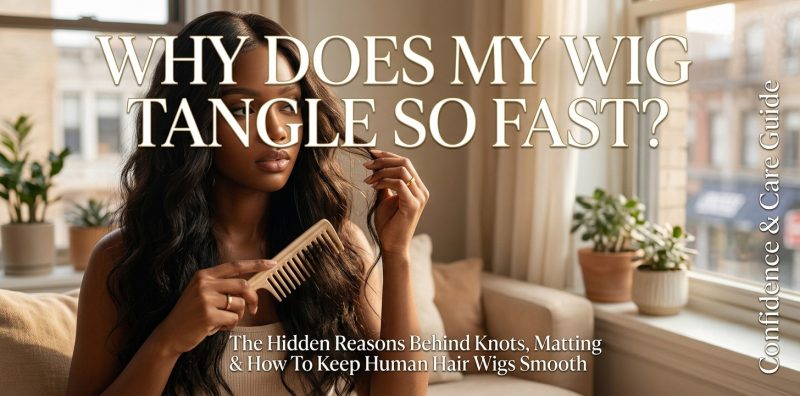
Introduction: The Wig Is Beautiful… So Why Does the Hairline Feel Wrong?
Have you ever had this experience?
You put on your wig.
You style it carefully.
You check yourself in the mirror.
For a few minutes, you think:
“Okay. This actually looks good.”
Then you move closer to the mirror.
You notice the front.
Something feels different.
The hair itself looks beautiful.
The texture is soft.
The length is exactly what you wanted.
But the hairline does not feel connected to you.
It feels like the wig is sitting on top of your head instead of growing from it.
And that tiny difference can completely change how confident you feel.
This is one of the most interesting things about wigs.
People rarely notice the entire hairstyle first.
They notice transitions.
The place where:
- lace meets skin;
- hair meets forehead;
- baby hairs meet the hairline;
- added hair meets natural features.
A woman can wear a gorgeous human hair wig with beautiful movement, but if the hairline transition is not right, the whole style may feel unnatural.
Many women think the solution is buying a more expensive wig.
Sometimes it helps.
But often, the real issue is not the wig price.
It is understanding how hairlines actually work.
A natural hairline is not a straight border.
It is a soft landscape.
There are:
- different densities;
- small irregular spaces;
- different hair directions;
- shorter baby hairs;
- gradual movement from skin to hair.
A lace front wig creates the illusion of natural growth because the lace allows hair strands to appear as if they are coming directly from the scalp.
But the illusion depends on many small decisions.
The lace.
The placement.
The adhesive.
The customization.
The density.
The styling.
After years of helping women choose and maintain wigs, I often tell them:
“The goal is not to make people notice your wig less. The goal is to make your hairline feel like yours.”
That small mindset shift changes everything.
Why Your Wig Hairline Is Not Blending: The Four Main Problems
Problem One: The Lace Color Does Not Match Your Skin Tone
One of the first things women notice when a lace front wig does not blend is the lace itself.
Sometimes it looks:
- too white;
- too gray;
- too orange;
- slightly visible around the edges.
This happens because lace is not invisible by itself.
HD lace is designed to become less noticeable when it works together with:
- your skin tone;
- lighting;
- adhesive;
- foundation or tinting methods.
Think about a sheer curtain.
A thin curtain does not disappear.
It becomes less noticeable because it blends with what is behind it.
HD lace works in a similar way.
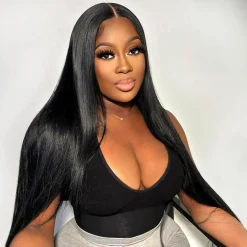

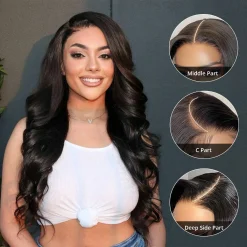
HD lace wigs
Pre-bleached Knots Straight HD Lace Frontal Wig 180% Density 6×5 Pre-cut Lace Wear & Go Glueless Wig
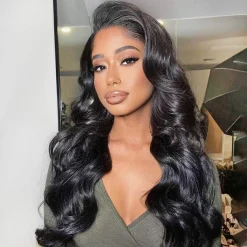
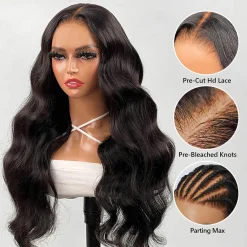
HD lace wigs

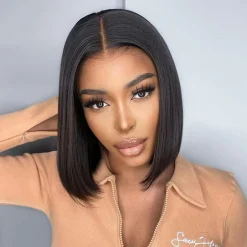
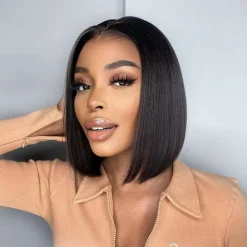
HD lace wigs
Glueless Straight Short Bob Wigs Brazilian Clear Lace 180% Density Hd Closure Wig Human Hair
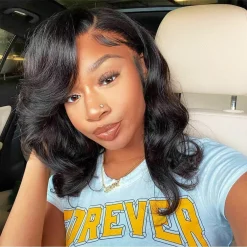
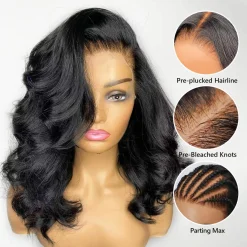
HD lace wigs
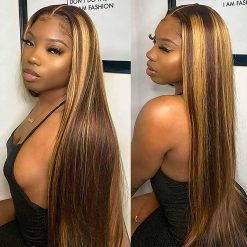
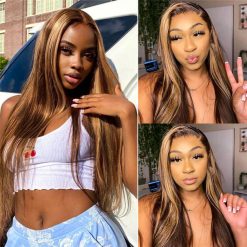
HD Lace Explained: Why It Helps and What It Cannot Do
HD lace is a very fine lace material created to provide a more natural scalp-like appearance.
Compared with thicker traditional lace:
HD lace usually offers:
- thinner construction;
- more transparency;
- softer appearance around the hairline.
However, many beginners misunderstand this.
They think:
“HD lace means I do not need customization.”
That is not true.
Even high-quality lace can look noticeable if:
- the shade does not match;
- too much adhesive creates shine;
- the lace is placed incorrectly;
- the hairline density is too heavy.
A professional-looking installation is a combination of materials and technique.
How To Improve Lace Blending Step by Step
A simple adjustment sequence:
Step 1: Check the lace in natural light
Bathroom lighting can hide differences.
Stand near a window.
Look from:
- front;
- side;
- slightly above.
The goal is seeing what others see.
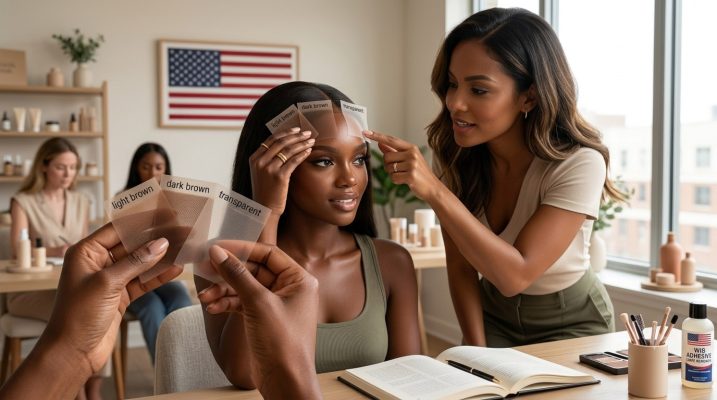
Step 2: Match the lace tone
Depending on your skin tone, some women may need:
- lace tinting;
- foundation matching;
- powder adjustment.
The goal is not changing the lace completely.
It is reducing contrast.
Step 3: Use the correct adhesive amount
Too much adhesive can create a shiny layer.
Too little may leave lifting edges.
A thin, even application usually creates a smoother transition.
Problem Two: The Hairline Is Too Perfect
This is one of the most surprising reasons a wig does not look natural.
Many women think:
“A perfect hairline should look better.”
But human hairlines are not perfect.
They are beautifully imperfect.
A natural forehead does not usually have:
- identical density across the front;
- every strand facing the same direction;
- a perfectly curved edge.
When a wig hairline is too symmetrical, the brain recognizes it.
It creates a “manufactured” feeling.
Hairline Customization: Creating Natural Imperfection
A realistic wig hairline often needs customization.
Common techniques include:
Plucking
Plucking reduces excessive density near the front.
But it requires patience.
Over-plucking creates another problem:
A hairline that looks too empty.
The goal is not making the wig thinner.
The goal is creating gradual density.
Baby Hair Adjustment
Baby hairs should support the illusion.
They should not become the focus.
Common mistakes:
- making every baby hair identical;
- using too much gel;
- creating dramatic curves that do not match the wearer.
Natural baby hairs are usually:
- softer;
- shorter;
- less uniform.
HD lace wigs
Pre-bleached Knots Straight HD Lace Frontal Wig 180% Density 6×5 Pre-cut Lace Wear & Go Glueless Wig
HD lace wigs
HD lace wigs
Glueless Straight Short Bob Wigs Brazilian Clear Lace 180% Density Hd Closure Wig Human Hair
HD lace wigs
Problem Three: The Wig Placement Does Not Follow Your Natural Hairline
Sometimes the wig itself is not the problem.
The placement is.
This is something I see often with women who are new to lace front wigs.
They carefully install the wig, but they place it according to where they think a hairline “should” be.
The result?
The wig may look beautiful from a distance, but the connection between the lace and forehead feels unusual.
A natural-looking installation begins with understanding your own proportions.
Finding the Correct Hairline Position
Every person’s forehead and hairline are different.
Some women naturally have:
- a lower hairline;
- a higher forehead;
- rounded temples;
- widow’s peak areas;
- softer side edges.
A lace front wig should work with those features.
A common mistake is pulling the wig too far forward.
This can create:
- a smaller-looking forehead;
- an unnatural straight edge;
- a “cap sitting on the head” appearance.
Another mistake is placing the wig too far back.
This can create:
- excessive forehead space;
- an obvious separation between lace and face.
The goal is not copying another person’s hairline.
The goal is creating harmony with your own face.
The Role of Adhesion in Hairline Blending
Adhesive is often discussed only as a security issue.
But it also affects appearance.
A properly installed lace front wig should have a smooth transition.
Poor adhesive technique can create:
White Residue
Some adhesives dry with visible residue when applied too thickly.
Under direct lighting, this may look like:
- flakes;
- cloudy areas;
- uneven texture.
Shiny Lace Area
The human scalp has a natural matte appearance.
Too much adhesive can create an artificial shine.
Uneven Lace Contact
If some areas attach better than others, the lace may reflect light differently.
This creates small shadows that make the hairline noticeable.
Professional Adhesion Sequence for a Natural Hairline
A cleaner installation usually follows this order:
Step 1: Prepare the Skin
The forehead area should be:
- clean;
- free from heavy oils;
- dry.
Skincare products can affect adhesion.
Heavy moisturizers or oils may prevent even contact.
Step 2: Apply Thin Layers
Many beginners apply one thick layer.
A better approach:
- apply a thin layer;
- allow it to become slightly tacky;
- repeat if needed.
Thin layers usually create a smoother finish.
Step 3: Press, Do Not Drag
After placing lace:
Avoid repeatedly moving it.
Dragging can create:
- wrinkles;
- uneven attachment;
- lifted sections.
A gentle press allows the lace to settle naturally.
HD lace wigs
Pre-bleached Knots Straight HD Lace Frontal Wig 180% Density 6×5 Pre-cut Lace Wear & Go Glueless Wig
HD lace wigs
HD lace wigs
Glueless Straight Short Bob Wigs Brazilian Clear Lace 180% Density Hd Closure Wig Human Hair
HD lace wigs
Problem Four: Your Natural Hair and Wig Texture Are Fighting Each Other
This problem is less obvious.
A wig may have the correct lace.
The installation may be good.
But the overall appearance still feels disconnected.
Why?
Because the hair texture does not match the visual expectation.
Hair is not only about strands.
It is about movement.
Human Hair Wig vs Synthetic Wig: Texture Reality
Choosing between a synthetic wig and a human hair wig is not only a budget decision.
It is also about how you want the hair to behave.
Synthetic Wig
Synthetic wigs can be convenient because the fibers are designed to maintain a specific style.
Benefits:
- less daily styling;
- keeps original shape;
- easy for occasional wear.
However, some synthetic fibers may behave differently under close observation.
Sunlight and movement can sometimes reveal:
- stronger shine;
- uniform strand direction;
- less natural flow.
Human Hair Wig
Human hair wigs behave more like natural hair.
They can:
- move with the body;
- respond to humidity;
- be restyled.
But they also require realistic expectations.
Human hair still needs:
- moisture;
- brushing;
- proper storage;
- heat protection.
A dry human hair wig can look just as unnatural as a poorly made synthetic wig.
Hair Extensions and Wig Blending Have the Same Principle
Many women who already use hair extensions understand this feeling.
Extensions look natural when the added hair disappears into the existing hair.
The same idea applies to wigs.
The transition area matters most.
With extensions:
- attachment points must disappear.
With wigs:
- lace and hairline must disappear.
Both require:
- correct color;
- matching texture;
- balanced density.
Four “Giveaway” Dimensions That Reveal an Unblended Wig Hairline
When a wig does not blend, the issue usually appears in one of four visual areas.
Dimension One: The Lace Border
The first place people notice is usually the front edge.
Signs of an obvious lace border:
- visible outline;
- color mismatch;
- lifted corners;
- shiny adhesive.
Solutions:
- match lace tone;
- improve placement;
- use thinner adhesive layers;
- check in daylight.
Dimension Two: The Transition From Forehead to Hair
A natural transition is gradual.
An unnatural transition feels sudden.
Think about walking from a beach into the ocean.
The water does not suddenly begin.
It gradually changes.
A realistic hairline works the same way.
The forehead should transition naturally into:
- baby hairs;
- shorter strands;
- fuller hair.
Dimension Three: Density Distribution
Many wigs have enough hair.
The challenge is where the hair is concentrated.
Natural density usually changes:
- lighter around edges;
- fuller behind the hairline;
- slightly different near temples.
A uniform wall of hair at the front often creates the “wig look.”
Dimension Four: Hair Direction and Parting
Natural hair does not grow in a perfectly arranged pattern.
Hair direction creates realism.
Important details:
- part placement;
- strand movement;
- crown direction;
- temple flow.
A wig with correct density but incorrect direction may still appear artificial.
Real Case Study One: Jasmine’s Lace Was Perfect, But Her Hairline Was Not
Jasmine purchased a beautiful lace front wig for daily wear.
The hair quality was excellent.
The lace was thin.
The texture matched what she wanted.
But she still felt uncomfortable.
She said:
“Everything looks good, but I feel like people can tell.”
During a consultation, the problem became clear.
The lace itself was not the issue.
The wig had been installed too far forward.
The front edge created a sharper forehead transition.
The solution:
- moved the wig slightly backward;
- softened the front density;
- adjusted baby hairs;
- reduced adhesive around visible areas.
The change was small.
The result was completely different.
The lesson:
Sometimes a natural hairline is not created by adding more.
It is created by allowing space.
Real Case Study Two: Angela Chose the Wrong Density
Angela loved full glamorous hairstyles.
She selected a high-density long wig.
In photos, she loved it.
But during everyday conversations, she felt it looked unlike her.
The problem was not quality.
The wig was beautiful.
It simply did not match her lifestyle.
She worked in an office environment where her usual style was more relaxed.
After switching to a lighter-density lace front wig and adjusting the part placement, the hairstyle felt more connected.
She did not need a different person.
She needed a hairstyle that felt like herself.
HD lace wigs
Pre-bleached Knots Straight HD Lace Frontal Wig 180% Density 6×5 Pre-cut Lace Wear & Go Glueless Wig
HD lace wigs
HD lace wigs
Glueless Straight Short Bob Wigs Brazilian Clear Lace 180% Density Hd Closure Wig Human Hair
HD lace wigs
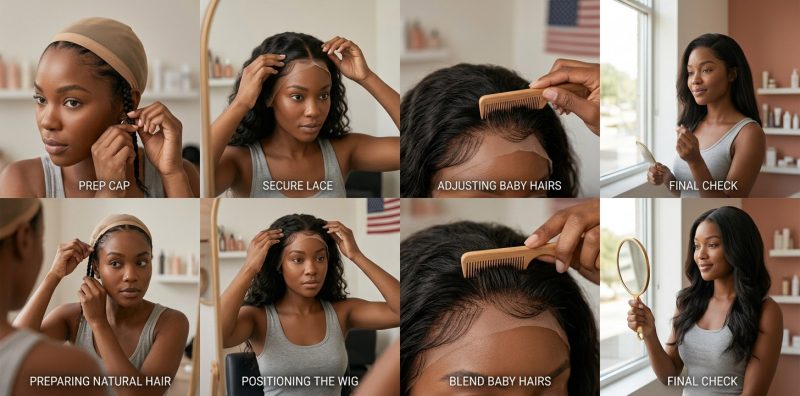
The Step-by-Step Sequence: How To Make Your Wig Hairline Blend Naturally
A natural-looking wig hairline is not created by one single trick.
It is a series of small choices.
The lace.
The placement.
The density.
The styling.
The maintenance.
When these details work together, the wig stops feeling separate from you.
Here is a professional sequence you can follow.
Step 1: Start With the Right Wig Construction
Before adjusting anything, look at the foundation.
Different wig constructions create different levels of styling flexibility.
Lace Front Wig
A lace front wig focuses on the front hairline area.
It allows:
- more natural-looking edges;
- styling away from the face;
- better forehead transition.
HD Lace Wig
HD lace is designed for a thinner, more transparent appearance.
It can be useful for women who want a softer hairline effect.
Closure Wig
Closure wigs cover a smaller scalp area.
They can be easier to maintain because there is less lace area to manage.
The right choice depends on:
- how often you wear wigs;
- your styling habits;
- your comfort level.
A wig construction that matches your lifestyle usually creates a more natural result.
Step 2: Prepare Your Natural Hair Underneath
Many women focus only on the wig.
But what happens underneath affects the final appearance.
Your natural hair should create a smooth foundation.
Common methods:
- flat braiding;
- low-profile wrapping;
- protecting edges without creating bumps.
A bumpy foundation can push the wig upward.
This can affect:
- hairline position;
- lace contact;
- overall shape.
Think of it like putting a fitted sheet on a mattress.
The surface underneath matters.
Step 3: Position the Wig According to Your Face (H3)
Do not follow another person’s hairline.
Use your own features.
Check:
- forehead proportion;
- temple position;
- face shape.
After placing the wig:
Look straight ahead.
Then check:
- side view;
- smiling expression;
- talking movement.
A wig should look natural while you are living.
Not only while standing still.
Step 4: Customize Slowly
Customization is where many wigs become personal.
Possible adjustments:
Adjusting Density
If the front looks too heavy:
- reduce small amounts gradually.
Do not remove too much at once.
Creating Natural Baby Hairs
Baby hairs should support the hairline.
They should not become a dramatic decoration.
Adjusting the Part
A slightly different part can change how the entire wig frames your face.
Step 5: Test Before Wearing Outside
Many women skip this step.
They install indoors and leave immediately.
Instead:
Take a few minutes.
Check:
- daylight near a window;
- outdoor sunlight;
- different angles.
Take photos.
Not because you need to criticize yourself.
Because photos show details your mirror may miss.
Choosing the Right MsAloe Wig Style for a Natural Hairline
Different women need different solutions.
A natural-looking hairline begins with choosing a construction that supports your routine.
For women who want more styling freedom around the front, lace-based wigs can offer more flexibility.
MsAloe’s lace wig collection can help compare different textures, lengths, and constructions: https://www.msaloe.com/category/wigs/hd-lace-wigs
For a Soft Everyday Hairline
A straight HD lace frontal wig can be a practical choice for women who prefer:
- smooth texture;
- simple styling;
- a clean hairline appearance.
The straight texture allows the hairline and parting to become the focus.
Product reference:
For Natural Movement and Volume
Body wave textures create softer movement.
They can feel less structured than very straight styles.
The key is maintaining the wave pattern.
Avoid:
- excessive brushing;
- too much heat;
- heavy styling products.
Product reference:
FAQ: Why Is My Wig Not Blending With My Hairline?
Why can I see my lace front wig edge?
The lace edge may be visible because of:
- wrong lace color;
- incorrect placement;
- too much adhesive;
- insufficient blending.
Check your wig in natural light before making adjustments.
Should I pluck my wig hairline myself?
You can customize density, but patience matters.
Removing too much hair can create a thin or uneven hairline.
Small adjustments are usually safer.
Why does my wig hairline look straight?
Many factory wigs are created with a fuller front density.
Natural hairlines usually have gradual density changes.
Customization helps create a softer transition.
Does HD lace guarantee a natural hairline?
No.
HD lace is a helpful material.
But realism depends on:
- customization;
- installation;
- color matching;
- styling.
Why does my wig look good in photos but not in person?
Photos usually capture one angle.
Real life includes:
- movement;
- sunlight;
- different viewing angles.
A wig needs to work from many perspectives.
Can hair extensions and wigs use the same blending techniques?
Yes.
Both require:
- matching texture;
- balanced density;
- natural transitions.
The goal is always making added hair feel connected.
A Note From One Wig Lover To Another
There is a funny thing about hair.
We often think other people are looking much more closely than they actually are.
A woman wearing a wig may spend twenty minutes worrying about a small lace detail.
Meanwhile, everyone around her is noticing the whole picture:
Her smile.
Her expression.
Her confidence.
Still, wanting your wig to feel natural is completely understandable.
Hair is personal.
It changes how we show up in the world.
The best wigs are not the ones that make you look like someone else.
They are the ones that make you feel more like yourself.
A natural hairline is not about creating a perfect illusion.
It is about creating harmony.
The lace should support you.
The texture should fit you.
The density should feel like you.
The hairstyle should move with your life.
When those pieces come together, you stop thinking about whether your wig is blending.
You simply wear it.
And that is usually the moment when a wig feels the most natural.
Continue Learning About Wig Care and Styling
For readers who want to learn more about choosing, installing, and maintaining wigs, MsAloe’s wig education resources provide additional guidance:
